 Edit
Romanian deputy PM resigns amid bribery scandal
Dragoș Anastasiu’s departure has prompted questions about Romania’s post-communist business environment
Romania’s brief experiment in technocratic fiscal reform was thrown into turmoil after Deputy Prime Minister Dragoș Anastasiu resigned amid revelations that his own businesses had systematically bribed tax officials for nearly a decade.
The departure, which Anastasiu called a “moral necessity,” followed growing public pressure and a scathing report detailing how his tourism companies paid over €150,000 in bribes to avoid fiscal inspections.
In a late-night press conference in Bucharest on Sunday, Anastasiu confirmed his resignation, stating that Prime Minister Ilie Bolojan had not asked him to leave, but that his continued presence in government risked undermining the cabinet’s credibility.
“From this point on, I would do more harm than good,” Anastasiu said. “I don’t want to damage the government’s image. But this doesn’t mean the reforms should stop – quite the opposite.”
The scandal has prompted questions about whether Romania’s post-communist business environment has ever truly escaped its transactional past and whether reform can succeed when its architects are themselves entangled in the very systems they seek to dismantle.
Appointed just weeks ago as part of Prime Minister Ilie Bolojan’s reformist cabinet, Anastasiu had been tasked with a politically sensitive portfolio: overhauling the Romanian budget system and improving oversight of the notoriously opaque National Agency for Fiscal Administration (ANAF). The irony is brutal – it was ANAF that his companies were paying off, through fictitious marketing and travel contracts, between 2009 and 2017.
The resignation follows a wave of media reporting and court documents revealing that between 2009 and 2017, companies owned by Anastasiu paid over €150,000 in bribes to an inspector at the National Agency for Fiscal Administration (ANAF). The payments, masked as fictitious consulting and tourism services, were allegedly used to avoid tax inspections and penalties for irregularities such as unpaid social contributions.
Anastasiu admitted the facts both during court proceedings and in statements to prosecutors, stating that the payments were made during a time of acute financial pressure.
“It was a compromise – a survival bribe, not a bribe for enrichment,” he said. “Back then, everyone feared inspections and blackmail. That was the business climate.”
The case revolves around the company Touring Europabus Romania, a key player in Anastasiu’s Eurolines tourism group. According to judicial records, after ANAF inspectors found salary-related tax irregularities in 2009, the company entered into a long-term illicit agreement with tax official Angela Burlacu. In exchange for money, she allegedly ensured inspections would omit or whitewash any violations.
Touring Europabus went from financial distress in 2009 to exponential growth in the following years – reaching a turnover of nearly 300 million RON by 2014. Investigators say none of the subsequent inspections conducted by Burlacu reported any irregularities, despite clear red flags. Burlacu was sentenced to five years in prison in 2023.
In 2018, after terminating the payments, Anastasiu and a business partner reported the bribes to the National Anticorruption Directorate (DNA). That same year, the tourism operations were shifted to a new entity, Travel Brands, while Touring Europabus shrank to near dormancy. One year later, the revamped business was sold to Germany’s REWE Group, which owns tourism brands like Dertour and retail chains such as Billa and Penny Market.
Anastasiu described the 2019 sale as his “best year in business.” While the value of the transaction remains undisclosed, industry reports estimate the tourism group was generating €150 million in annual revenue at the time.
The first political response came swiftly from the far-right Alliance for the Union of Romanians (AUR), whose spokesman Dan Tanasă described the resignation as “a minimum gesture of decency.” But he added: “To speak publicly about bribes as if they were patriotic acts shows total contempt for the law and for every honest taxpayer.”
Tanasă’s rebuke reflects a broader public disillusionment with the political class. “Romania has been trapped for 35 years between bribes for survival and bribes for enrichment,” he said. “And every new government promises reform, only to be compromised by its own leaders.”
Romania’s coalition survives no-confidence vote, pushes painful tax hikes amid dire economic outlook
The resignation leaves Bolojan’s government with four deputy prime ministers. For a government that entered office on promises of institutional renewal and fiscal responsibility, the damage to credibility is already palpable.
For many, the case is not simply about one politician’s fall, but about a system’s enduring weakness. Despite high-profile anti-corruption campaigns, Romania still struggles to reconcile the competing legacies of authoritarian bureaucracy and fragile capitalism.
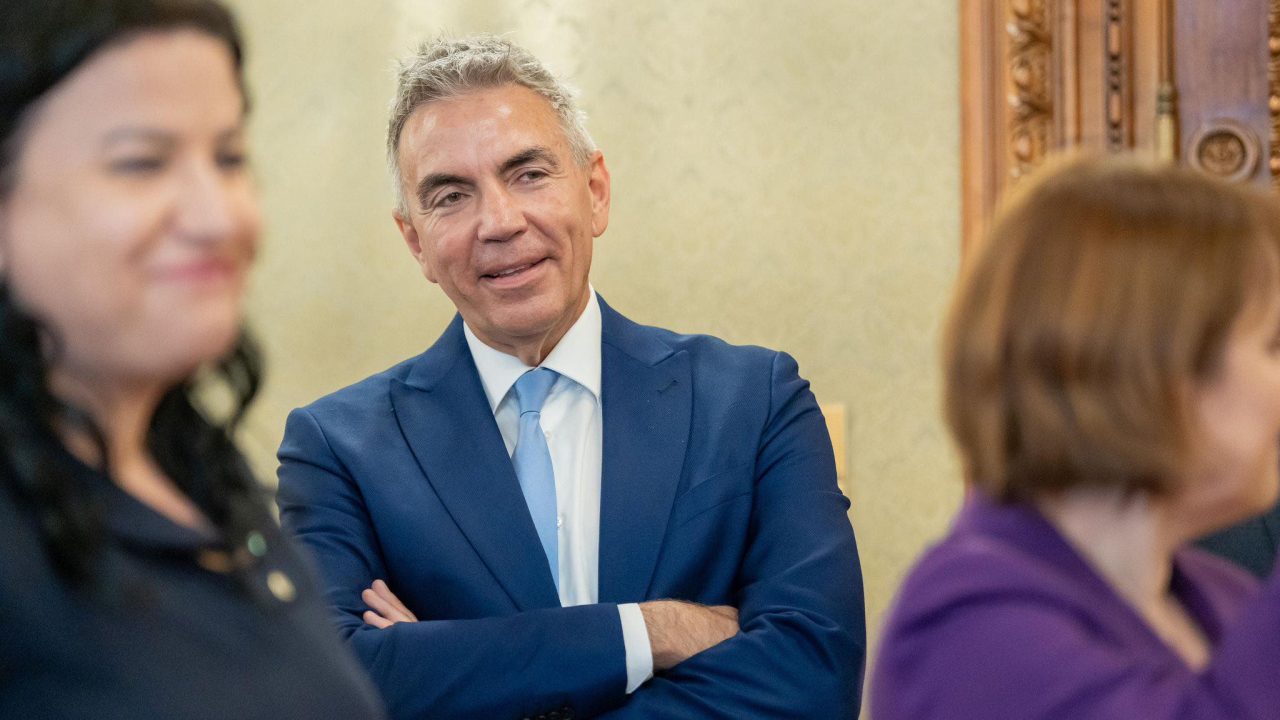
Caption: A photo from Dragoș Anastasiu’s official Facebook page.
Updated: July 29, 2025 - 05:05