 Edit
EU funding sought to finalise rail link between Sofia and Skopje
After 150 years of attempts a potential breakthrough hinges on reaching agreement on technical details by fall
Bulgaria and North Macedonia are expected to seek European Union funding for the joint construction of a border railway tunnel key for the Corridor 8 project – an initiative that has faced over 150 years of challenges. However, progress depends on whether the two countries can agree on technical details by this fall.
The Bulgarian Ministry of Transport told EUalive that an expert meeting between Bulgaria and North Macedonia is scheduled for 16 July in Brussels with European Commission participation. The agenda includes finalising plans for the project, establishing procedures for public procurement, and selecting contractors for design, construction, and consulting services. The meeting will also address updates on project development, financing, and future activities.
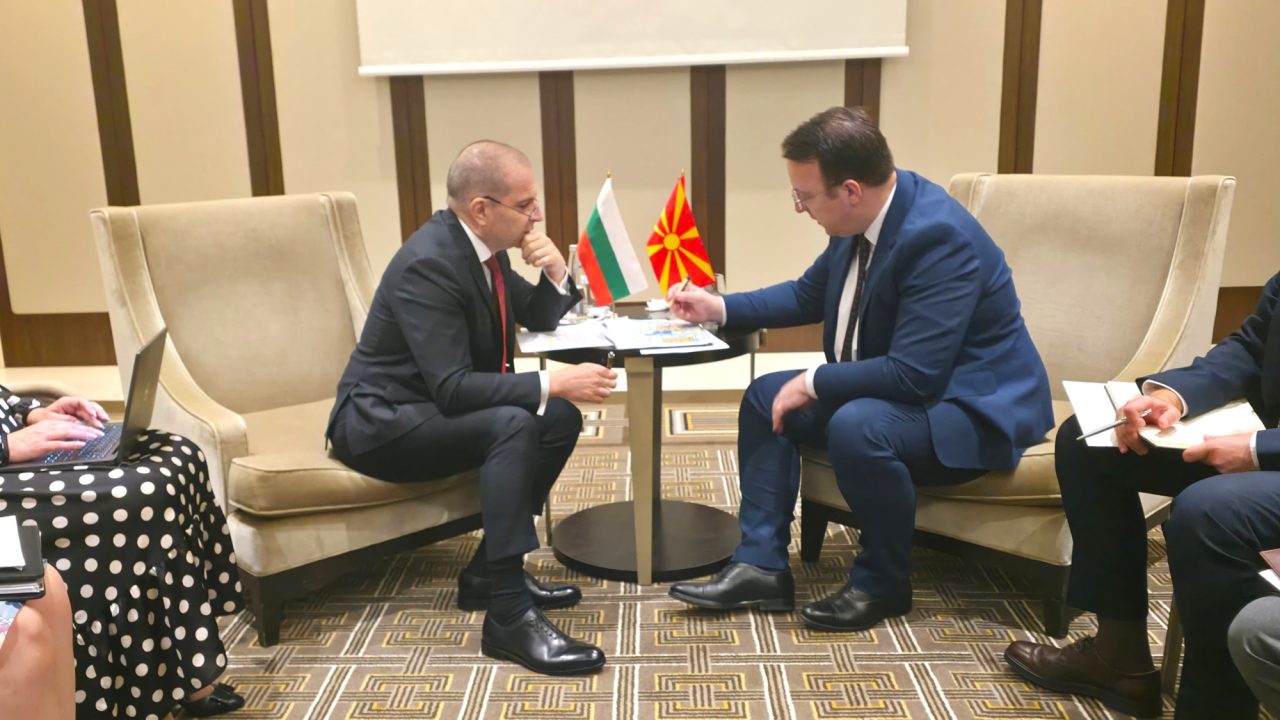
The neighboring countries agreed in Istanbul on 28 June to expedite an agreement for the cross-border railway tunnel. A meeting between Bulgarian Transport Minister Grozdan Karadzhov and North Macedonian counterpart Aleksandar Nikoloski reportedly marked a significant step toward this goal.
At last year’s NATO summit, leaders underscored the critical strategic role of Corridor 8 in facilitating the efficient movement of troops and goods across Europe. Furthermore, enhanced infrastructure investment supports NATO’s goal of meeting the 5% GDP defense spending target urged by U.S. President Donald Trump.
A historic opportunity after decades of stalemate
Corridor 8 aims to connect the Adriatic Sea with the Black Sea from the Italian port of Bari through Albania, North Macedonia and Bulgaria, promising economic growth and regional integration. Despite its potential, the corridor has been stalled for decades due to geopolitical tensions and logistical hurdles, the bottleneck being the currently unexisting rail link Skopje-Sofia.
The Sofia-Skopje railway line, part of this corridor, was originally opened in 1956 but ceased operations in 1994 due to deteriorating infrastructure. Both countries committed to completing the line by 2027, according to a 2017 Memorandum of Understanding. Now, renewed cooperation and recent discussions suggest a chance to reopen this historic route.
The Bulgarian Ministry of Transport noted that in 2018, a preliminary design was prepared by North Macedonia for a cross-border tunnel connecting Kriva Palanka with Bulgaria, as part of Corridor 8. However, project costs remain uncertain at this stage. Detailed estimates for construction will be determined after formal agreements are signed and procurement processes are finalised.
North Macedonia’s Nikoloski confirmed that an agreement in principle exists to jointly build the tunnel, with EU funding as a key prerequisite. He outlined three conditions: the tunnel must be built by boths sides, Bulgaria and North Macedonia; North Macedonia must fulfill its commitments, as must Bulgaria; and Skopje seeks connectivity not only to Kriva Palanka but also to Sofia, Burgas, and Varna. To achieve this, Bulgaria must modernise its railway network, he indicated.
Bulgaria’s Karadzhov announced that the call for constructing the final 2.4 km of the railway line between Gyueshevo and Deve Bair on the Bulgarian side will be launched by the end of July.
Prospects for EU funding
The total railway network of corridor 8 spans 1,220 km, with over half – 747 km – located within Bulgaria. Only 2.5 km remain to complete the Bulgarian section, from Gyueshevo to Deve Bair. North Macedonia has approximately 70 km left to build.
By late July, a joint document for project approval is expected to be finalised, and Bulgaria plans to announce a tender for construction of the Bulgarian section. Project revisions are scheduled for July and August, with the goal of applying for EU grants if technical agreement is reached by autumn.
If Bulgaria and North Macedonia can overcome political differences and finalise technical agreements by fall, The likelihood of securing EU funding is high, as Corridor 8 is expected not only to enhance regional connectivity, but also foster economic prosperity and bolster security cooperation in southeastern Europe.
Other sources used: BGNES, North Macedonia’s Ministry of Transport announcements
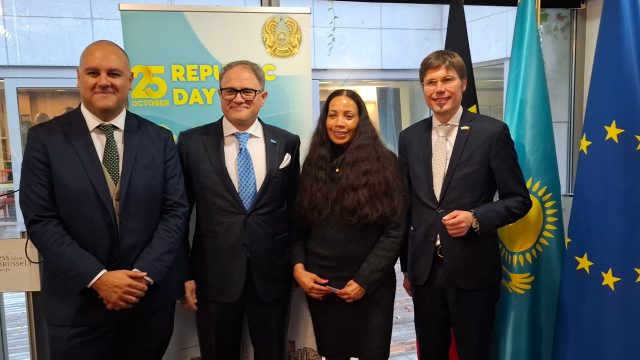
Caption: Bulgaria and North Macedonia agreed on 28 June to quickly finalize the agreement for the construction of the cross-border railway tunnel. This happened at a meeting in Istanbul between Bulgarian Transport Minister Grozdan Karadzhov and his North Macedonian counterpart Aleksandar Nikoloski. Ministry of Transport of Bulgaria
Updated: July 8, 2025 - 13:06