 Edit
A new chapter in Trump’s immigration crackdown: Kosovo agrees to host U.S. deportees
The move highlights Kosovo’s strategic alignment with the U.S. while raising questions about ethics
On 11 June, Kosovo, one of Europe’s poorest nations, agreed to a U.S. request to temporarily host up to 50 migrants deported from the United States annually, as announced by the Kosovar government in a statement to Reuters.
This decision, part of a broader strategy by the Trump administration to secure third-country agreements for deportees, underscores both the aggressive immigration policies of the United States and a growing trend among Western nations to outsource migrants to less affluent countries, particularly in the Balkans.
The move highlights Kosovo’s strategic alignment with the U.S., a key supporter of its 2008 unilaterally declared independence from Serbia, while raising questions about the ethics and sustainability of “dumping” deportees in economically vulnerable regions like the Western Balkans.
Trump’s immigration policies
Since taking office in January, Trump has pursued what he describes as the “largest domestic deportation operation” in U.S. history, fulfilling campaign promises to curb unauthorised immigration. His administration has implemented sweeping measures, including invoking the 1798 Alien Enemies Act to expedite deportations with limited due process, targeting not only undocumented migrants but also legal residents with revoked statuses.
The U.S. Supreme Court’s May 2025 decision to lift Temporary Protected Status (TPS) for approximately 500,000 migrants from Venezuela, Cuba, Haiti, and Nicaragua has further fuelled these efforts, leaving many without legal recourse and prompting the U.S. to seek third-country destinations for those whose home nations refuse repatriation.
The Trump administration has secured agreements with several countries, including El Salvador, Costa Rica, Panama, and now Kosovo, to accept third-country nationals – migrants who are neither citizens of the U.S. nor the host country. For instance, over 200 Venezuelan migrants accused of gang affiliations were deported to El Salvador’s notorious mega-prison, while hundreds of Asian and African migrants have been sent to Costa Rica and Panama for temporary relocation.
These policies aim to address two key objectives: tactically removing migrants whose countries of origin, such as Venezuela or China, refuse to accept them, and strategically deterring immigration by creating a perception of risk through high-profile deportations to harsh destinations.
However, the approach has faced significant criticism. Human rights groups and Democrats have accused the administration of violating due process, citing cases of American citizens wrongfully detained and deported, as well as inadequate notice for migrants to contest third-country removals. Federal judges, including one in Massachusetts, have mandated credible fear assessments to ensure deportees are not sent to countries where they face persecution, though the administration has appealed such rulings to the Supreme Court.
A strategic ally with economic motives
Kosovo’s decision to accept U.S. deportees reflects its strong ties with the United States, rooted in America’s pivotal role in supporting Kosovo’s independence from Serbia in 2008 following a U.S.-led NATO campaign. The Kosovar government’s statement emphasised this alliance, noting that it holds U.S. support “in very high regard” as it pursues Euro-Atlantic integration. Acting Prime Minister Albin Kurti framed the deal as a gesture of partnership, with Kosovo selecting individuals from a U.S.-proposed pool to ensure compliance with local laws.
Economically, Kosovo, a nation of 1.6 million with a GDP per capita among Europe’s lowest, sees such agreements as a potential revenue source. The country has already secured a deal with Denmark to host 300 prison inmates starting in 2027 for €210 million over a decade, and it has expressed interest in similar arrangements with the United Kingdom to host asylum seekers denied sanctuary.
Kosovo’s history of hosting migrants, such as Afghan evacuees in 2021 for U.S. vetting, demonstrates its willingness to cooperate with Western allies. However, the decision to accept deportees has sparked domestic controversy, with critics arguing it strains Kosovo’s limited resources and risks public order, despite assurances that only those meeting strict criteria will be admitted.
Europe’s migrant outsourcing trend: Italy, Denmark, and beyond
Kosovo’s agreement is part of a broader trend where Western nations, facing domestic pressure to curb immigration, outsource migrants to poorer countries, particularly in the Balkans. Italy, under Prime Minister Giorgia Meloni, has led this approach with a 2023 deal to establish migrant reception centres in Albania to process asylum seekers intercepted at sea. Italy funds these centres, but the arrangement has faced legal challenges and logistical issues, with Italian courts questioning the safety of deporting migrants to Albania.
Similarly, Denmark’s agreement to transfer 300 foreign prisoners to Kosovo’s Gjilan facility, set to begin in 2027, reflects a strategy to offload incarceration costs while providing economic aid to Kosovo.
The United Kingdom has also explored Balkan nations, including Kosovo, for “return hubs” to host asylum seekers, following the collapse of its controversial Rwanda deportation plan in 2024 due to legal rulings citing human rights violations.
Ethical and geopolitical implications
Kosovo’s agreement to host U.S. deportees, while limited in scope, exemplifies the ethical dilemmas of third-country deportation schemes. By outsourcing migrants to poorer nations, the U.S. and European countries externalise the costs and responsibilities of immigration management, often disregarding the capacity of host nations to provide humane conditions.
Geopolitically, these deals leverage economic and diplomatic pressures to secure compliance. Kosovo’s gratitude for U.S. support in 2008 and its pursuit of Euro-Atlantic integration make it a willing partner, but this dynamic risks creating a perception of exploitation. The Balkans’ role as a migrant “dumping ground,” could fuel resentment and destabilise a region already grappling with ethnic tensions and economic challenges.
Are the Balkans becoming a dumping ground for unwanted people from Europe and the United States?
Sources: Reuters, Fox News, CBS News, The Washington Post, Bloomberg, Prishtina Insight, edited by g.g.
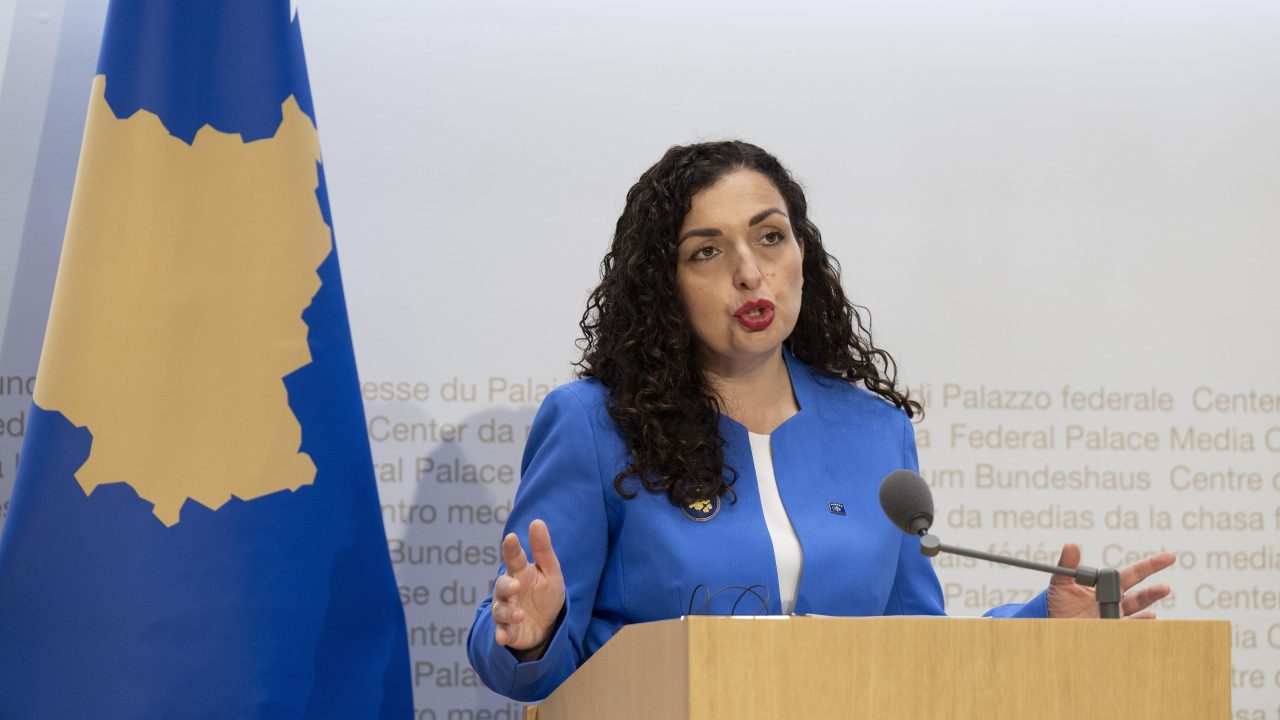
Caption: Vjosa Osmani Sadriu (L), President of the Republic of Kosovo, speaks during a press conference with Swiss Federal President Karin Keller Sutter (not pictured) in Bern, Switzerland, 21 May 2025. [EPA/PETER SCHNEIDER]
Updated: June 12, 2025 - 04:00