 Edit
Diplomacy cannot afford emotions: why Ukraine cannot afford to lose America
Presidents come and go, but the vital partnership between the peoples of Ukraine and the U.S. must endure
The tendency towards the personalisation of relations with Washington is dangerous, writes Kostiantyn Yielisieiev.
Kostiantyn Yelisieiev is a former Ambassador of Ukraine to the EU. He now leads the NGO “Centre for New Solutions”.
Ukrainian-American relations are going through one of their most difficult crises in recent years. It would be a mistake to underestimate its scale. After all, the highest price for the deterioration of the strategic partnership with the United States is being paid not by Washington or Trump, but by Ukraine, by our people, our children and our soldiers.
The recent decisions of the White House to ease the implementation of the Graham sanctions law have caused understandable and justified disappointment. Instead of the anticipated increase in economic pressure on Russia, the Kremlin has been given additional room for manoeuvre. This is particularly dangerous against the backdrop of Russia’s continuing terror against Ukrainian cities and energy infrastructure.
I believe Trump is making a desperate bet on a strategy of engagement, seeking to persuade Putin to end the war primarily through agreements rather than coercion. The approach is not inherently unworkable, but we have already been down this road and know where it has led.
If Trump’s bet succeeds, we may see a ceasefire on hybrid terms, without reliable guarantees that Russia will not resume hostilities.
If it fails, however, this strategy may be pushed to the margins of international politics for a long time, while its supporters receive a sobering lesson. Such a failure would provide a strong argument against attempts by other European capitals to follow a similar approach. In particular, political forces such as Marine Le Pen’s National Rally in France or Alternative for Germany would lose one of their central arguments in favour of rapprochement with Moscow: the claim that it is possible to reach an agreement with Putin without compelling him to change his behaviour.
The failure of the engagement strategy would strengthen the case for returning to a policy of sustained and serious pressure.
Given the complexity of the broader geopolitical environment, Ukraine must not allow itself to be guided by today’s emotions and indignation. It must think strategically.
Difficult negotiations require cool-headed calculation, the ability to listen, an understanding of the other side’s motivations, and the capacity to anticipate consequences many moves ahead. The more difficult the partner, the higher the standards of professionalism required of Ukrainian diplomacy.
Not every thought, however justified, needs to be expressed publicly, particularly when doing so could close channels of communication or undermine specific defence arrangements.
Diplomatic restraint should not be confused with political weakness. We can remain principled in defending our national interests while avoiding unnecessary confrontation.
We must recognise that, despite the substantial support provided by our European partners, Europe is not yet capable of fully replacing American capabilities in air defence, intelligence, military technology and critically important weapons systems. Preserving our strategic relationship with the United States is therefore not a matter of political preferences. It is a matter of national security and saving human lives.
This is precisely why I am concerned about the dangerous tendency towards the personalisation of relations with Washington.
It increasingly appears that, instead of painstaking diplomatic work, we risk becoming trapped in the logic of personal political confrontation. Demonising Trump, or cultivating a negative image of the United States more broadly, runs counter to Ukraine’s national interests.
A similar approach has already damaged our relations with certain European partners. Applying it to the United States, however, would be a strategic mistake of an entirely different magnitude.
Trump is not Orban. And the United States is not a country whose support Ukraine can afford to disregard.
It would be equally dangerous to tie the prospects of Ukrainian-American relations to the outcome of the forthcoming midterm congressional elections.
Whatever their results, Donald Trump will remain President of the United States. Even if the Democrats secure a majority in one or both chambers of Congress, key foreign policy decisions will continue to depend to a considerable extent on the White House.
At the same time, bipartisan support for Ukraine in Congress remains an exceptionally important asset.
Despite the White House’s decisions, the reaction of American lawmakers has demonstrated that Ukraine continues to enjoy support across party lines.
Our task is to preserve Ukraine as a shared strategic interest of both major American political parties. We must not allow support for Ukraine to become hostage to partisan confrontation within the United States.
What should be done?
First, we must restore a fully functioning strategic dialogue with the White House, engage systematically with both parties in Congress, and ensure uninterrupted practical cooperation between our defence and security institutions.
In our relations with the United States, we need to return to systematic, institutional diplomacy that goes far beyond telephone conversations and personal meetings between presidents.
Ukraine and the United States once maintained an extensive network of working mechanisms, including the Strategic Partnership Commission, its specialised working groups and other bilateral formats.
In 2018, for example, working groups were established within the Commission to address security and countering Russian aggression, the rule of law and humanitarian issues, as well as economic and energy matters. In 2021, the two sides agreed to resume the Commission’s work and strengthen its role.
Where are these mechanisms today? Why are we not using them to their full potential?
It is also high time to appoint Ukraine’s Ambassador to the United States.
As a professional diplomat, I cannot accept the argument that we should supposedly wait until after the elections before deciding on an ambassadorial candidate.
Ukraine needs permanent channels of engagement with the State Department, Congress, the Pentagon, the Treasury Department and other American institutions.
We must hold regular discussions on sanctions policy, military assistance, joint defence production, energy security and long-term security guarantees for Ukraine.
A strategic partnership between two countries cannot depend exclusively on political mood, public statements or arrangements reached at the highest level.
Personal dialogue between presidents is important, but it must rest on systematic cooperation among ministries, parliaments, intelligence agencies, experts, specialised institutions, think tanks, civil society, the media and the diaspora.
Second, Trump’s decisions place additional responsibility on the European Union.
If concessions to the aggressor come to be perceived as a means of solving economic problems, this would create a dangerous precedent for European populists and political forces aligned with Moscow.
The EU must maintain its sanctions, strengthen efforts to prevent their circumvention, put frozen Russian assets to work for Ukraine, and expand its own defence production.
A just and lasting peace will be possible only when the cost of continuing the war becomes higher for Putin than the cost of ending it.
Europe must demonstrate strategic maturity and ensure that neither economic difficulties nor Trump’s manoeuvres become an excuse for appeasing the aggressor.
We need a stronger Europe alongside the United States, not a Europe that seeks to replace the United States.
Finally, it is time to persuade Washington to abandon its traditional approach of providing Ukraine with carefully calibrated assistance — enough to prevent defeat, but not enough to secure strategic success.
In my view, this is one of the fundamental problems in our relations with the United States.
American assistance has been and remains critically important. Yet its scale and limitations have not always matched Ukraine’s actual needs.
The task of our diplomacy is to change this calculation by demonstrating that Ukraine’s victory and the defeat of Putin’s aggressive ambitions are in the long-term strategic interests of the United States itself.
In this context, it would also be worth asking about the current state of implementation of the groundbreaking and historic so-called “minerals deal” and its potential to revitalise Ukrainian-American relations under these difficult circumstances.
Today, Ukraine must grit its teeth, set emotions aside and demonstrate the highest possible level of diplomatic professionalism.
We must fight not against the American President, but for continued American support for Ukraine.
Presidents come and go, but the vital partnership between our peoples must endure.
At this decisive moment, the European Union must maintain sanctions, Congress must preserve bipartisan support, and Ukrainian diplomacy must sustain dialogue with the White House and ensure effective transatlantic coordination.
After all, the ultimate measure of our diplomacy’s effectiveness is not the number of loud statements or rounds of applause.
It is our ability to protect Ukrainian cities with sufficient air defence capabilities, provide our soldiers with reliable intelligence, save human lives and move towards a just and lasting peace.
This opinion was first published with Mirror of the week Zn.ua. EUalive republishes it with the permission of the author.
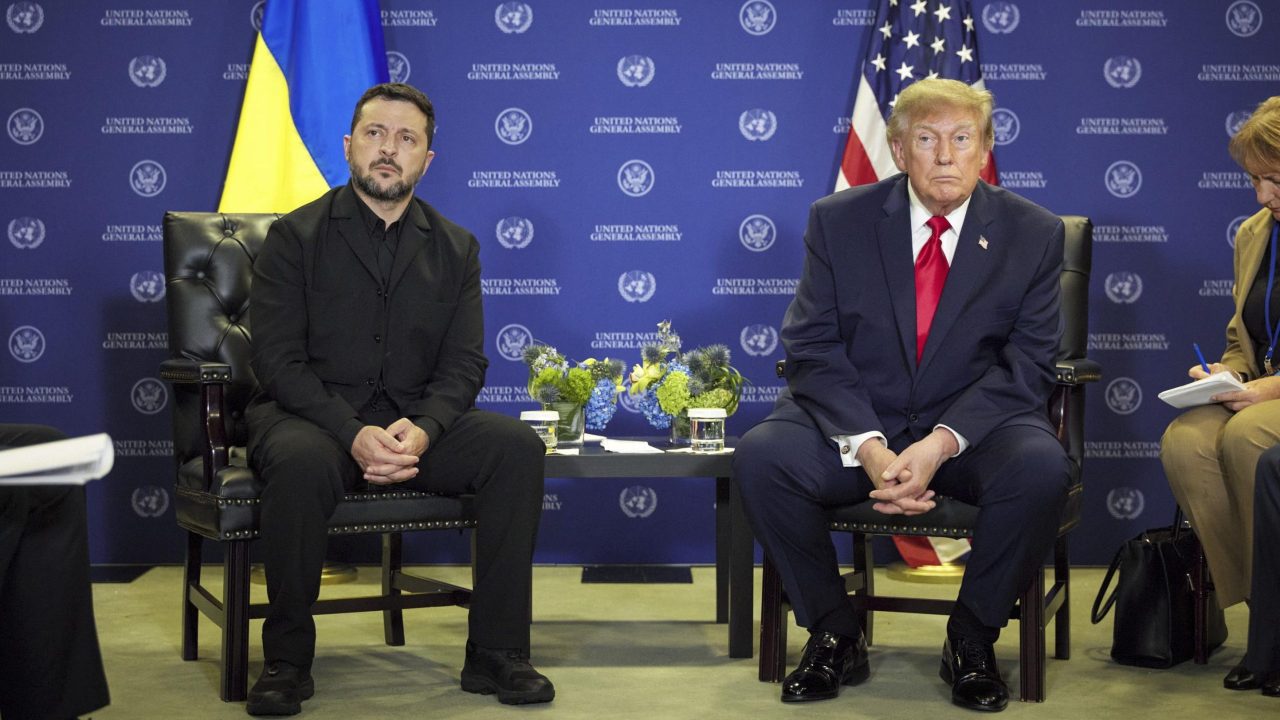
Caption: A handout photo made available by the Ukrainian Presidential Press Service shows Ukraine’s President Volodymyr Zelenskyy (L) with U.S. President Donald Trump (R) during a meeting in New York, New York, USA, 22 September 2026, on the sidelines of the United Nations General Assembly (UNGA). EPA/UKRAINIAN PRESIDENTIAL PRESS SERVICE HANDOUT
Updated: October 21, 2026 - 14:37