 Edit
Putin and Trump’s absence undermines Istanbul peace talks for Ukraine
Ukrainian President Volodymyr Zelenskyy labelled the Russian team “decorative”
Russian President Vladimir Putin’s call for peace talks in Istanbul to address the Ukraine conflict, announced on 11 May has faltered, as both he and U.S. President-elect Donald Trump confirmed they would not attend the negotiations scheduled for 15–16 May at Dolmabahçe Palace.
This development, reported by Reuters and other sources, highlights the diplomatic challenges and underlying motivations surrounding the talks.
Context and developments
Putin proposed direct talks with Ukraine on 11 May, following a European ultimatum for a 30-day ceasefire or face new sanctions. The talks, the first direct Russia-Ukraine negotiations since March 2022, were framed as a continuation of earlier Istanbul discussions disrupted by the Bucha massacre and Russian demands for Ukrainian neutrality. Hosted by Turkey, a mediator in the 2022 Black Sea Grain Initiative, the talks aimed to explore a ceasefire and long-term settlement.
However, Putin’s decision to send a “second-tier” delegation led by aide Vladimir Medinsky, rather than attending himself, drew sharp criticism. Ukrainian President Volodymyr Zelenskyy, who initially agreed to attend only if Putin was present, labelled the Russian team “decorative” and opted to send Defence Minister Rustem Umerov instead. Trump, who had hinted at joining the talks during his Middle East trip, ultimately declined, stating, “Nothing’s going to happen until Putin and I get together”. U.S. Secretary of State Marco Rubio, attending a NATO meeting in Turkey, echoed this, saying a breakthrough required direct Trump-Putin engagement.
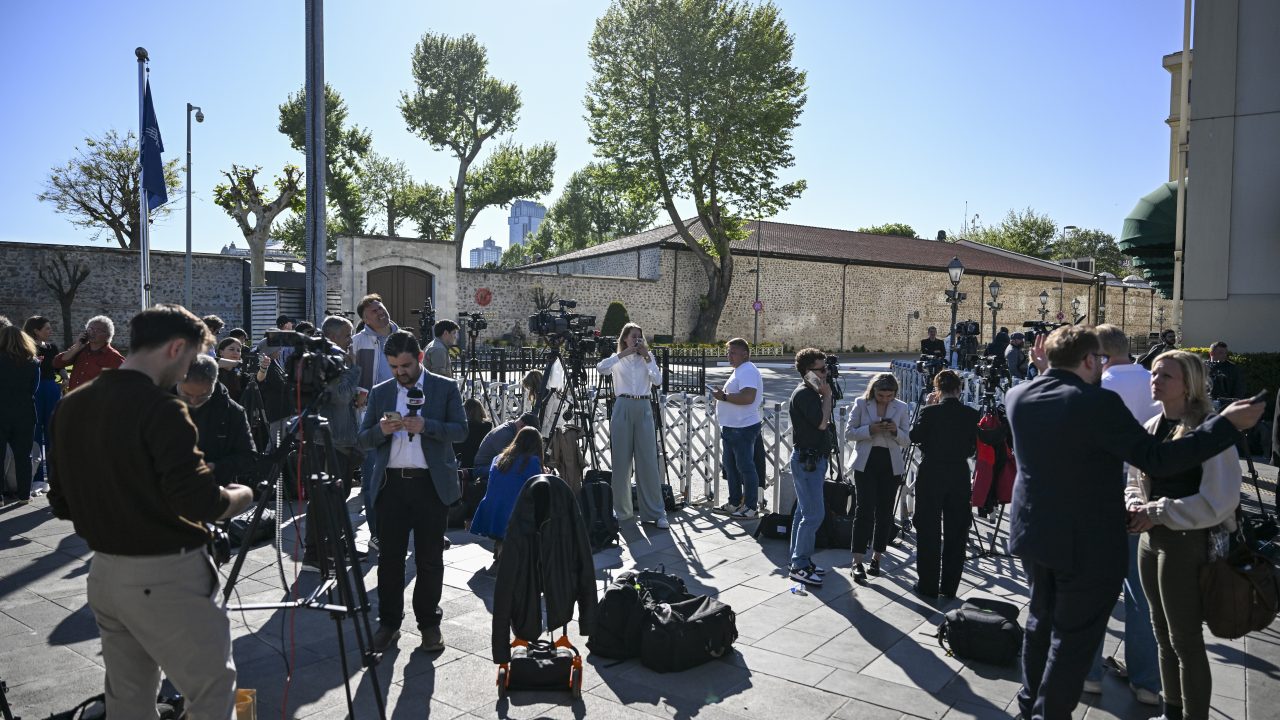
Logistical confusion further marred the talks. Russian and Ukrainian delegations were in different Turkish cities (Ankara and Istanbul) on 15 May, with schedules shifting and talks postponed to Friday. Reuters reported 200 journalists waiting outside Dolmabahçe Palace with no clear start time, underscoring the disarray.
Analytical perspectives
Analysts question Putin’s sincerity. The Carnegie Endowment suggests the talks may be a “propaganda exercise” to deflect blame for continued aggression while Russia advances in Donetsk, capturing 1,200 square kilometres since January 2025, per the Institute for the Study of War. Russian demands – Ukrainian neutrality, NATO exclusion, and recognition of occupied territories – remain unchanged from 2022, terms Kyiv rejects as capitulation. Political analyst Vladimir Pastukhov argued, “The chances of a peaceful outcome plummeted after Putin announced his negotiators,” signalling a preference for war over de-escalation.
Zelenskyy’s initial willingness to attend reflected pressure from Trump, who urged Ukraine to accept Putin’s offer to avoid appearing obstructionist. However, Zelenskyy insisted on a ceasefire and Russian withdrawal, telling Sky News, “Putin’s no-show is a very clear message” of disinterest in peace. Ukraine’s participation, despite Russia’s low-level delegation, aimed to demonstrate commitment to diplomacy, as Zelenskyy noted, “out of respect for [Turkish President] Erdoğan and Trump.”
Trump’s rhetoric, including claims he could end the war “in 24 hours,” contrasts with his absence in Istanbul. His insistence on direct talks with Putin aligns with his deal-making style but risks sidelining Ukraine, as Foreign Policy warns. European leaders, like EU’s Kaja Kallas, criticised the lack of commitment, stating, “Peace requires action, not posturing”. Trump’s envoy, Steve Witkoff, and Rubio’s presence in Istanbul signal U.S. engagement, but Rubio’s “low expectations” reflect scepticism.
Turkey’s role as a neutral broker is constrained. The Middle East Institute notes that while Erdoğan facilitated past agreements, “Turkey lacks leverage over Russia or the U.S.” Erdoğan’s meeting with Zelenskyy on 15 May in Ankara, where he reaffirmed Crimea as Ukrainian territory, aimed to bolster talks, but Putin’s absence weakened Ankara’s influence.
Reactions and implications
The talks’ faltering start has drawn varied responses. European leaders, wary of Russian stalling, push for sanctions. French Foreign Minister Jean-Noël Barrot called for measures to “suffocate” Russia’s economy, per AFP. NATO’s Mark Rutte urged Russia to halt its offensive, emphasising “concrete actions” over gestures. Ukrainian Foreign Minister Andrii Sybiha, meeting Rubio in Istanbul, reaffirmed Kyiv’s commitment but called for Russian reciprocity.
Oleg Ignatov of the International Crisis Group told ABC News, “Russia wants long negotiations while maintaining military pressure,” suggesting talks may serve to buy time. Conversely, Ukraine risks losing U.S. support if it appears uncooperative, as Trump has threatened to scale back aid.
Geopolitically, the talks’ failure could escalate the conflict. Russia’s battlefield gains may embolden further offensives, while Ukraine’s allies, including Germany’s €1.2 billion arms package announced 15 May, signal prolonged support. Trump’s anticipated policy shift in 2026, potentially pressuring Ukraine for concessions, could strain transatlantic unity.
Sources: Reuters, ABC News, Sky News, Deutsche Welle, Atlantic Council, Carnegie Endowment
Caption: Journalist work outside the Presidential Office in Istanbul, Turkey, 15 May 2025. Delegations from Russia and Ukraine, including the Ukrainian head of state, have arrived in Turkey as peace talks were due to take place. EPA-EFE/STRINGER
Updated: May 16, 2025 - 07:00