 Edit
Slovakia blocks year-long extension of EU sanctions targeting Russian oligarchs
Bratislava seeks shorter renewal period and removal of specific names as EU diplomats race against 15 September deadline
Slovakia has blocked the proposed one-year extension of European Union sanctions targeting more than three thousand Russian individuals and companies for undermining Ukraine’s territorial integrity, insisting instead on a six-month renewal and the removal of certain names from the list.
On Wednesday evening, the Committee of Permanent Representatives of the member states to the EU, known as Coreper II, failed to reach agreement on the extension precisely because of Slovakia’s position. The issue has been postponed until 9 September, with member states required to secure consensus by 15 September at the latest to prevent the measures from expiring.
Foreign reporting indicates that Slovakia is rejecting the Irish presidency’s proposal for a full-year extension of the individual and entity sanctions regime and is pressing for the shorter interval that has applied until now. According to information from the euBrief portal, Bratislava is also seeking the deletion of several names, with two individuals specifically identified as the focus of its request. The Slovak Ministry of Foreign and European Affairs neither confirmed nor denied the reports when approached. It stated only that negotiations on the regular review of the sanctions regime are continuing and are expected to conclude by 15 September. The ministry added that it would not comment on or provide details of its negotiating positions or those of other member states, describing the discussions as non-public. Independent confirmation from euBrief nevertheless aligns with the earlier accounts published by Ukrainska Pravda and Radio Free Europe/Radio Liberty.
Precedents for shorter renewals and name removals
Both of Slovakia’s current demands have clear precedents. Until recently, the sanctions list covering individuals and entities had been extended every six months. At the EU summit on 18 June, however, member states unanimously agreed to lengthen the interval to twelve months for the broader anti-Russian sanctions packages. The change was designed to provide greater stability and predictability while reducing opportunities for individual governments to threaten vetoes at each renewal. Slovakia is now seeking to restore the previous six-month cycle for this particular regime.
The push to remove names also echoes earlier efforts. In March, Slovakia, together with Hungary under then-Prime Minister Viktor Orbán, advocated the exclusion of two prominent Russian businessmen, Alisher Usmanov and Mikhail Fridman. Radio Free Europe editor Rikard Jozwiak reported on the social network X that Slovakia is again speaking in favor of the same two figures, though he did not cite a source. Jozwiak had previously covered the March delay caused by the two countries. At that time, Turkey, Azerbaijan and three Central Asian republics also pressed for Usmanov’s removal. Turkish President Recep Tayyip Erdoğan even wrote directly to Slovak Prime Minister Robert Fico on 2 March, urging support for the change. According to a letter later published by the Financial Times, Erdoğan cited Usmanov’s cooperation with EU institutions and humanitarian considerations. The appeal was not well received in Brussels.
Unlike in the spring, when Foreign Minister Juraj Blanár openly confirmed Slovakia’s request, the government is now remaining silent on the details. The March campaign ultimately failed. The sanctions were extended at the last minute before the 15 March deadline, and neither Usmanov nor Fridman was delisted. Only two individuals were removed: Maya Bolotova, daughter of the head of the Russian company Transneft, and Dutch businessman Niels Troost. Their cases were judged legally weak on the advice of the Council’s legal service.
Oligarchs, earlier Slovak cases and the broader sanctions framework
Usmanov, a businessman of Uzbek origin, is described in the EU Official Journal of February 2022 as a pro-Kremlin oligarch with extremely close ties to Russian President Vladimir Putin and often characterised as one of Putin’s favorites. He has long challenged his inclusion through legal means and rejects the oligarch label; the EU later removed that specific designation from its description. Mikhail Fridman, an Israeli-Russian businessman and the main shareholder of Alfa Group, which includes Alfa Bank, is cited by the EU as having strong ties to Putin’s administration and enabling the functioning of the president’s inner circle.
Slovakia’s Ministry of Foreign Affairs has previously framed its approach as a matter of fairness. In March it stated that it had an interest in ensuring that anyone unjustly included on the sanctions list is treated fairly and, where relevant arguments or court decisions exist, removed. It denied blocking the extension at that time, while acknowledging that two years earlier it had been prepared to consider such a step if member states had ignored its reservations about the listing of Slovak citizen Jozef Hambálek. Hambálek, founder of the Slovak branch of the Night Wolves motorcycle club, was sanctioned in 2022 for supporting Kremlin interests. The EU Journal noted that he had established the group’s European headquarters on a former military base in Slovakia and used decommissioned military equipment including tanks. Prime Minister Fico repeatedly sought his removal, raising the matter with European Commission President Ursula von der Leyen shortly after returning to office in October 2023 and later with then-German Chancellor Olaf Scholz. Hambálek was eventually delisted in 2024 after member states accepted arguments that his inclusion had been unfounded.
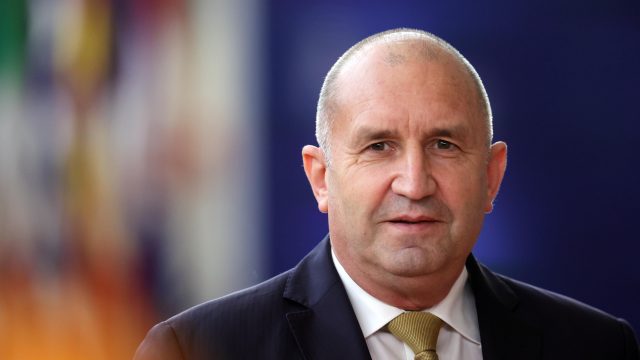
On 4 September Slovak Prime Minister Fico will visit Bulgaria for talks with his counterpart, Bulgarian Prime Minister Rumen Radev. Radev’s government already has a track record of securing the removal of individuals from EU sanctions: in July, Bulgaria’s insistence led to the exclusion of Russian Patriarch Kirill and Lukoil founder Vagit Alekperov from the 21st package of sanctions against Russia.
EU softens 21st sanctions package against Russia as Bulgaria secures key exemptions
The EU sanctions regime against Russia primarily imposes travel bans and asset freezes on listed individuals and entities, while prohibiting the provision of funds or economic resources to them. Parallel measures target key sectors of the Russian economy, including energy, finance, transport and trade. With the September 15 deadline approaching, diplomats must still find a formula that satisfies Slovakia’s dual insistence on a shorter renewal period and selective removals if the current package is to remain in force without interruption.
The original article by EUalive’s partner euBrief can be found here.
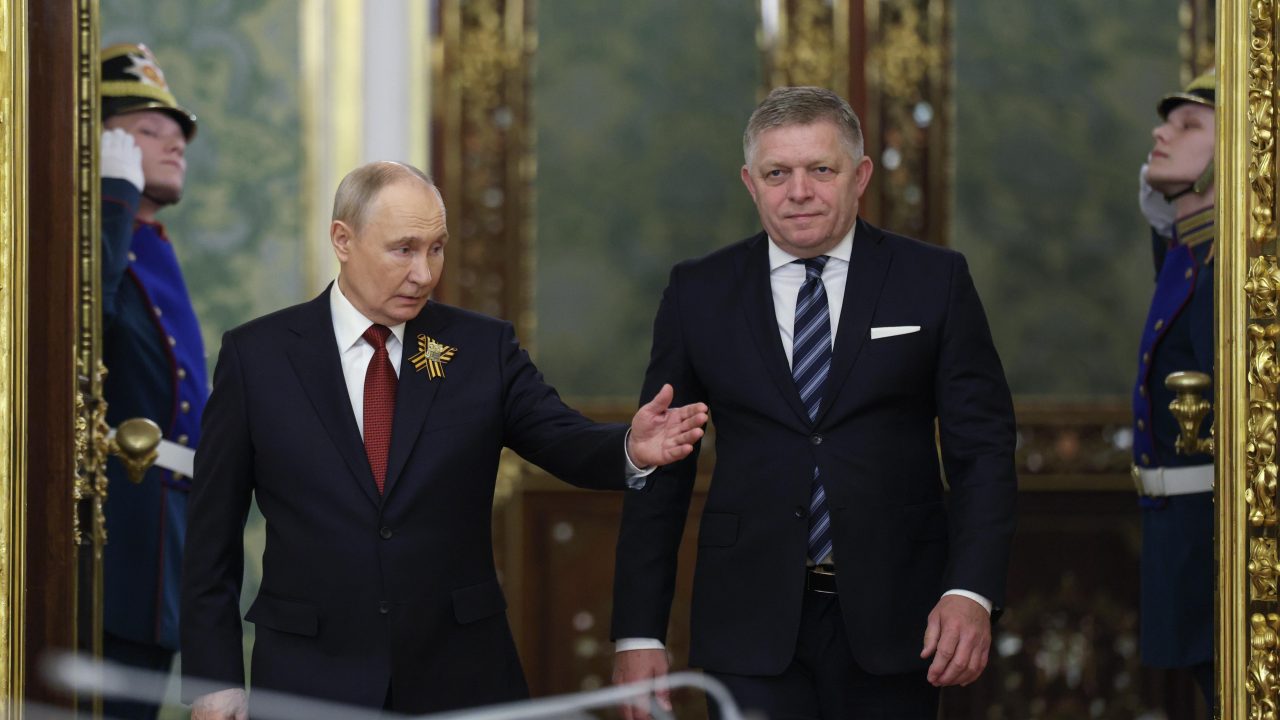
Caption: Russian President Vladimir Putin (2nd-L) gestures toward Slovak Prime Minister Robert Fico during a meeting at the Kremlin in Moscow, Russia, 9 May 2026. Robert Fico arrived in Moscow to attend celebrations marking the 81st anniversary of the victory in World War II over Nazi Germany and its allies. EPA/RAMIL SITDIKOV
Updated: September 4, 2026 - 09:51