 Edit
Europe’s detailed accord: establishing a tribunal to prosecute Russian aggression
On 14 May, Ukraine will propose the tribunal at the Council of Europe’s Committee of Ministers
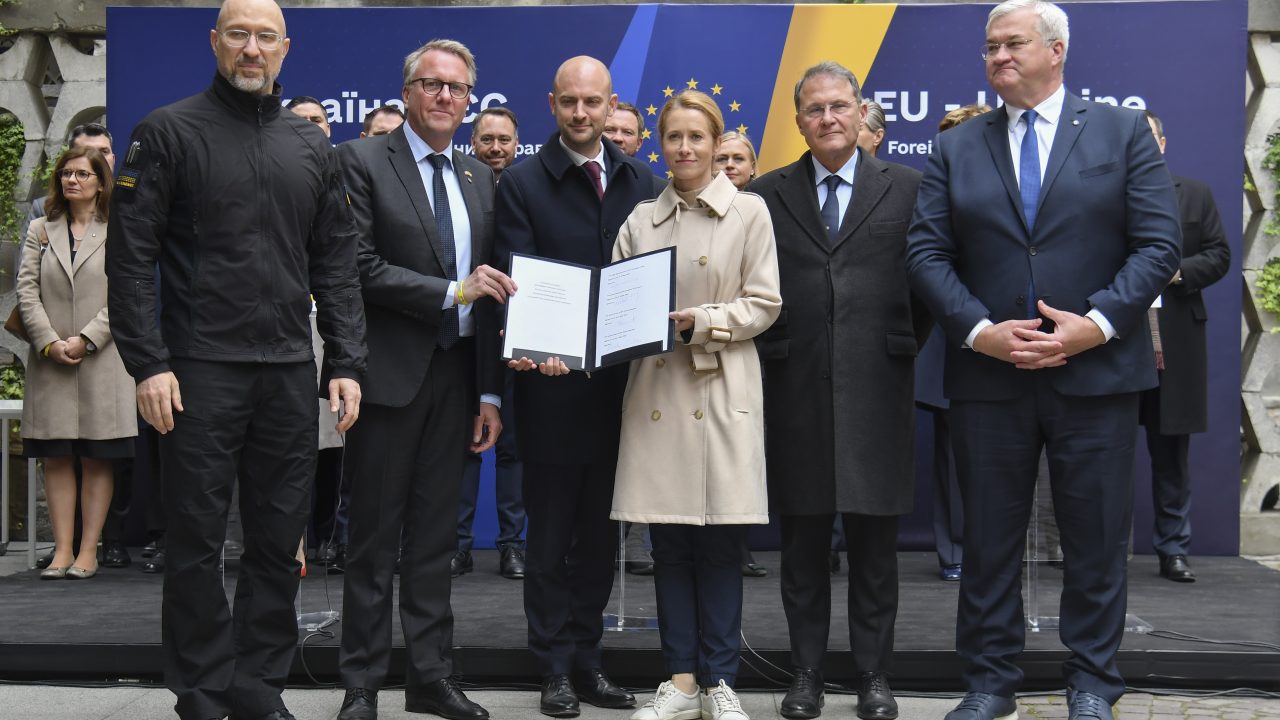
On 9 May, while Moscow hosted its military parade commemorating the 80th anniversary of Soviet Victory Day, foreign ministers and senior diplomats from EU nations and other Western states gathered in Lviv, Ukraine. Their mission: to finalise the creation of a tribunal to hold Russia’s leadership accountable as war criminals for their aggression against Ukraine.
This tribunal, reminiscent of the Nuremberg Trials against Nazi leaders, marks the first effort since the 1940s to prosecute political figures for such crimes.
Set to be based in The Hague, the tribunal differs from Nuremberg, which occurred post-war. This mechanism could commence operations before a ceasefire in Ukraine, with trials potentially conducted in absentia. Verdicts may impose life imprisonment, limited prison terms, fines, or asset confiscation. Charges could target Russian President Vladimir Putin, Foreign Minister Sergey Lavrov, and extend to leaders of Belarus and North Korea for supporting Russia’s actions, though proceedings against sitting heads of state will be paused until their terms end, a compromise influenced by the United States.
“We are creating this tribunal because impunity for committed crimes is unacceptable. Leaders who decided to send soldiers to Ukraine must be held accountable. If there is no punishment, this will happen again,” declared EU High Representative for Security Policy Kaja Kallas during the Lviv meeting.
In Lviv City Hall, diplomats formally endorsed this international court, tasked solely with investigating Russia’s illegal aggression against Ukraine. European Pravda compiled this report based on anonymous diplomatic sources from Ukraine, the Council of Europe, the EU, and a European nation, as some details remain sensitive or unpublished.
Sources of European Pravda in Kyiv anticipate the tribunal could begin operations in 2026, with initial investigations starting that year. “The optimistic plan is for the first investigations to begin in 2026,” one source noted, with verdicts to follow later. The Lviv decision, though political, ensures irreversibility, safeguarding against external pressures, notably from the U.S.
On 14 May, Ukraine will formally propose the tribunal at the Council of Europe’s Committee of Ministers in Luxembourg. The necessary documents are prepared, and within weeks, the Council will approve a legally binding agreement with Ukraine, requiring ratification by Ukraine’s parliament. Subsequently, up to 38 countries, primarily European but including some non-European states, will join via an Enlarged Partial Agreement. Each must ratify the agreement, and the tribunal will fully operate once a threshold (e.g., 20 ratifications) is met—a process expected to be lengthy but certain.
The tribunal addresses a gap in international law, which recognizes aggression as a crime but lacks mechanisms to punish it. This will be a historic precedent, as no politicians have faced such charges since the Nuremberg and Tokyo tribunals post-World War II. Ukraine expects to nominate up to 20 defendants, including Russia’s top political, governmental, parliamentary, security, and military leaders. Ukraine’s Prosecutor General will initiate investigations, after which the tribunal’s independent prosecutor and judges take over, ensuring an international process.
A key feature is the allowance for trials in absentia, critical for effectiveness, as seen in Nuremberg’s conviction of Martin Bormann. The tribunal’s statute omits “personal immunities” but specifies that “functional immunities do not apply,” meaning officials cannot claim they were merely fulfilling duties. For Putin, Lavrov, and possibly Prime Minister Mikhail Mishustin, investigations will proceed, with public indictments issued, but judicial proceedings will pause while they hold office.
“The prosecutor will carry out the investigation, draw up an indictment, present it publicly and submit it to the permanent Pre-trial Judge. The process is paused until the accused leaves office, then resumes automatically,” a government source explained.
Belarus’s Alexander Lukashenko faces charges for providing territory and infrastructure for Russia’s aggression, while North Korea’s Kim Jong Un may be targeted for supplying arms and troops, though proving aggression is complex as North Korean forces operate in Russia’s Kursk region, not Ukraine. Evidence against Iranian leaders remains insufficient, as their role involved lower-level commanders.
Punishments include up to life imprisonment, terms up to 30 years, fines, or asset confiscation. Participating states will commit to arresting accused individuals on their territory, though Russian leaders are unlikely to travel to such countries. Verdicts will primarily serve as symbolic condemnations, with asset confiscation feasible only if a future Russia cooperates. Acquittals are possible, and an independent defence unit will handle in-absentia trials, with re-trials if defendants are later apprehended.
The tribunal can determine the aggression’s timeframe, enabling charges for 2014 events like Crimea’s annexation, potentially targeting figures like Vladislav Surkov. The U.S. withdrew from negotiations in March 2025 but did not obstruct progress, having earlier facilitated compromises on prosecuting sitting leaders. Initial hesitancy from Germany, France, and the UK, fearing global backlash, was overcome. “I believe the US will return,” Kallas said, but the Lviv decision ensures the tribunal’s path forward, marking a historic step toward justice.
Caption: (L-R) Ukraine’s Prime Minister of Ukraine Denys Shmyhal, Danish Minister of Business Morten Bodskov, French Foreign Minister Jean-Noel Barrot, EU High Representative for Foreign Affairs and Security Policy Kaja Kallas, and Ukrainian Foreign Minister Andrii Sybiha show a signed document during a EU-Ukraine Foreign Ministers’ meeting in Lviv, western Ukraine, 9 May 2025, amid the Russian invasion. [EPA-EFE/MYKOLA TYS]
Updated: May 10, 2025 - 05:38