 Edit
Ukraine’s resilience: reaching a negotiating position despite, not because of, U.S. support
JD Vance’s observation on the current battlefield situation reflects Ukraine’s hard-won position
In a recent interview with The Sunday Times, U.S. Vice President JD Vance suggested that Ukraine’s military efforts have created conditions favorable for ending the war. While acknowledging tactical progress, it is important to note that Ukraine has arrived at this point largely through its own determination and decisive European support – often in spite of inconsistent or delayed American backing.
On Ukraine, Vance noted the contrast with the 2023 counteroffensive, which he described as pressured by the West (including Biden) and a “strategic and tactical disaster.” He added that Russia is now in a position where “what it can achieve through sustained offensive operations is negligible and approaching zero,” creating space for a conclusion to the conflict.
Aid realities: Europe steps up
Since Russia’s full-scale invasion in 2022, the United States has provided substantial assistance, totalling around $175 billion (with significant military components). However, collective European aid has surpassed U.S. contributions in recent years, exceeding $200–235 billion when including financial, humanitarian, and military support from EU member states.
Trump has substantially reduced U.S. military aid to Ukraine compared to the Biden administration and has repeatedly called on European allies to shoulder a much larger share of the financial and military burden.
Europe has delivered critical capabilities Ukraine needed most urgently: Leopard tanks from Germany and partners, artillery ammunition, air defence systems, and training for tens of thousands of Ukrainian troops. The EU has mobilized over $86 billion in military aid alone, including through the European Peace Facility. As U.S. supplemental funding faced political hurdles and delays in 2024–2025, European nations increased their commitments to fill gaps.
Counteroffensive context
Ukraine’s 2023 counteroffensive highlighted these dynamics. Planned for spring, it was delayed into summer partly due to slow Western weapons deliveries, including U.S.-influenced hesitations on tanks and long-range systems. This gave Russia time to build extensive fortifications. Ukrainian forces adapted with limited resources, achieving incremental gains through grit and European-supplied equipment, even as broader U.S. aid packages stalled in Congress.
Ukraine’s success in holding key lines, inflicting heavy Russian losses, and conducting effective strikes has been driven by its military innovation, societal mobilisation, and reliable European partners – not unwavering U.S. leadership. European nations have consistently prioritized Ukraine’s survival as a strategic imperative for continental security.
Vance’s observation on the current battlefield situation reflects Ukraine’s hard-won position. That position was secured through Ukrainian courage and European resolve, even when transatlantic support wavered. As talks of ending the war intensify, recognizing these contributions ensures a clear-eyed view of what has sustained Ukraine’s defence.
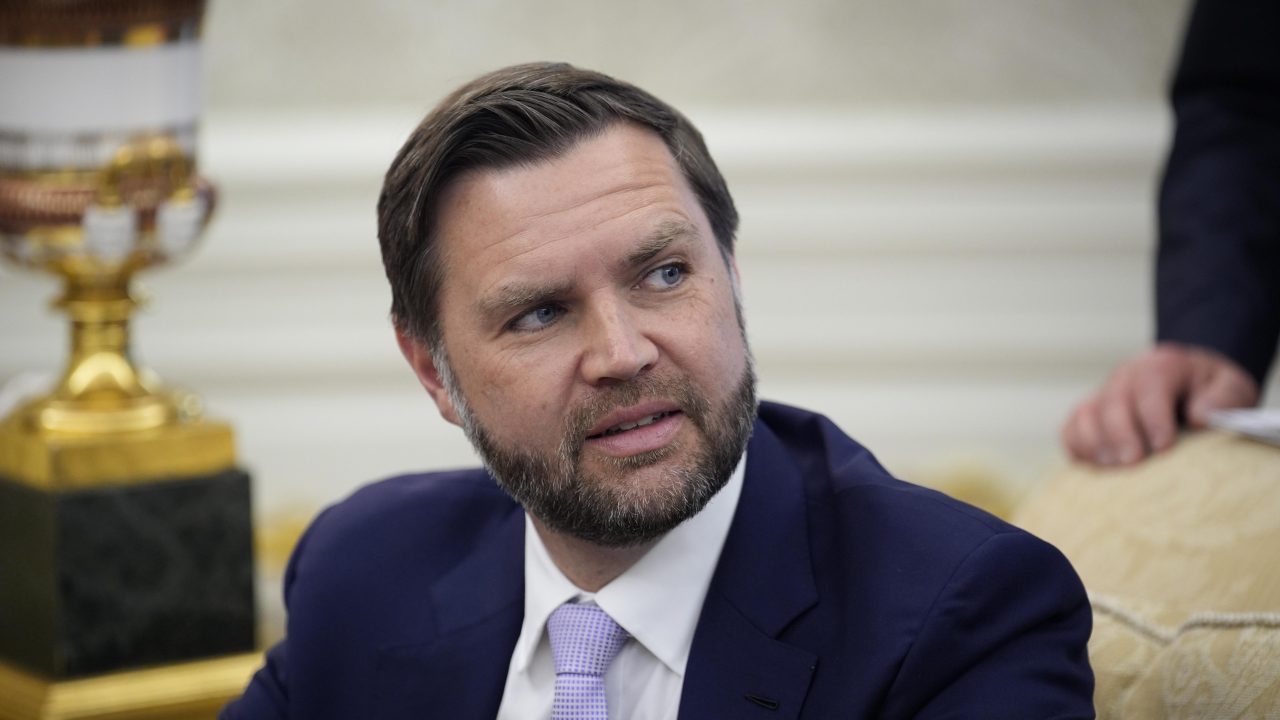
Caption: US Vice President JD Vance listens as US President Donald Trump meets with Mark Rutte, Secretary General of the North Atlantic Treaty Organization (NATO), in the Oval Office of the White House in Washington, DC, USA, 24 June 2026. EPA/YURI GRIPAS / POOL
Updated: July 6, 2026 - 07:02