 Edit
Von der Leyen faces renewed scrutiny over transparency and deleted messages
This time it's the European Ombudsman who finds maladministration in handling of sensitive communications with French President Macron
European Commission President Ursula von der Leyen is once again confronting accusations of insufficient transparency and procedural shortcomings at the highest levels of EU governance.
This latest controversy centers on the disappearance of text messages exchanged via the encrypted messaging app Signal between von der Leyen and French President Emmanuel Macron during critical negotiations over the EU-Mercosur trade agreement. While informal high-level communications are commonplace among leaders, the Commission’s prolonged delay in responding to a formal access-to-documents request has drawn sharp rebuke from the European Ombudsman, who has formally cited maladministration.
The case highlights deeper tensions surrounding digital record-keeping, accountability, and the balance between operational flexibility and public oversight in Brussels. It also revives memories of similar disputes, most notably the so-called Pfizergate affair involving von der Leyen’s text exchanges with Pfizer’s CEO during the COVID-19 pandemic. Together, these episodes paint a picture of a leadership style criticized for opacity, even as von der Leyen navigates her second term at the helm of the EU executive.
The Macron message and the 15-month delay
The story traces back to January 2024, when journalist Alexander Fanta submitted a formal request for access to a specific message from Macron to von der Leyen. According to reports, the French president had urged a pause in talks on the ambitious but contentious trade deal with the Mercosur bloc, comprising Argentina, Brazil, Paraguay, and Uruguay. Macron’s intervention came as negotiations approached a decisive phase, reflecting France’s strong reservations over environmental standards, agricultural impacts, and other concerns. The deal ultimately secured qualified majority approval early this year despite opposition and entered provisional force on 1 May.
For more than fifteen months, the Commission provided no substantive response to Fanta’s request. Only after a follow-up in May 2025 did officials reply, stating that the message no longer exists. The explanation cited the Signal app’s “disappearing messages” feature, which automatically deletes content after a set period. Von der Leyen’s office maintained that, at the time of receipt, neither the president nor her chief of staff believed there was a formal obligation to archive the exchange.
European Ombudsman Teresa Anjinho, Portugal’s former justice minister who succeeded the long-serving Emily O’Reilly in 2025, found this handling deeply problematic. Her investigation could not establish with certainty whether the message had been deleted before or after the initial access request. Nor was it clear whether Commission staff had actively searched for the document in early 2024 or only much later. Such ambiguities, Anjinho argued, undermine trust in the institution’s commitment to transparency.
Compounding the issue was the Commission’s internal disarray. The Secretariat-General failed to issue reminders or monitor progress on the request, effectively allowing it to languish untouched in the president’s office for over a year. Anjinho rejected the Commission’s suggestion that the matter could be considered “dormant” due to the journalist’s initial lack of follow-up, pointing to EU transparency regulations and case law that impose clearer obligations on the institution.
Broader patterns of secrecy and institutional pushback
This Mercosur-related episode does not stand in isolation. It echoes the landmark 2025 ruling by the European Court of Justice, which annulled the Commission’s refusal to release von der Leyen’s text messages with Pfizer CEO Albert Bourla. Those exchanges, which reportedly helped secure up to 1.8 billion doses of the Pfizer-BioNTech vaccine at a critical juncture in the pandemic, later fueled questions about pricing, critics noted the EU paid higher per-dose costs than some other buyers, and overall deal transparency. The court criticized the Commission for failing to provide a plausible explanation for not possessing the documents and for not adequately respecting EU access-to-documents rules.
The pattern has drawn sustained criticism from journalists, NGOs, and even some former commissioners. O’Reilly, in public remarks before stepping down, described a prevailing “elitist” culture within the Commission, where decision-makers withhold information under the assumption that citizens cannot be trusted with it. She highlighted repeated instances where her office’s recommendations on vaccine contracts and other matters were ignored, despite their legal grounding. Parliamentary discontent has also grown, with a cross-party group of 73 MEPs signing an open letter earlier in 2025 decrying delayed and superficial responses to formal questions.
Von der Leyen, widely praised for her crisis management during the pandemic and geopolitical challenges, continues to face accusations of a top-down approach that sidelines scrutiny. The use of ephemeral messaging tools like Signal, while convenient for sensitive diplomacy, creates loopholes that risk evading public accountability when policy-shaping discussions vanish without trace.
In her recommendations, Ombudsman Anjinho has called for systemic reforms. The Commission should establish robust procedures for monitoring access requests, particularly those involving the president’s office or individual commissioners. Crucially, all text and instant messages exchanged between heads of state, government ministers, and commissioners—especially those related to policies, activities, and decisions—must be preserved for a reasonable period to enable public scrutiny. Once a formal request arrives, relevant documents should be secured until the process concludes, allowing independent review by the Ombudsman or the Court of Justice.
The Commission has acknowledged the finding of maladministration on procedural delays but maintains it does not extend to the decision not to retain the message itself. Spokespeople have indicated a willingness to study the ruling and improve practices, though past experience suggests implementation can be slow.
As the EU grapples with complex trade deals, health emergencies, and geopolitical shifts, the stakes of transparency are high. Citizens and elected representatives rightly demand insight into how major decisions are reached. Ephemeral chats may offer short-term convenience, but they are in fact an official way of communication and cannot become a permanent shield against democratic oversight.
Sources: FocusEurope.it, Le Monde, Reuters, Politico
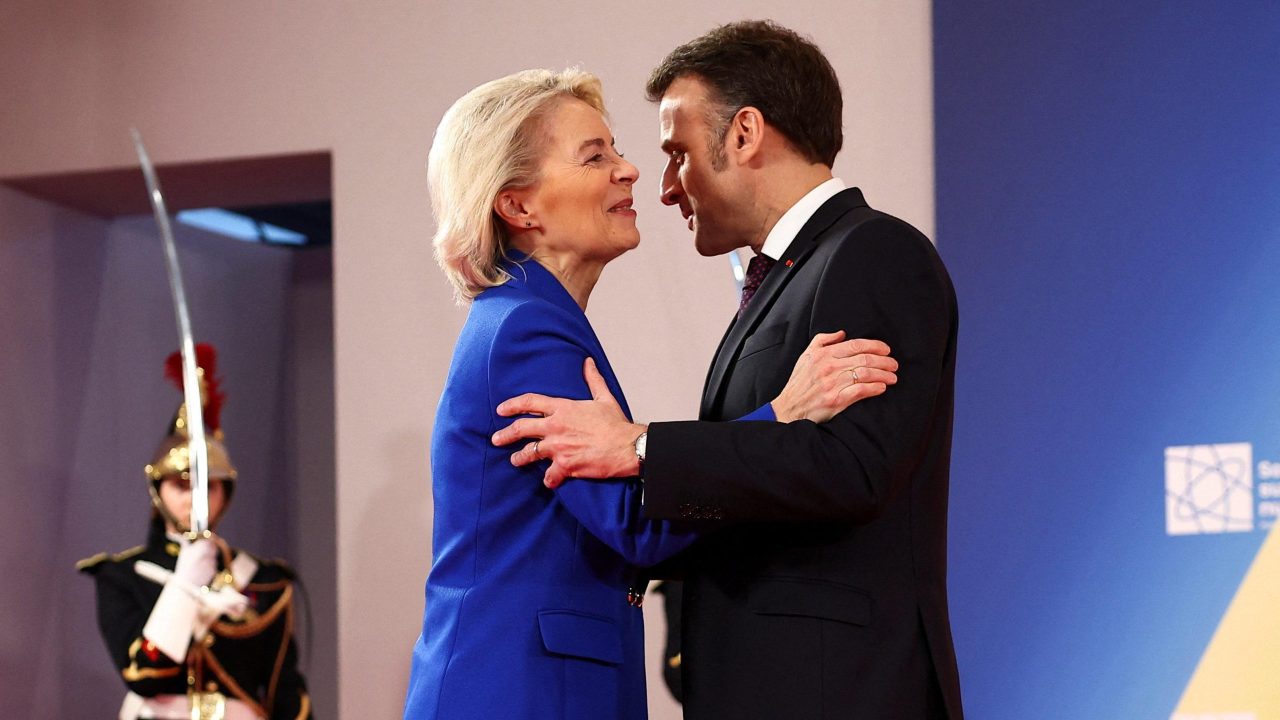
Caption: French President Emmanuel Macron welcomes European Commission President Ursula von der Leyen at the IAEA Nuclear Energy Summit in Paris, France, 10 March 2026. EPA/ABDUL SABOOR / POOL
Updated: June 9, 2026 - 12:20