 Edit
Lille chosen to host new EU Customs Authority – another blow to geographical balance in EU agency seats
Belgium, Croatia, Italy, Netherlands, Poland, Portugal, Romania, and Spain had competed fiercely for the prize
The Council and the European Parliament have selected Lille, France, as the seat of the future European Union Customs Authority (EUCA), the institutions announced on Wednesday.
The new authority, expected to employ around 250 staff, will coordinate and support national customs services across the EU. It forms a key part of the ongoing reform of the EU Customs Union, designed to handle surging trade volumes, the explosion of e-commerce, fragmented national systems, and new geopolitical challenges.
Nine member states had competed fiercely for the prize: Belgium (Liège), Croatia (Zagreb), France (Lille), Italy (Rome), Netherlands (The Hague), Poland (Warsaw), Portugal (Porto), Romania (Bucharest), and Spain (Málaga). The final decision was reached during an informal inter-institutional meeting at political level, when Lille defeated Rome in the third round of a run-off vote.
French President Emmanuel Macron was quick to express his satisfaction on X.
Félicitations à Lille qui accueillera le siège de la future autorité douanière de l’Union européenne – le fruit d’une formidable mobilisation collective.
C’est le choix d’une métropole ouverte et pleinement européenne, une fierté pour la France. Nous serons au rendez-vous… pic.twitter.com/REVJoy8SYD
— Emmanuel Macron (@EmmanuelMacron) March 25, 2026
This outcome continues a well-established pattern: when it comes to locating powerful or attractive EU agencies, considerations of geographical balance across the Union are routinely set aside in favour of other factors – such as proximity to Brussels, existing infrastructure, transport links, recruitment pools, and political influence.
Lille, located just 35 minutes from the Belgian capital by high-speed train and positioned at the heart of the European Metropolis, clearly benefited from these practical advantages. France, already home to several EU agencies and institutions, strengthens its position in the dense “Brussels–Paris–Luxembourg triangle” where many EU bodies cluster.
Eastern and Central European member states, despite repeated calls for a more equitable distribution of EU seats, once again came away empty-handed in this high-profile competition. Romania, which had actively promoted Bucharest and was the subject of an earlier EUalive report on the race, failed to secure the authority despite its strategic location on the EU’s eastern flank.
Romania enters crowded race to host powerful new EU customs authority
Critics argue that the repeated concentration of agencies in Western Europe undermines the EU’s commitment to cohesion and risks reinforcing perceptions of a two-speed Europe. While newer member states have received some agencies in the past (such as Frontex in Warsaw or eu-LISA in Tallinn), the most prest, igious or operationally central ones continue to gravitate toward the original EU-15 core.
The location decision will now be formally incorporated into the broader customs reform regulation, which is in its final negotiation stages. The exact start date of operations for the EUCA remains to be agreed.
In practice, the selection of Lille confirms what many observers have long noted: in the competition to host EU agencies, “fair geographical balance” remains more of a rhetorical goal than a decisive criterion. Political weight, logistical convenience, and institutional proximity continue to prevail.
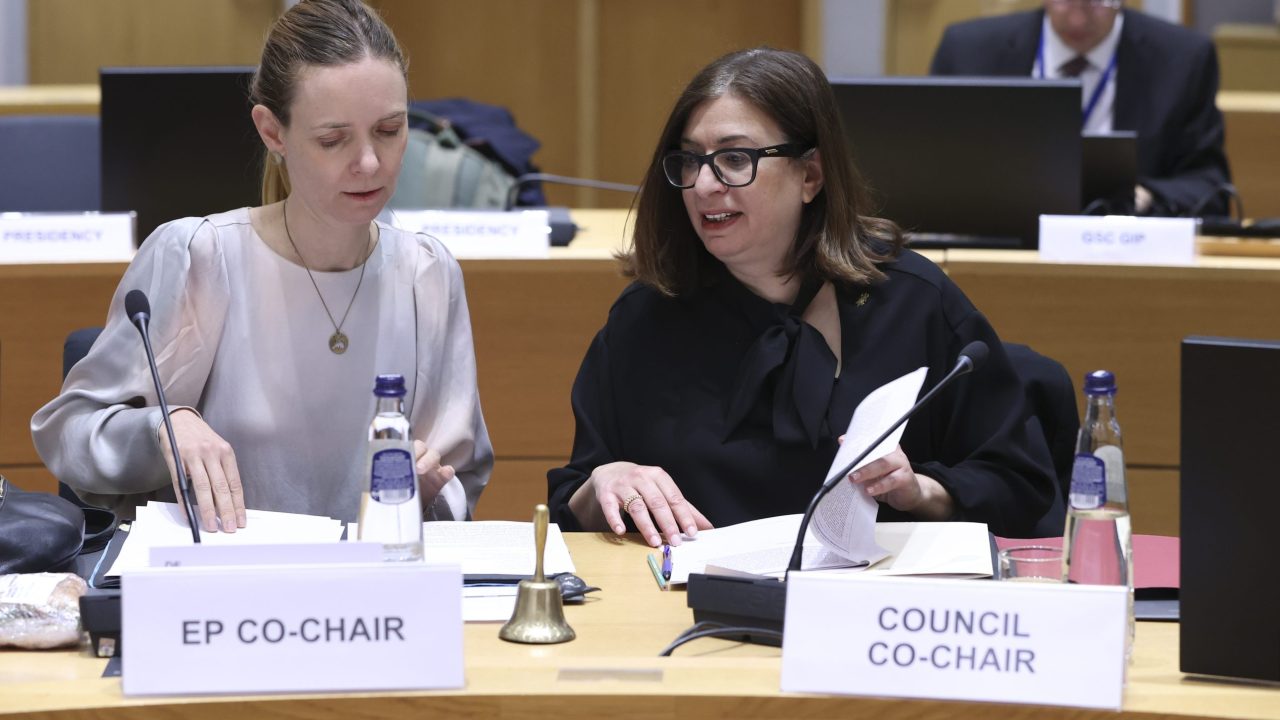
Caption: Interinstitutional meeting on the seat of the EU Customs Authority, Brussels, 25 March 2026 [Council Newsroom]
Updated: March 25, 2026 - 16:45