 Edit
Mobilisation fuels boom in guardianship appointments for deferments in Ukraine
Applications to declare individuals legally incapacitated have multiplied since the full-scale war began, raising questions about corruption to avoid military service
Ukrainian law enforcement authorities have issued more than 260 suspicions to individuals who obtained deferments from military service or early discharge using forged medical documents claiming they were caring for people with disabilities. The cases emerged during “Operation Guardian”, launched in 2025, according to Ukraine’s National Police in response to a request from the investigative unit of public broadcaster Suspilne.
These criminal proceedings represent only part of a broader trend of attempts to avoid mobilisation during wartime. While police investigate falsified medical certificates, journalists examined a fully legal mechanism that can also exempt men from service: being appointed guardian of a legally incapacitated person. Under Ukrainian law, a person can only be declared incapacitated and assigned a guardian through a court decision.
Data from Ukraine’s judicial portal show a sharp increase in such cases since the start of Russia’s full-scale invasion. Between 2021 and 2025, the number of applications to recognise individuals as incapacitated and appoint guardians rose by 2.5 times, despite the country’s population shrinking due to territorial losses and wartime migration.
Courts reviewed 3,855 such applications in 2021. By 2024 the number had surged to 14,628, before declining to 9,581 applications filed in 2025. The number of court-approved guardianships also rose significantly, from 2,805 in 2021 to nearly 7,900 in 2025.
The largest increases in court decisions declaring people legally incapacitated were recorded in western regions including Chernivtsi, Lviv, Zakarpattia, Ivano-Frankivsk and Ternopil, according to data from the Unified State Register of Court Decisions. These regions have also experienced major demographic changes due to internal displacement. By December 2025, more than 72,000 internally displaced persons had registered in Chernivtsi region, over 202,000 in Lviv, nearly 124,000 in Zakarpattia, almost 110,000 in Ivano-Frankivsk and more than 63,000 in Ternopil.
Courts approve most applications, refusals remain relatively rare. In 2025 courts rejected 85 such requests in Chernivtsi region, 128 in Lviv, 29 in Zakarpattia, 86 in Ivano-Frankivsk and 48 in Ternopil.
Data from the National Social Service of Ukraine also indicate a major increase in the number of legally incapacitated adults. Between 2021 and 2025, the number of people declared incapacitated tripled, while the number of guardians appointed doubled. Authorities said they do not track whether guardians are men of mobilisation age.
A closer look at court decisions suggests a shift in who is applying to become guardians. Before the war, guardians were usually women. Since the full-scale invasion, however, the majority of applicants appear to be men.
One example comes from the Drohobych district court in the Lviv region, where guardianship rulings have increased sevenfold since the war began. In 2021 the court issued six such decisions, all appointing women as guardians. By 2025 the number had risen to 44, with women appointed in only four cases. In the remaining cases, guardians were men, including sons, grandsons, brothers and more distant relatives.
In one July 2025 case, the court granted guardianship over an 80-year-old man to his cousin’s grandson. The decision cited the fact that the man’s direct relative, the applicant’s father, worked full time as an excavator operator and was already caring for his disabled wife. The applicant, a private entrepreneur with a flexible schedule, was considered by the guardianship council and the court to be better able to provide daily care. According to case data, the guardian was born in 1996 and therefore of mobilisation age.
Other cases involve relatives by marriage. In one ruling from November 2025, guardianship of a 78-year-old man was granted to the husband of his granddaughter after his wife, daughter and granddaughter all submitted written statements saying they could not provide care due to living abroad, health issues or childcare responsibilities. The court appointed the 28-year-old applicant as guardian because he lived with the elderly man and supported him.
In total, the Drohobych court appointed 13 grandsons, 14 sons, three nephews, three brothers and seven other male relatives as guardians in 2025.
Courts have increasingly begun scrutinising such applications more closely. In a May 2025 ruling, Ukraine’s Supreme Court stated that during martial law authorities must examine whether guardianship appointments could constitute abuse of legal rights to avoid mobilisation.
Lower courts have already rejected several applications on those grounds. In one case in the Ivano-Frankivsk region, a man applied for guardianship over his father 11 days after failing to appear following a mobilisation summons. The court refused the request, noting that other relatives had no valid legal grounds to decline caregiving responsibilities.
Judges have also pointed to the surge in such cases. The Halych district court in Ivano-Frankivsk reported receiving only 17 applications of this type between 2019 and 2021. Between 2022 and 2024, during wartime, the number increased to 170.
Legal experts say the process itself makes widespread abuse difficult. Roman Likhachov, a military lawyer at the Veteran Support Centre, said courts now closely examine each request and sometimes involve recruitment offices or military units as third parties.
Declaring someone legally incapacitated requires a psychiatric examination, which often involves long waiting lists. In some cities, the process can take up to a year. Courts also require medical records or proof of previous psychiatric treatment before ordering such an examination.
Even when medical experts confirm mental illness, they may conclude that the person remains legally capable of understanding their actions. In those cases courts refuse to declare the person incapacitated and therefore deny guardianship.
According to Olena Temchenko, a human rights advocate from the Ukrainian Human Rights Initiatives organisation, only courts can deprive a person of legal capacity. Applications may be submitted by close relatives, guardianship authorities or psychiatric institutions.
She said the rapid rise in such cases could have multiple explanations. The war has worsened mental health problems, but the increase may also reflect attempts by some individuals to avoid fulfilling their duty to defend the country.
The original article in Ukrainian by EUalive’s partner Suspilne can be found here.
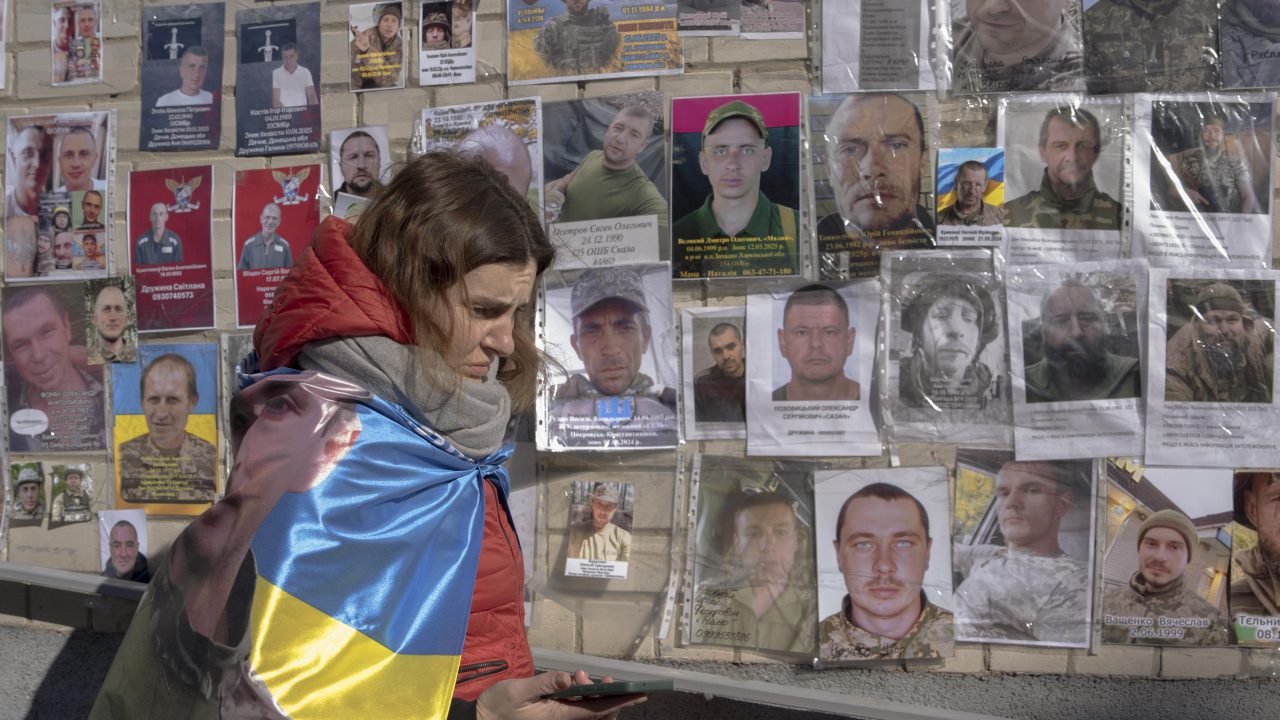
Caption: Ukrainians attend a prisoner swap at an undisclosed location in Ukraine, 6 March 2026. EPA/ANDREW KRAVCHENKO
Updated: March 16, 2026 - 13:31