 Edit
Polish President signals potential shift toward nuclear capability amid Russian threats
Karol Nawrocki dismissed concerns about Moscow's potential reaction, stating bluntly that "Russia can react aggressively to anything"
In a stark reflection of deepening security anxieties on NATO’s eastern flank, Polish President Karol Nawrocki has publicly endorsed the pursuit of an independent nuclear deterrent for Poland, citing the country’s precarious position “on the brink of armed conflict” with an “aggressive, imperial” Russia.
Speaking in a Sunday interview with Polsat News, Nawrocki described himself as “a great supporter of Poland joining a nuclear project.” He emphasized the need to develop “Polish nuclear potential” while respecting international regulations, including those under the Nuclear Non-Proliferation Treaty (NPT).
“This is the path we should take,” he said. “We must work toward this goal so that we can begin the work.”
The remarks come as Poland grapples with Russia’s ongoing war in neighboring Ukraine and persistent threats against Warsaw. Nawrocki dismissed concerns about Moscow’s potential reaction, stating bluntly that “Russia can react aggressively to anything.”
Poland, a signatory to the NPT since 1969, is legally barred from developing nuclear weapons as a non-nuclear-weapon state. Any move toward an indigenous program would require withdrawal from the treaty or a major reinterpretation – steps that could unravel decades of global non-proliferation efforts.
The statement arrives at a pivotal moment for international nuclear stability. Just days earlier, on February 5, the New Strategic Arms Reduction Treaty (New START) – the last bilateral pact limiting U.S. and Russian strategic nuclear arsenals – expired without replacement. For the first time since the early 1970s, the world’s two largest nuclear powers face no binding caps on deployed warheads, raising fears of an unconstrained arms race. Analysts warn that the treaty’s end, combined with Russia’s suspension of inspections and China’s rapid arsenal growth, could erode confidence in existing deterrence frameworks.
In Europe, where U.S. extended nuclear guarantees have long underpinned NATO security, doubts are mounting. Recent shifts in transatlantic relations have prompted discussions of greater European autonomy in nuclear matters. French President Emmanuel Macron has floated extending France’s “nuclear umbrella” to EU partners, while German leaders have explored closer cooperation with Paris on deterrence.
Merz eyes European nuclear shield in call for transatlantic reset
Nawrocki’s comments push the debate further, suggesting some Eastern European states may no longer rely solely on alliance assurances
.Experts caution that proliferation pressures are building across multiple regions. In Asia, allies like South Korea and Japan have voiced similar concerns amid North Korean threats and perceived U.S. unreliability. In the Middle East, Saudi Arabia has hinted at matching Iranian capabilities if needed.
A Polish nuclear push, if pursued, could trigger a cascade effect, further straining the NPT regime – already weakened by North Korea’s withdrawal and tests.
Nawrocki stopped short of outlining a timeline or concrete steps, acknowledging uncertainty about feasibility. Yet his words underscore a broader reevaluation: with bilateral arms control in tatters and geopolitical tensions rising, the post-Cold War non-proliferation consensus appears increasingly fragile.
For now, Poland’s leadership appears to be signalling readiness to explore all options for national survival in an era of heightened nuclear risks. Whether this leads to diplomatic initiatives, alliance reforms, or unilateral moves remains uncertain – but the president’s candid advocacy marks a notable escalation in Europe’s nuclear discourse.
With Polsat News and European Pravda.
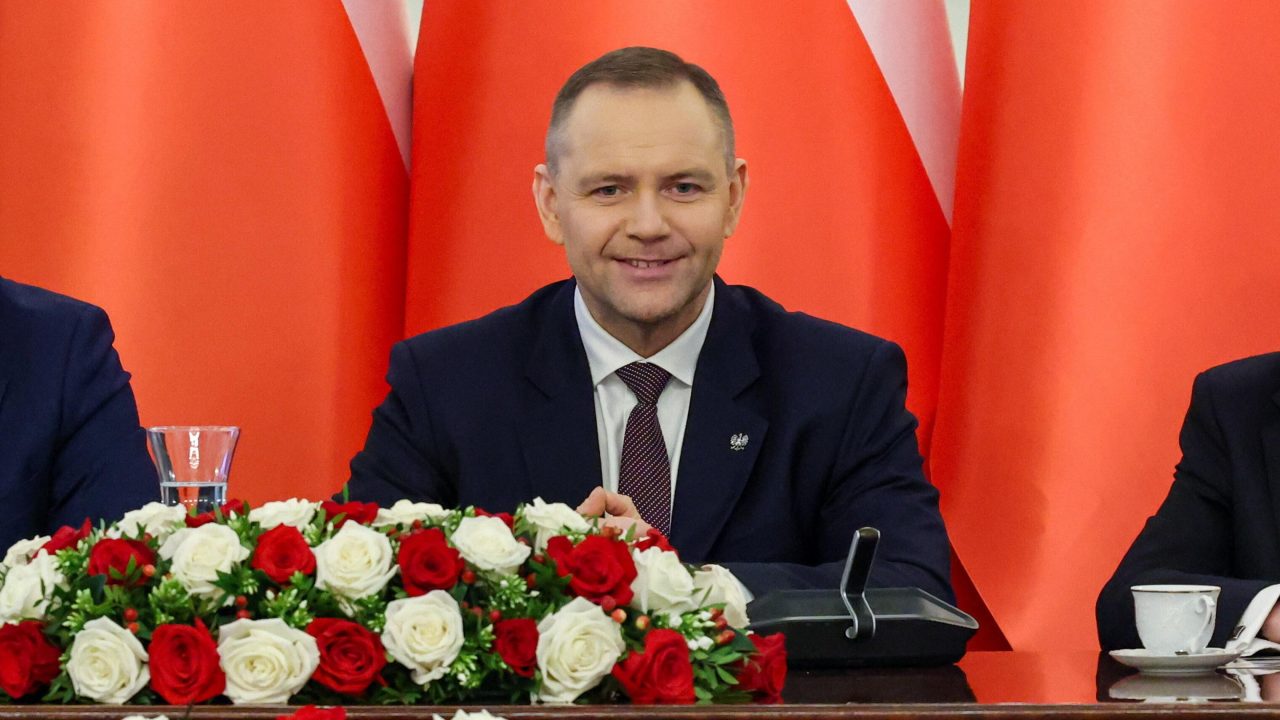
Caption: Polish President Karol Nawrocki attends a meeting with the National Commission of ‘Solidarity’ (NSZZ Solidarnosc) trade union at the Presidential Palace in Warsaww, Poland, 12 February 2026. EPA/ALBERT ZAWADA
Updated: February 16, 2026 - 07:15