 Edit
Merz eyes European nuclear shield in call for transatlantic reset
He was followed by Macron, who said it was time that Europe was more assertive and prepared itself with a stronger security architecture
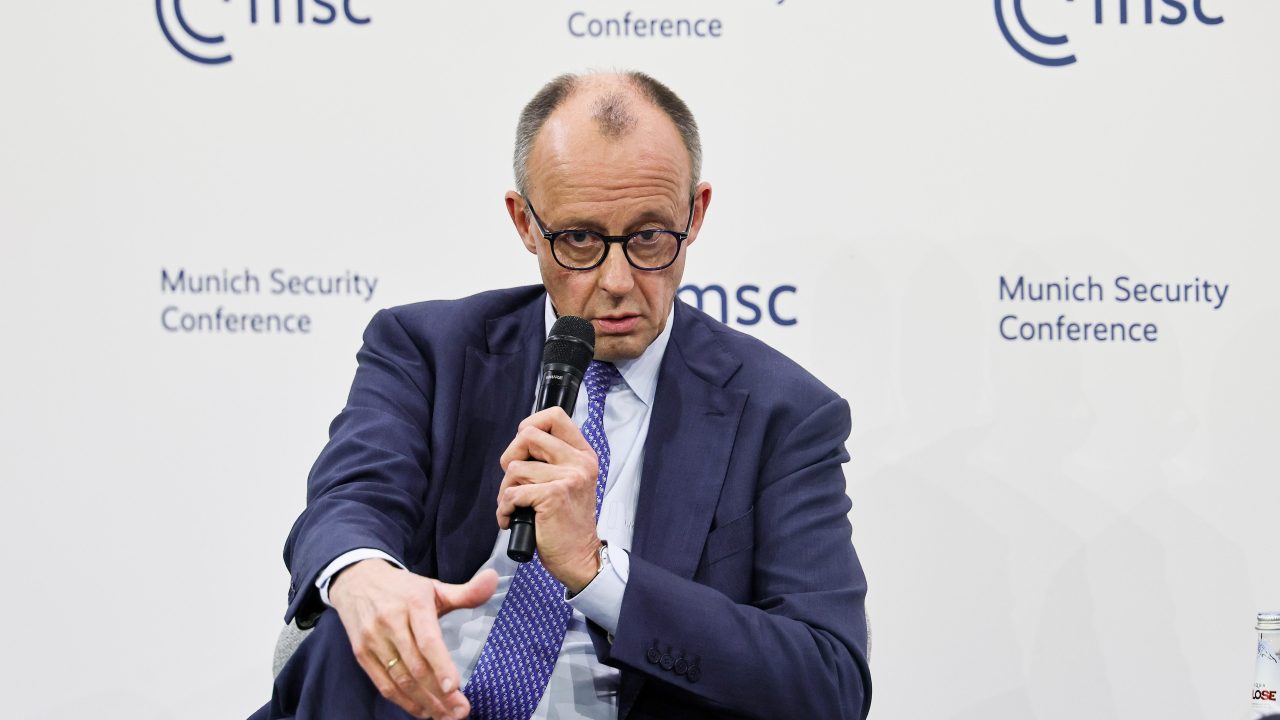
At the 62nd Munich Security Conference (MSC) on Friday, German Chancellor Friedrich Merz opened the proceedings with a bold call for Europe to develop its own nuclear deterrent, framing it as essential to building a “strong, self-supporting European pillar” within NATO amid uncertainties in the transatlantic relationship under U.S. President Donald Trump.
In his keynote speech, Merz disclosed that Germany had initiated confidential talks with French President Emmanuel Macron on a joint European nuclear shield.
“I have begun initial talks with French President Emmanuel Macron on European nuclear deterrence,” Merz stated, emphasizing that this would not mean abandoning NATO but rather reinforcing Europe’s role.
“We’re not doing this by writing NATO off. We’re doing it by building a strong, self-supporting European pillar within the alliance.” He warned that the old global order “no longer exists,” and even the United States “will not be powerful enough to go it alone” in an era of great-power rivalry, urging Washington to “repair and revive trust” with its allies.
Merz’s remarks reflect growing European anxiety over potential U.S. retrenchment, including Trump’s threats to allies’ security commitments and his focus on domestic priorities. The proposal revives long-standing debates on extending France’s nuclear umbrella – its “force de frappe” – to cover other European nations, a concept Macron himself floated in recent years.
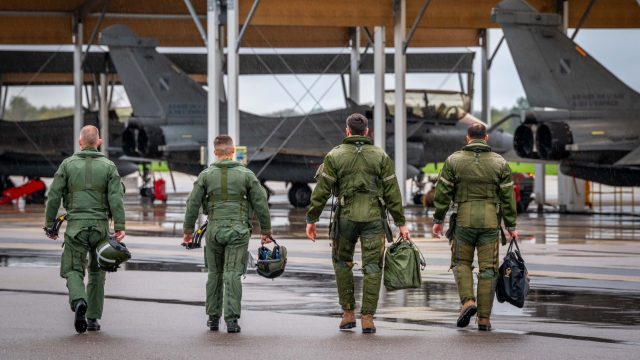
The French nuclear deterrent consists of approximately 290 operational warheads delivered by two complementary systems: four Triomphant-class ballistic missile submarines (SSBNs) equipped with M51 submarine-launched ballistic missiles (SLBMs) carrying multiple independently targetable re-entry vehicles (MIRVs), and air-launched nuclear cruise missiles (ASMP-A) carried by Rafale fighter aircraft based on land and on the aircraft carrier Charles de Gaulle.
France’s nuclear doctrine is based on strict sufficiency and strict sufficiency, meaning it maintains the minimum arsenal needed to inflict unacceptable damage on any aggressor, and it explicitly does not rule out the first use of nuclear weapons in extreme circumstances of vital interests being threatened, including in response to conventional threats that could escalate to existential levels.
Merz stressed no “zones of differing security” in Europe, signalling a unified approach to counter Russian threats while addressing the expiration of arms control treaties like New START.
French President Emmanuel Macron, speaking later in the day, delivered what many interpreted as a direct reply to Trump’s Davos remarks earlier in 2026 (where he questioned Europe’s defence spending and implied conditional protection). Macron dismissed notions of European decline, insisting the continent must “learn to become a geopolitical power” to control its destiny.
“This is the right time for audacity. This is the right time for a strong Europe,” he declared. “Europe has to become a geopolitical power… It’s ongoing, but we have to accelerate.”
He advocated long-term strategic thinking, including deep-strike capabilities, stronger defence industries, and a reassessment of how France’s nuclear doctrine could integrate into Europe’s security architecture. “We are conceiving… how we can articulate our national doctrine with special cooperation, common security interest,” Macron said, teasing a forthcoming detailed speech on the topic.
Macron’s emphasis on European strategic autonomy – defence, technologies, and de-risking from major powers – aligned with Merz’s vision but highlighted France’s leadership role as the EU’s only nuclear power. He pushed back against criticism of Europe’s “decaying” state, defending its handling of disinformation, social media excesses, and the need for Europe to be “at the table” in negotiations, including arms control with Russia.
Macron stated that after the Ukraine war, Europe would need to define rules of coexistence with Russia to limit escalation risks, essentially proposing a modus vivendi for post-conflict relations.
The speeches set a tone of pragmatic realism at the MSC, where leaders from over 70 countries, including U.S. Secretary of State Marco Rubio and Ukrainian President Volodymyr Zelenskyy, address transatlantic strains, Ukraine support, Middle East conflicts, and technological security risks.
Caption: German Federal Chancellor Friedrich Merz delivers a speech during the 62nd Munich Security Conference (MSC) at the hotel ‘Bayerischer Hof’, in Munich, Germany, 13 February 2026. The 62nd Munich Security Conference, running from 13 to 15 February 2026, is expected to host around 50 world leaders. EPA/RONALD WITTEK
Updated: February 14, 2026 - 07:30