 Edit
Ankara meeting reinforces commitment to calm Greek-Turkish relations
The meeting reflects a pragmatic approach amid geopolitical shifts - Russia's war in Ukraine, Middle East instability, and U.S. policy changes under President Trump
In a significant diplomatic development amid global turbulence, Greek Prime Minister Kyriakos Mitsotakis met Turkish President Recep Tayyip Erdoğan in Ankara on Wednesday, marking their first bilateral encounter in over 21 months since May 2024.
The visit, part of the sixth session of the Greece-Turkey High-Level Cooperation Council – the first in nearly two years – underscored both sides’ determination to sustain the “theory of calm waters” in bilateral ties, a doctrine that emerged after earlier fluctuations but has held firm without major crises.
The one-and-a-half-hour tête-à-tête between the leaders was described by both as particularly positive. Before their joint press statements, the two countries exchanged six memoranda of understanding, covering areas such as trade, energy, education, and cultural cooperation. These agreements highlight ongoing efforts to build a positive agenda and implement confidence-building measures, even as core disputes persist.
In their remarks, Erdoğan and Mitsotakis emphasized structured dialogue and diplomacy as the foundation for progress. Erdoğan portrayed Mitsotakis as a “valued friend” and stressed that the problems between Greece and Turkey are “not insoluble” when approached through international law and good-neighbourly principles. He highlighted regional issues like Gaza and Syria, calling for broader contextual understanding.
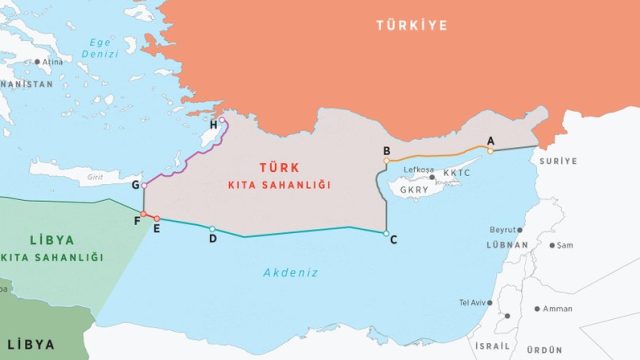
Mitsotakis, meanwhile, welcomed the improvement in relations, noting concrete results such as a 60% reduction in migration flows thanks to bilateral cooperation. He called for the complete removal of threats between the two nations and reiterated that the delimitation of maritime zones in the Aegean and Eastern Mediterranean remains the sole dispute amenable to referral to the International Court of Justice under the United Nations Convention on the Law of the Sea (UNCLOS).
A key highlight was Mitsotakis’s reference to the Cyprus problem. He described UN Secretary-General António Guterres’s recent initiatives as creating a “window of opportunity” to resume substantive negotiations from where they broke down at Crans-Montana in 2017. Any revived process, he insisted, must adhere strictly to UN Security Council resolutions, which call for a bizonal, bicommunal federation. Erdoğan made no direct mention of Cyprus in his public comments, though the leaders confirmed they had openly discussed their positions on the Aegean, Eastern Mediterranean, and related matters.
The Cyprus issue has remained frozen since the 2017 collapse, exacerbated by divergent visions: Greek Cypriots advocate reunification under a federal model, while Turkish Cypriots and Ankara push for a two-state solution or sovereign equality. Recent UN efforts to restart talks have faced hurdles, including Ankara’s reported resistance to recording past convergences or convening informal five-party meetings.
Despite these enduring differences, both leaders reaffirmed their commitment to de-escalation and dialogue. The meeting reflects a pragmatic approach amid geopolitical shifts – Russia’s war in Ukraine, Middle East instability, and U.S. policy changes under President Trump – prioritising stability in the Eastern Mediterranean over confrontation.
While no breakthroughs on sensitive issues were expected or achieved, the Ankara talks signal continued momentum in Greek-Turkish relations, with both sides invested in keeping channels open to avoid escalation. As Mitsotakis noted, “We can move forward” – a cautious optimism that could pave the way for further progress if sustained.
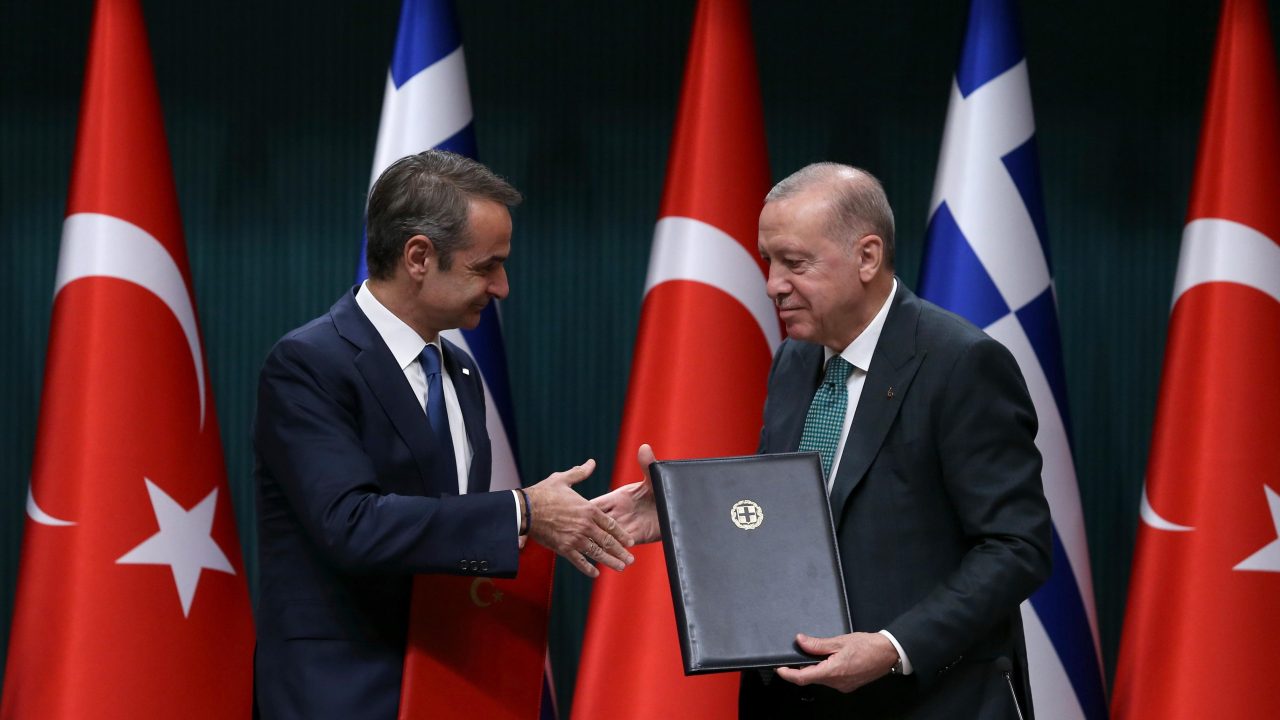
Caption: Turkish President Recep Tayyip Erdogan (R) and Greek Prime Minister Kyriakos Mitsotakis (L) exchange documents during a joint press conference following their meeting in Ankara, Turkey, 11 February 2026. EPA/NECATI SAVAS
Updated: February 12, 2026 - 10:47