 Edit
End of an era: Moldova initiates legal withdrawal from the Commonwealth of Independent States
The government has begun the legal process of denouncing the three foundational documents underpinning Moldova's membership in the Russia-led organization
Moldova is advancing toward a definitive break from its post-Soviet ties by initiating the formal withdrawal from the Commonwealth of Independent States (CIS), a Russia-led organization formed in 1991 following the collapse of the Soviet Union.
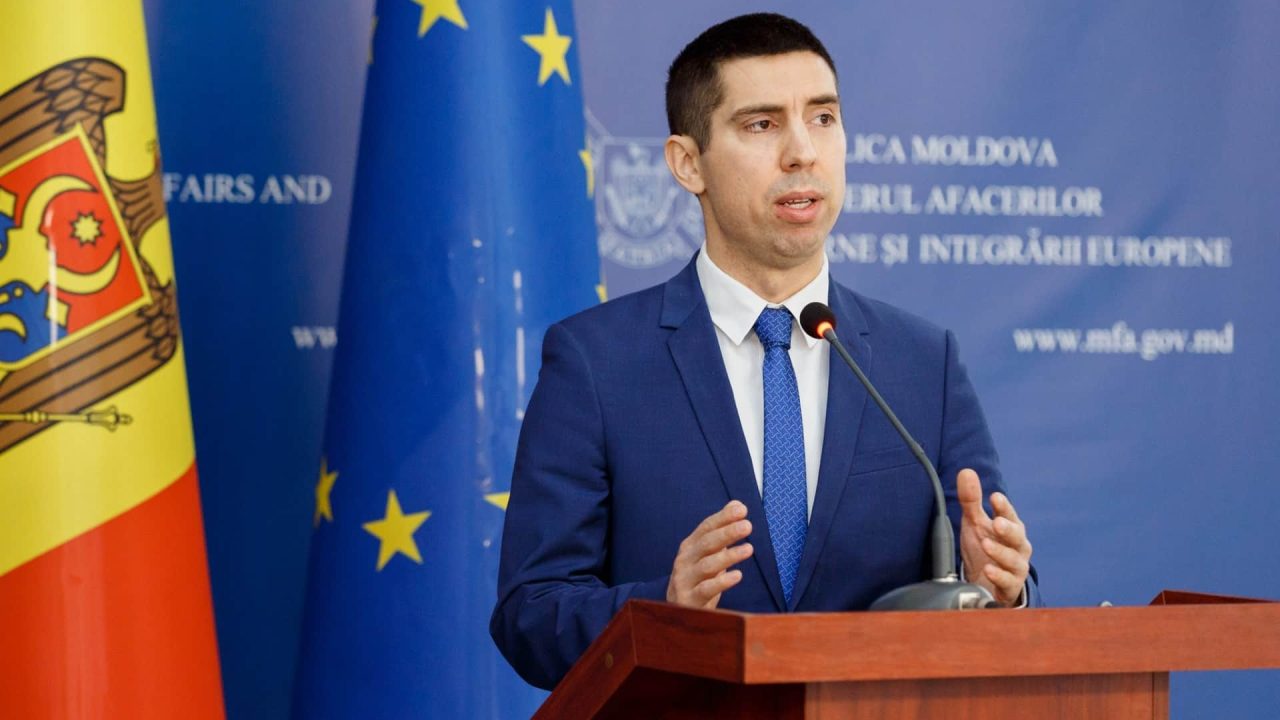
Deputy Prime Minister and Foreign Minister Mihai Popșoi announced on 19 January in an interview with Radio Moldova that the government has begun the legal process of denouncing the three foundational documents underpinning Moldova’s membership in the CIS: the Agreement on the Establishment of the Commonwealth of Independent States (signed in Minsk on 8 December 1991), its annex (dated 22 December 1991), and the CIS Charter (signed on 22 January 1993). Once these denunciations are complete, Moldova will no longer be a member of the organization, even from a strictly legal perspective.
Popșoi explained that although Moldova has de facto suspended its participation in CIS activities for several years – effectively since around 2023, the country remained a member under international law until now. The denunciation of these core agreements will resolve that ambiguity, allowing Chisinau to state clearly that it has exited the bloc. The government aims to finalize its internal approval procedures by mid-February 2026, after which the documents will be submitted to Parliament for ratification and final approval.
This step fits into a broader pattern of reorienting Moldova’s foreign policy away from post-Soviet structures and toward European integration. The process gained momentum after Russia’s full-scale invasion of Ukraine in February 2022, which prompted Moldova, sandwiched between Ukraine and EU member Romania, to accelerate its shift. In March 2022, the country submitted its application for EU membership, received candidate status in June 2022, and formally opened accession negotiations in June 2024. It has long maintained an Association Agreement with the EU, including a Deep and Comprehensive Free Trade Area, in force since 2016.
Since 2022, Moldova’s authorities have systematically reviewed and denounced CIS agreements deemed outdated, inapplicable, or incompatible with its European aspirations. Of the 283 agreements Moldova signed within the CIS framework over the years, 71 have already been terminated, with around 60 more in the process of denunciation. Popșoi emphasized that Chisinau intends to retain only those agreements that provide tangible benefits to citizens and do not conflict with EU commitments.
The move aligns with the pro-European stance of President Maia Sandu and her Party of Action and Solidarity, which secured re-election for Sandu in 2024 and maintained a parliamentary majority. It also follows related actions, such as the Moldovan Parliament’s termination at the end of 2025 of the cultural agreement with Russia, leading to the closure of the Russian Center for Science and Culture (often referred to as the “Russian House”) in Chisinau. Moldova’s Minister of Culture described the center as a front for activities that undermined the country’s sovereignty.
Sandu has denounced Russia’s invasion of Ukraine and accused the Kremlin of trying to subvert her government. In September 2025, Moldovan authorities announced that they had conducted 250 searches and detained 74 individuals as part of an investigation into a Russian-backed conspiracy to incite “mass unrest.” Moldovan police stated that the plot to destabilize the country was “coordinated by the Russian Federation through criminal elements.” Sandu accused Russia of paying “hundreds of people” to foment instability in Moldova ahead of upcoming parliamentary elections.
Just as Montenegro and Albania, Moldova is considered as a front-runner on its way to EU accession. With a population of approximately 2.4 million, nestled between Romania and Ukraine, the country is increasingly the target for Russian hybrid warfare, including aggressive disinformation campaigns.
EU internally explores limited accession for Ukraine, Moldova, and Western Balkans
The CIS, which includes nine full members (Armenia, Azerbaijan, Belarus, Kazakhstan, Kyrgyzstan, Moldova, Russia, Tajikistan, and Uzbekistan) and one associate member (Turkmenistan), was originally intended to foster voluntary cooperation among former Soviet republics, excluding the Baltic states. Georgia withdrew in 2009, and Ukraine never fully ratified the charter before ceasing participation in its bodies in 2018 amid Russian aggression. Georgia is no longer a member of CIS because it formally withdrew in 2009, following the Russo-Georgian War of August 2008.
While the withdrawal marks a symbolic and legal milestone in Moldova’s pivot toward the West, analysts note it will not sever all bilateral ties with former Soviet states. Moldova is expected to pursue relations on a case-by-case basis where mutually beneficial.
The decision has drawn criticism from pro-Russian opposition figures, including former President Igor Dodon, who called it unacceptable. Nevertheless, it underscores Moldova’s determination to clarify its geopolitical alignment amid ongoing regional tensions.
Sources: Nordnews.md, Radio Moldova, Reuters
Moldovan President makes headlines with comment on reunification with Romania
Caption: Deputy Prime Minister and Foreign Minister Mihai Popșoi announced on 19 January 19 in an interview with Radio Moldova that the government has begun the legal process of denouncing the three foundational documents underpinning Moldova’s membership in the CIS. /Nordnews.md/
Updated: January 20, 2026 - 17:37