Edit
Zapad drills begin as NATO watches its nuclear simulations with concern
The drills will be held at training grounds in both Belarus and Russia, and will also include the Oreshnik hypersonic missile
Russia and Belarus have launched their joint Zapad-2025 military exercises, which this year include nuclear simulations and the newly deployed Russian-made intermediate-range hypersonic Oreshnik ballistic missile, raising fears of potential offensive intent among NATO allies. The manoeuvres come just two days after Poland accused Moscow of escalating tensions by violating its airspace with drone swarms.
“The joint strategic manoeuvres of the Russian and Belarusian armies have begun,” the Russian defence ministry said.
The Zapad drills are taking place as Russian forces make slow advances along the stretched frontline in Ukraine while intensifying air strikes on Ukrainian cities.
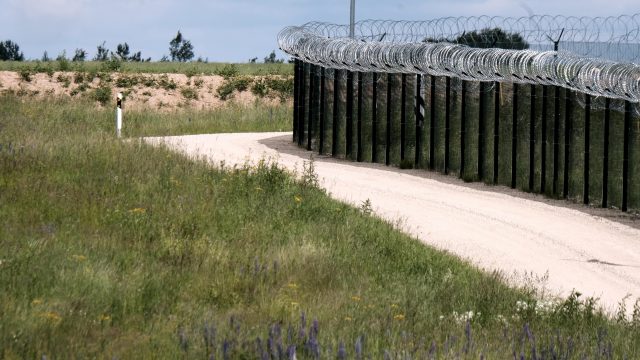
NATO’s eastern flank members bordering Belarus – Poland, Lithuania and Latvia – are on heightened alert over the exercises, which Belarus said will be held near Barysaw, a city east of the capital Minsk.
All three neighboring countries have stepped up security measures ahead of the manoeuvres, with Poland ordering the full closure of its border with Belarus for the duration of the drills.
Polish Prime Minister Donald Tusk warned of “critical days” for his country, noting that Poland is closer to “open conflict” than at any time since the Second World War. His comments came after Polish and allied NATO fighter jets were scrambled on Wednesday morning to intercept Russian drones flying into Polish airspace.
“These are planned exercises, not directed against anyone,” Kremlin spokesman Dmitry Peskov said, dismissing Warsaw’s claims that the drills amount to an “aggressive” show of force.
But Ukrainian President Volodymyr Zelenskyy also sounded the alarm over Moscow’s intentions.
“The significance of such actions by Russia is definitely not defensive and is directed not only against Ukraine,” he said in Kyiv.
The Zapad drills will continue until 16 September and will be held at training grounds in both Belarus and Russia.
“The purpose of the training is to work out the joint actions of Belarusian and Russian troops within the framework of ensuring the military security of the Union State and readiness to repel possible aggression,” Minsk said in an official statement.
Belarusian news agency BelTA reported that key elements of the training focus on “improving command and staff skills in the management of troops during the repulsion of aggression, as well as working out joint actions to neutralise threats and stabilise the situation on the borders of the Union State”.
“Zapad-2025” is described as a planned event, preceded by a series of preparatory manoeuvres in both countries. Exercises in Belarus are taking place either in the country’s interior or in its eastern regions.
Oreshnik and the potential offensive intent?
On 13 August Reuters reported that the upcoming Russian-Belarusian military exercises Zapad-2025 will include simulations involving nuclear weapons and the Russian-made intermediate-range hypersonic Oreshnik missile.
Belarusian Defense Minister Viktor Khrenin confirmed that the drills will focus on “planning the use” of both nuclear capabilities and the Oreshnik system as part of a “strategic deterrence” against what they claim is increased NATO presence near their borders.
The Oreshnik missile, first used in Ukraine in November 2024, is an intermediate-range ballistic missile with a reported range exceeding 3,000km. It can carry both conventional and nuclear warheads and reach speeds of up to Mach 11. Its unpredictable trajectory makes it particularly challenging for existing NATO air defence systems like Patriot or SAMP/T. Russia claims the missile entered serial production in 2025.
The inclusion of these strategic assets marks a significant escalation. Previous Zapad exercises, notably Zapad-2021, have had tangible consequences—that exercise preceded Russia’s full-scale invasion of Ukraine. Ukrainian officials have confirmed the arrival of Russian units but report no immediate change in the security situation.
While Belarus frames the exercises as a defensive response to NATO drills, their scale, potentially involving up to 150,000 troops, and the integration of strategic strike systems have intensified concerns among Ukraine and NATO’s eastern members about a potential offensive intent.
Sikorski in Kyiv
Meanwhile, Polish Foreign Minister and Deputy Prime Minister Radosław Sikorski arrived in Kyiv on Friday.
Marking the visit, Ukrainian deputy foreign minister Andriy Sybiha wrote on social media platform X that, against the backdrop of Russia’s escalating terror against Ukraine and provocations against Poland, the two countries are “standing firmly together.”
Sources: European Pravda, Reuters, RFE/RL. Edited by k.n.
Caption: File photo. Belarussian tanks in action during the joint Russia-Belarus strategic military exercises Zapad 2017, at the Borissov training range in Belarus, 20 September 2017. EPA/TATIANA ZENKOVICH
Updated: September 12, 2025 - 10:03