 Edit
What follows after the U.S.-brokered release of prisoners from Belarus?
Progress could offer Washington a tool of soft pressure on Moscow. Failure, however, could once again freeze the dialogue
Belarusian strongman Alexander Lukashenko has moved to release what he considers his most valuable hostages, by freeing 123 political prisoners in the largest and most high-profile such move carried out by his regime to date.
The decision, announced on 13 December, marks the third wave of prisoner releases secured through mediation by the current administration of U.S. President Donald Trump. It also represents a significant escalation compared to earlier steps, both in scale and in political symbolism.
The first breakthrough came on 21 June, when U.S. General Keith Kellogg became the first senior American official in years to visit Minsk. That visit was widely seen as a test of the waters: in exchange for a partial diplomatic opening, Lukashenko agreed to release 14 political prisoners. At the time, the Belarusian leader made clear that any further concessions would depend on reciprocal moves by Washington.
A second release followed on 11 September, when 51 political prisoners were freed. In return, the United States lifted some sanctions, allowing Belarus to purchase spare parts for Boeing aircraft. That step appeared to pave the way for a much larger exchange.
This time, the concessions from Washington look considerably more substantial. It has already been announced that the United States will lift sanctions on Belarusian potash exports, one of the key sources of revenue for the Belarusian state budget.
In response, Lukashenko authorised the release of what Minsk clearly viewed as top-tier figures: Nobel Peace Prize laureate Ales Bialiatski, former banker Viktar Babaryka – widely seen as Lukashenko’s main rival in the disputed 2020 presidential election, and Babaryka’s close ally Maria Kalesnikava.
The move is widely seen as a clear success for U.S. diplomacy. At the same time, it raises a central question: what follows after this major exchange?
EU holds firm on sanctions as US-brokered deal frees 123 Belarusian political prisoners
Two deportation routes
In a statement, Lukashenko’s press service framed the “pardon” of political prisoners as a direct response to agreements reached with President Trump, citing the lifting of “illegal sanctions” on the potash sector imposed under the previous U.S. administration and the practical steps towards easing other restrictions.
The decision came shortly after the announcement of a visit to Minsk by Trump’s special envoy John Cole. A month earlier, on 4 November, the U.S. Treasury had already lifted sanctions on Belarus’s national airline and authorised operations linked to Lukashenko’s own aircraft – moves that, in retrospect, looked like preparation for a much larger deal.
Cole’s visit confirmed the removal of U.S. sanctions on Belarusian potash, a step of fundamental importance for Minsk. However, the latest release did not proceed without surprises.
Until now, all freed political prisoners had been deported to Lithuania. This time, most of them – including Babaryka and Kalesnikava, were deported to Ukraine. It later emerged that the decision was taken personally by Lukashenko in the final hours before the deportation.
The move was logical only for a small number of those released, initially reported to include several Ukrainian citizens, although that information was not confirmed. For the majority, deportation to a country at war appeared highly unusual.
One possible explanation lies in the sharply deteriorating relations between Belarus and Lithuania. Minsk has detained Lithuanian truck drivers and accused Vilnius of hostile actions involving meteorological balloons disrupting airport operations. Lithuanian officials, in turn, have threatened to confiscate all Belarusian assets. Against this backdrop, Lukashenko may have been unwilling to offer even a symbolic concession to Lithuania.
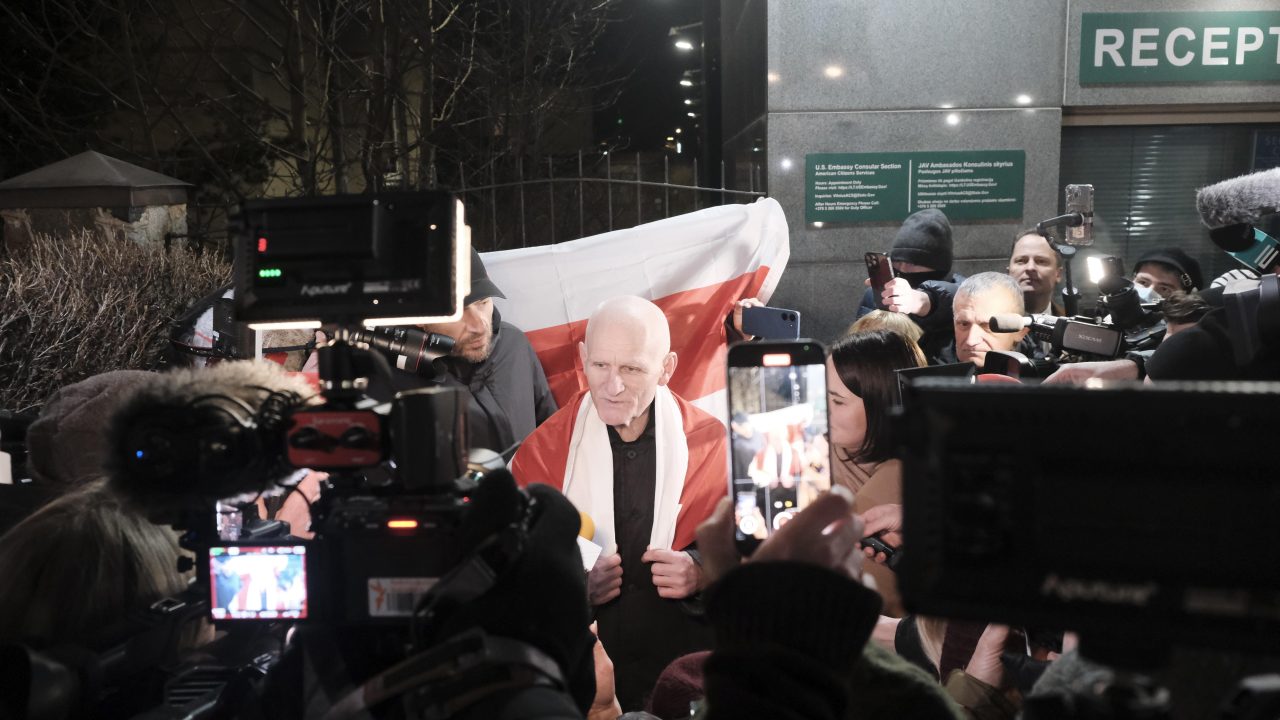
Still, a small group of prisoners was deported there, including Bialiatski. This was a notable exception: among all of Lukashenko’s prisoners, Bialiatski was the only figure of clear personal interest to Trump. The release of the Nobel Peace Prize laureate could bolster Trump’s own chances of being awarded the coveted distinction, which may explain why Washington insisted on his transfer to Lithuania.
What leverage remains?
Despite three waves of releases, around 1,000 political prisoners remain in Belarus. Special envoy John Cole has suggested they could be freed within a month, possibly in a single group, arguing that momentum exists and that Lukashenko is seeking to reduce tensions with his neighbours.
Cole has also indicated that a full release of political prisoners could lead to the lifting of most remaining U.S. sanctions, describing this as a “fair exchange”.
Whether this scenario is realistic remains uncertain. Previous deals have shown that Lukashenko is willing to free even his most personal enemies. However, those remaining in prison – largely journalists and trade union activists – offer little political value to Washington.
The only remaining high-profile figure is Andrzej Poczobut, a journalist and activist of Polish origin. His case, however, is primarily a matter between Minsk and Warsaw.
Beyond prisoner releases, Lukashenko’s potential usefulness to the United States appears limited. While U.S. envoys have discussed the war in Ukraine with him and pointed to his contacts with Vladimir Putin, expectations that Minsk could exert meaningful influence remain low.
Crucially, Europe is absent from the current thaw. For Belarus, EU sanctions matter far more than U.S. ones, particularly on potash exports. Without EU participation – and without access to Lithuanian ports, the economic gains for Minsk from U.S. concessions alone will remain constrained.
As a result, future exchanges are likely to depend heavily on the trajectory of peace talks between Ukraine and Russia. Progress there could keep Washington interested in Minsk as a tool of soft pressure on Moscow. Failure, however, could once again freeze the dialogue – until the next opening emerges.
The original article in Ukraine is published by EUalive’s partner European Pravda and can be found here.
Caption: Belarusian social activist, politician, human rights defender and political prisoner Ales Bialiatski (C) speaks to the media and supporters in front of the US Embassy in Vilnius, Lithuania, 13 December 2025. Belarus on 13 December 2025 has released 123 political prisoners, among them opposition activist Maria Kalesnikava, former presidential candidate Viktor Babariko, and Nobel Peace Prize laureate Ales Bialiatski, ‘within the framework of the agreements reached with US President Donald Trump and at his request,’ the Belarusian press service said. EPA/VALDA KALNINA
Updated: December 15, 2025 - 18:20