Edit
“We already behave like an EU member”: Montenegro tighten visa rules for Russian citizens
The decision mirrors EU measures that ended the issuance of multiple-entry Schengen visas to most Russian citizens
Montenegro is set to fully align its visa policy with the European Union in the coming months, a move that will significantly tighten rules for Russian citizens.
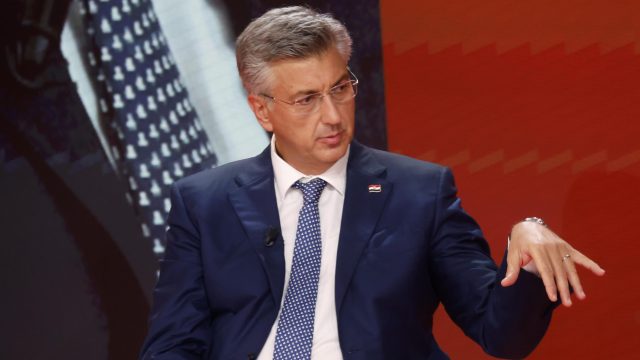
Prime Minister Milojko Spajić confirmed this shift in a recent interview with Euronews, describing it as a necessary step toward the country’s ambitious goal of joining the EU by 2028.
“Even without membership and the corresponding benefits, we behave like a member state,” Spajić said, underscoring Montenegro’s full compliance with the EU’s Common Foreign and Security Policy, including on visa issues.
While tourism remains a cornerstone of the Montenegrin economy, and Russia has traditionally been an important market, the government is prepared to accept the short-term costs. In October alone, Montenegro ended visa-free entry for citizens of Armenia, Uzbekistan, Kuwait, and Egypt as part of the same harmonisation process. The same fate now awaits Russian visitors, who currently enjoy up to 30 days of visa-free travel.
The decision mirrors broader EU measures introduced in early November that ended the issuance of multiple-entry Schengen visas to most Russian citizens. From now on, Russians generally receive only single-entry visas, except in humanitarian cases or for specific categories such as close family members of EU residents, transport workers, dissidents, and employees of recognised public organisations. Each new trip requires a fresh application and renewed security screening.
Spajić stressed that EU accession is the government’s overriding priority. Convincing all 27 member states that Montenegro’s membership serves their national interests remains a key diplomatic challenge.
“We cannot relax,” he said, acknowledging that much work lies ahead, especially on the rule of law – the area that traditionally attracts the closest scrutiny for Balkan candidates.
Progress is visible, however. Montenegro recently closed Chapter 5 of the accession negotiations (public procurement), and the European Parliament adopted a resolution in June recognising the country as the frontrunner among enlargement candidates, with 470 votes in favour.
Earlier this week, Montenegro’s Ministry of Foreign Affairs strongly condemned Russian Ambassador Alexander Lukashik for what it called “absolutely unacceptable” interference in the country’s internal affairs and summoned him to the ministry. The sharp rebuke came in response to a series of public statements in which the ambassador openly criticized Montenegrin institutions and officials. Lukashik had particularly attacked Montenegro’s decision to join NATO’s Security Assistance and Training for Ukraine (NSATU) mechanism and leveled pointed criticism at President Jakov Milatović, prompting an unusually firm reaction from Podgorica.
Montenegro summons Russian ambassador over “unacceptable interference”
From tourists to ghost companies: Russia’s quiet back door is closing
Yet the Russian presence in Montenegro extends beyond tourism. Since the start of Russia’s full-scale invasion of Ukraine in February 2022, more than 5,800 new companies owned by Russian citizens have been registered – a sharp increase from the roughly 4,600 that existed in 2021. Contrary to the perception of a major economic windfall, an investigation by the Balkan Investigative Reporting Network (BIRN) found that these firms contributed only €4.89 million in taxes and social contributions over 17 months, or roughly €837 per company.
Nearly two-thirds of the new firms have a single employee, and 22 per cent have none besides the founder. Economists interpret the pattern as evidence that many Russians opened businesses primarily to secure residence permits rather than to conduct genuine commercial activity. “This could suggest that the creation of companies is a strategy for securing the right of residence, rather than a legitimate business interest,” said analyst from BIRN Boban Stanić.
Despite Montenegro’s early decision to align its foreign policy with the West and impose sanctions on Russia, lax enforcement has allowed the country to function as a quiet haven for some Kremlin-connected individuals and assets on the edge of the European Union.
Under the leadership of the 38-year-old Prime Minister – a former Goldman Sachs and Credit Suisse banker, the government is pursuing an aggressive reform agenda dubbed “28 by 2028”. Judicial independence, anti-corruption measures, higher public-sector wages, and stronger defences against money laundering and organised crime top the list. Montenegro’s unilateral adoption of the euro in 2002 and its entry into the Single Euro Payments Area (SEPA) are expected to further stabilise the financial system and make the country more attractive to serious investors.
EU’s Costa: Albania and Montenegro could join the EU before the others
Sources: Suspilne, Euronews, Balkan Insight, Radio Free Europe/Radio Liberty
Caption: Montenegro’s Prime Minister Milojko Spajic (R) and EU Commission President Ursula von der Leyen (L) deliver speeches at the ‘Smart Growth, Green Future: Acceleration of Investments in Montenegro’ conference in Lustica, Montenegro, 14 October 2025. Von der Leyen is in Montenegro to attend the conference as part of her tour of Western Balkan countries. EPA/BORIS PEJOVIC
Updated: November 21, 2025 - 15:21