 Edit
The ten big lies about the euro designed to terrify Bulgarians
Journalists identified series of lies, and the list is not exahustive as pro-Russian parties nourish hopes to derail the eurozone accession
EU leaders formally backed Bulgaria’s eurozone accession on 26 June, paving the way for the country to adopt the single currency on 1 January 2026. The decision, announced at the close of the EU summit in Brussels, followed the European Council’s endorsement of the European Commission’s proposal, confirming that Bulgaria has met all convergence criteria outlined in the EU Treaty.
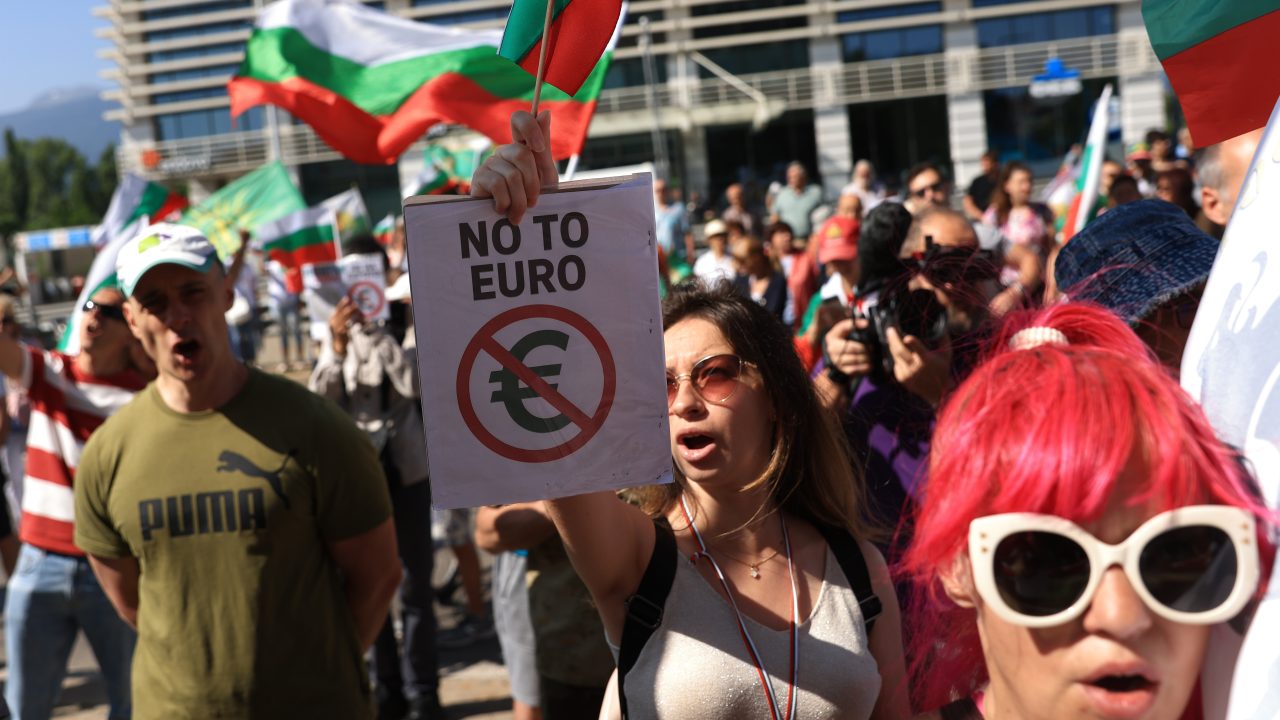
Despite this clear path forward, public debate has been clouded by a surge in disinformation campaigns aimed at sowing fear and resistance to the euro, often politically driven and deliberately misleading, experts warn. Journalists from Mediapool.bg, Segabg.com, Toest.bg, and Factcheck.bg have identified the ten most persistent myths about the euro and Bulgaria’s entry into the eurozone:
“Euro adoption will impoverish Bulgarians.”
The facts: Euro adoption does not inherently reduce real incomes. Economic outcomes depend on fiscal and monetary policy, business adaptation, and external conditions. A stable currency and lower interest rates, hallmarks of eurozone membership, can promote growth and income increases. In several Central and Eastern European countries, including Croatia, minimum wages have risen significantly post-euro adoption, improving the purchasing power of low-income earners.
“All prices will rise sharply after the euro is introduced.”
The facts: Empirical data from eurozone entrants over the past decade show only a minimal, short-lived inflationary effect, usually under 0.5%, linked mainly to price rounding during conversion. Slovakia’s central bank recorded a one-off inflation rise of just 0.2–0.4 percentage points after euro adoption in 2009. Eurostat data show annual inflation dropped from 3.5% to 2.4% within months. In Estonia, where the euro was introduced in 2011, ECB analysis shows a price impact of just 0.2–0.3 percentage points, mainly in services. Croatia experienced peak inflation of 13.2% in late 2022, before joining the eurozone in January 2023. By May 2023, inflation fell below 9%. An ECB analysis confirmed that currency conversion had a negligible effect on inflation. Price dynamics are influenced by broader market factors, not merely currency switches.
“Bulgaria is not economically ready and risks crisis.”
The facts: Bulgaria requested a special convergence report, confirming it met all Maastricht criteria: stable inflation, a budget deficit below 3%, public debt around 24.1% of GDP (second lowest in the EU), a stable exchange rate under the currency board, sustainable long-term interest rates, and legal convergence. Still, public perceptions diverge from the data. Psychological studies explain this as perception bias, as consumers focus on frequently purchased, lower-cost goods and are more sensitive to price increases than to stability or declines.
“Bulgaria may be forced into the eurozone at an unfavourable exchange rate.”
The facts: Accession exchange rates are agreed unanimously between euro area members and the candidate country. The EU treaties guarantee Bulgaria a veto over any change. In 2022, the Bulgarian Parliament adopted a resolution affirming that the country will join at the fixed exchange rate of 1.95583 BGN for one euro. This was reaffirmed in 2024. While not binding for the ECB or the Commission, it mandates the finance minister to sign an accession agreement only at that rate. If altered, Bulgaria reserves the right to decline entry.
“Loan interest rates will rise after joining the euro.”
The facts: The draft law on euro adoption stipulates that loan and deposit interest rates will remain unchanged. Variable-rate loans cannot see rates increased beyond pre-accession levels. Fixed-rate contracts remain as agreed. Moreover, access to ECB mechanisms is expected to enhance financial stability. Historically, eurozone interest rates are lower, potentially making credit more affordable.
“Bulgaria will lose its voice in the ECB and EU.”
The facts: Eurozone membership entails full participation in the ECB’s Governing Council, where the governor of the Bulgarian National Bank (BNB) will vote approximately 70% of the time. His vote will carry equal weight with those of Austria, Belgium, Ireland, and others. The BNB will help shape eurozone monetary policy.
“Czechia, Hungary, and Romania gave up the euro.”
The facts: These countries are legally obliged to adopt the euro once criteria are met. None have formally withdrawn. Czechia’s 2004 EU referendum saw 77.3% support, implicitly backing euro adoption. Prime Minister Petr Fiala recently said the issue will not be pursued before 2025, citing unmet criteria but ongoing reforms. Romania aimed for euro entry by 2024 but was delayed by inflation and deficits. ERM II accession is now planned for 2026–2027. Finance Minister Adrian Câciu has expressed hopes for euro adoption by 2026, conditional on implementation of the national recovery plan. Bucharest recorded a budget deficit of over 9% last year, a record level that makes it impossible for the country to adopt the euro before its public finances are stabilized. Hungary has not met convergence criteria and maintains a critical political stance. Prime Minister Viktor Orbán’s government views the euro as a potential tool of external control. Central Bank Governor György Matolcsy argues it would hinder economic growth. Nonetheless, Hungary has not renounced euro adoption.
“Bulgaria will have to pay for other eurozone countries’ debts.”
The facts: Participation in the European Stability Mechanism (ESM) is voluntary and governed by qualified majority voting. Each member contributes capital and retains decision-making power. Even during crises, ESM loans are temporary and repayable with interest. Bulgaria’s ESM shares remain its property.
“The ECB will seize BNB’s foreign exchange and gold reserves.”
The facts: The BNB will retain control over its reserves. Only a portion of the reserves will be transferred to the ECB’s balance sheet, in line with standard eurozone practices. The ECB must approve certain foreign currency transactions, but gold reserves remain untouched. The BNB clarified in April 2025 that Bulgaria’s gold—roughly 1.314 million troy ounces, or 40.9 tonnes—remains under national ownership. Around half is stored at the Bank of England and valued at BGN 7.31 billion.
“Euro adoption means losing monetary sovereignty.”
The facts: Since 1997, Bulgaria has operated under a currency board, fixing the lev first to the Deutsche Mark at 1:1 and later to the euro at 1.95583. Monetary policy autonomy has effectively not existed for decades. Eurozone entry formalizes a status quo while granting Bulgaria voting rights in shaping the very monetary policy it has long been bound by.
Eualive.net adds that this list is not exhaustive. Scrutiny of messages spread by the pro-Russian party “Vazrazhdane” reveals their role in stoking fear. MEP Rada Laykova (Europe of Sovereign Nations Group) claimed in interviews that discussions were underway to impose a deadline for spending money deposited in banks after eurozone entry, alleging unspent deposits would be lost within six months.
She further claimed, without evidence, that the European Parliament was secretly discussing restrictions on capital movement, redirecting private citizens’ money to finance European projects, including rearmament programs.
The European Commission denied both claims, stating, “European citizens have full freedom to invest their savings wherever they wish.”
Edited by k.n. and g.g.
Caption: People attend a protest against the adoption of the euro in front of the National Bank in Sofia, Bulgaria, 12 June 2025. Bulgaria has fulfilled all the criteria and is set to adopt the single European currency from 01 January 2026. EPA-EFE/VASSIL DONEV
Updated: June 27, 2025 - 10:39


