Edit
The Bulgarian caretaker cabinet is already acting as an advance post of possible political change
The Gurov team is channeling the momentum of the protests into concrete actions. But will this effort continue?
The snap parliamentary elections in Bulgaria on 19 April 2026 will serve as a decisive test for the caretaker cabinet – not only in ensuring a fair vote, but also in delivering on a key demand of the citizens who protested in December 2025.
When he took office two months ago, caretaker Prime Minister Andrey Gurov defined his “mission” as guaranteeing free voting – without control or vote-buying – and restoring the rule of law in the management of the prosecution service.
Gurov was appointed by President Iliana Yotova following the constitutional procedure, which requires selecting a prime minister from among ten senior state officials. As Deputy Governor of the Bulgarian National Bank (BNB), he met the formal criteria. Crucially, however, he was also the only candidate not beholden to the status quo dominated by Delyan Peevski – the oligarch and DPS leader sanctioned for corruption by the United States and the United Kingdom.
Although Gurov comes from the “We Continue the Change” (PP) party, the caretaker cabinet includes ministers from various political backgrounds, selected more on a team-oriented than a strictly partisan basis.
This is the eighth snap election in the past five years. It follows the resignation of the regular government, which was swept away by massive protests at the end of 2025. Public anger erupted against the so-called “captured state” model known as the “Borissov-Peevski” arrangement – named after Boyko Borissov, leader of the centre-right GERB party, and the oligarch who heads the Movement for Rights and Freedoms (DPS).
For the protesters, this is not merely a political formula but a symbol of the fusion between power, business, and the justice system in Bulgaria.
That is why Peevski has become the fiercest critic of the caretaker government. From the very first days in office, he has challenged the legitimacy of the prime minister and attacked the Interior Ministry’s actions against vote rigging. The first major clash between the oligarch and the premier arose when Gurov refused to submit for parliamentary ratification the document on Bulgaria’s accession to the so-called “Trump Peace Council.” In an interview with Euronews, the prime minister described the previous government’s decision as “a personal act by an oligarch sanctioned under the Magnitsky Act.”
Since then, the conflict has only intensified. Peevski has questioned the cabinet’s neutrality and accused it of attempting to influence institutions and the electoral process.
The cabinet hit back. Published information about the Investment Programme for Municipalities revealed a concentration of funds in regions linked to DPS. Some of these areas had received no financing until they declared affiliation with the party.
Thus, the confrontation has turned into a political frontline in the run-up to the vote, shifting attention away from the campaign itself.
For fair elections
Vote-buying and controlled voting remain a chronic problem in Bulgarian elections throughout the transition period. Even EU membership has failed to reduce them to a bare minimum. This led to the partial annulment of the October 2024 elections by the Constitutional Court – only the second such case in Bulgaria’s democratic history.
The caretaker government’s activity in protecting the freedom to vote is directed not only against domestic threats but also against disinformation and external interference in the elections. The cabinet requested the activation of European mechanisms for electoral protection, including the EU’s Rapid Reaction System. With this move, Gurov’s government has elevated the issue of electoral security to the European level.
A temporary coordination structure has been established at the Ministry of Foreign Affairs to respond to such threats, and investigative journalist Hristo Grozev (known for his work with Bellingcat) has been brought in as an adviser.
A full-scale mission from the OSCE Office for Democratic Institutions and Human Rights (ODIHR) has also been invited. This is a comprehensive observation mission that arrived a month before the vote to monitor the campaign, the electoral administration, and the media.
The mission’s interim report, published in April, presented a mixed picture of the vote’s preparation: a solid legal framework and organisation, but also a number of risks. Vulnerabilities include control over machine voting and video surveillance, dangers of disinformation, vote-buying, and “the use of administrative resources in a highly polarised political environment.”
At the same time, reports have emerged of the use of social benefits and the distribution of hot meals and product packages in schemes involving local authorities and institutional representatives. During police operations, in addition to lists of names and cash, samples of ballots have also been seized.
The mayor of a village in the Kardzhali region was detained for participating in a vote-buying scheme after he financed a local shop to offer free drinks to customers as a form of campaigning. The area, predominantly inhabited by Turks and Pomaks, has traditionally been dominated by DPS. The party’s leader, in turn, has appealed to the OSCE mission, European institutions, and the US Congress over what he calls “gross interference by the Interior Ministry in the electoral process.”
In the days before the vote, the Interior Ministry has stepped up pressure on vote brokers. In the first three weeks of the campaign alone, over 1,460 signals of electoral crimes were received, leading to 409 pre-trial proceedings and the detention of 250 individuals. Another 3,713 warning protocols were issued as preventive measures against vote trading. One million euros have been seized, and the Ministry has detected attempts at online payments of €50 per vote.
By comparison, the previous elections saw only 265 signals and ten times fewer detentions.
Prosecution and the rule of law
The question of fair elections inevitably leads to the deeper issue – public trust in the prosecution service, its independence, and the legitimacy of Acting Prosecutor General Borislav Sarafov.
Caretaker Justice Minister Andrey Yankulov has consistently challenged this legitimacy through requests for Sarafov’s removal and institutional pressure for the election of a permanent holder of the post. He has twice referred the matter to the Prosecutors’ College of the Supreme Judicial Council with a request to dismiss Sarafov, but without success.
Although the judicial appointments body has “cemented” him in place, Yankulov continues to insist that the prolonged occupation of the “acting” position goes beyond the intent of the law and demands a clear procedure for electing a permanent Prosecutor General. The Judicial System Act allows an acting Prosecutor General to serve in that capacity for no more than six months, and the Constitutional Court has ruled that this limit does not contradict the Constitution.
In an attempt to elevate the dispute to a supranational level, Yankulov asked the Supreme Administrative Court to send a preliminary reference to the Court of Justice of the European Union, after the Prosecutors’ College’s interpretation allowed Sarafov to remain in the post indefinitely.
In this way, the caretaker government’s actions have expanded the case of the acting Prosecutor General beyond the national framework, turning it into part of a broader European debate on the rule of law.
After the December protests demanded greater democracy and legality, the caretaker cabinet is already acting as an advance post of possible political change. The key question that remains is whether the next regular government will carry this change through to the end – or will neutralise it.
Factbox:
Since 2021, these are the eighth parliamentary elections in Bulgaria and will cost around €80 million. This amount adds to the more than €250 million spent on the previous elections, including presidential and European Parliament votes. The organisation of the vote takes place on three levels: the Central Election Commission (CEC), 31 regional election commissions, and 11,836 polling station commissions. A total of 4,786 candidates have been registered – representing 14 parties, 10 coalitions, and one independent candidate. About 30% of the candidates are women. The voter rolls include 6.6 million voters. Voting will be conducted with both paper ballots and voting machines.
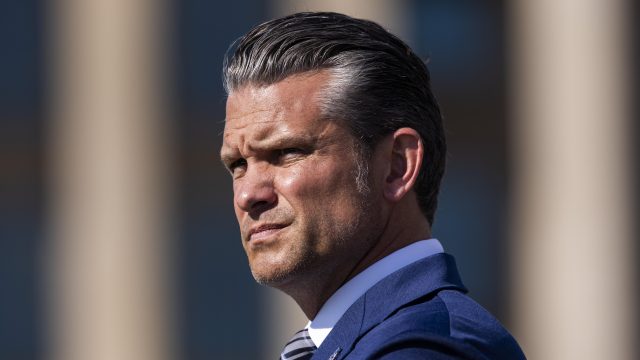
Caption: Caretaker PM Andrey Gurov at the 19 March European Council [Council newsroom]
Updated: April 15, 2026 - 07:27