 Edit
Summer travel gridlock: EU countries demand more time for troubled border system
The introduction of the European Union’s new biometric border control system EES has unleashed significant disruptions across the Schengen area
The introduction of the European Union’s new biometric border control system has unleashed significant disruptions across the Schengen area, turning what was meant to be a smooth security upgrade into a source of frustration for millions of travelers this summer.
Nine European countries have now formally appealed to the European Commission to extend temporary flexibilities in the Entry/Exit System (EES), warning that abrupt changes risk further chaos at already strained borders and airports.
The EES, which fully replaced manual passport stamping, collects fingerprints, facial scans, and detailed travel data for all non-EU travelers entering or leaving the Schengen zone. After a phased rollout that began in October 2025, the system became fully operational on 10 April. The goal was ambitious: to strengthen external border security, better track overstays, and modernize controls while giving authorities, airlines, and passengers time to adapt. Yet, in practice, the rollout has exposed persistent technical and operational hurdles, leading to long queues that have snarled air travel during the height of the holiday season.
The push for extended emergency measures
In a joint letter dated 7 July to Internal Affairs Commissioner Magnus Brunner, ministers from Belgium, France, Germany, Greece, Italy, Malta, the Netherlands, Portugal, and Switzerland highlighted “significant difficulties” that cannot be underestimated. While reaffirming their support for the EES’s long-term objectives, they urged the Commission to allow member states to continue using the system’s built-in emergency mechanism beyond 6 September, when current exemptions are set to expire.
This mechanism permits border authorities to temporarily suspend the collection of biometric data – fingerprints and facial scans, in exceptional circumstances to prevent excessive queues, while still registering all travelers electronically. The countries are seeking written guarantees from the Commission before the current flexibility ends, arguing that more time is needed to resolve teething problems without compromising security.
European Commission spokesperson Markus Lammert welcomed the countries’ “unambiguous commitment” to full implementation and systematic registration of non-EU travelers. He noted existing flexibilities, including summer measures for suspending biometric collection, and emphasized ongoing “close and constructive contact” with affected member states. “There is a strong common will to ensure that the system works everywhere,” he added. However, the Commission has so far stopped short of committing to a broader extension beyond 6 September.
The appeal comes amid mounting pressure from the aviation sector. Airports and airlines have warned that without additional relief, major hubs could face near standstill conditions. In an open letter to Commission President Ursula von der Leyen, industry groups including ACI Europe described the situation as “unsustainable,” with waiting times at some borders reaching up to five hours during peak periods.
Impact on travelers, airports, and Europe’s reputation
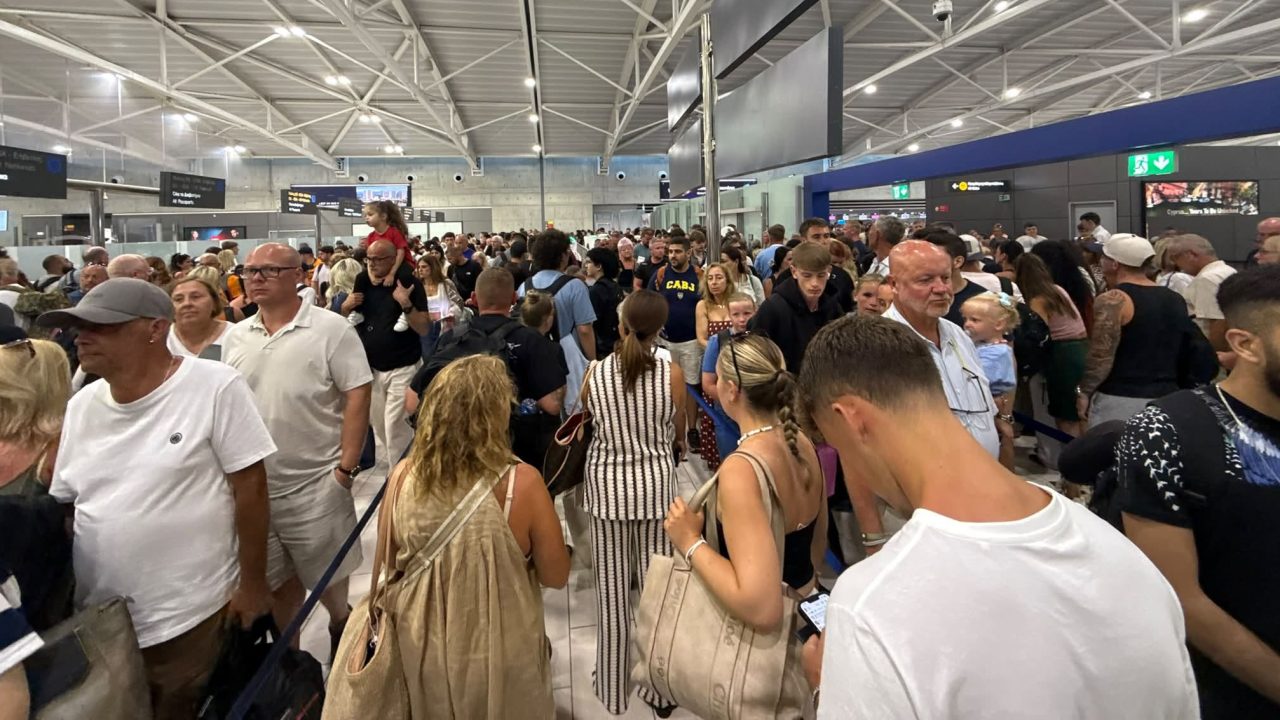
Real-world effects are already visible. At Brussels Airport, one of the hardest-hit locations, passengers have endured queues of two to three hours on arrival and about one hour on departure. According to reports, many flights, although fully booked, have departed half-empty as passengers faced long border control queues. With around 5.2 million passengers expected in July and August, a 4% increase from the previous summer, officials are deploying extra staff and 30 EES kiosks to mitigate delays. Spokesperson Quentin Mertens noted that priority is given to departing passengers to avoid missed flights, but the airport supports calls for greater flexibility.
Federal Mobility Minister Jean-Luc Crucke has advocated for a phased approach to minimize disruption, including postponing full biometric collection until after the busy summer period and increasing aviation police staffing. Similar concerns echo across popular destinations: airports in Spain (such as Palma, Alicante, and Malaga), Italy, Greece, and Portugal have reported major backlogs, missed connections, and operational strain. Low-cost carrier Ryanair’s COO Neal McMahon criticized the system as not ready for peak volumes, warning that families and vulnerable passengers are being treated as “guinea pigs.”
Videos on social media have amplified passenger frustration, showing long lines affecting elderly travelers, families with children, and those with reduced mobility. Industry representatives argue that Europe’s reputation as a tourist destination is at stake, with some international visitors reportedly reconsidering trips due to anticipated delays. Beyond immediate inconvenience, the disruptions threaten broader economic impacts on tourism, connectivity, and the internal market that Schengen was designed to support.
Separately, the Commission issued opinions on 2 July regarding the prolonged temporary reintroduction of internal border controls by several member states, including Austria, Denmark, France, Germany, Italy, the Netherlands, Norway, Slovenia, and Sweden. While acknowledging legitimate security and migration concerns, the Commission recommended phasing out these controls where possible, favoring alternatives like risk-based police checks and enhanced use of new tools such as the upcoming ETIAS system. The opinions underscore the tension between security needs and preserving the free movement that underpins Schengen’s success.
Commission President von der Leyen has acknowledged that “there is still a lot to do” to iron out issues, with meetings ongoing between EU services and the air transport industry. The EES is viewed as essential for modern border management, yet critics contend that inadequate preparation, staffing shortages, and technical glitches have undermined its promise.
Sources: Update-eu.cz, Politico, The Brussels Times, Insight EU Monitoring, European Commission Statements
Caption: View from Larnaca Airport (Demetra Sofroniou on Facebook)
Updated: July 10, 2026 - 10:35