 Edit
Spain-Portugal power outage lays bare human vulnerabilities
The blackout underscores the fragility of modern grids
The massive power outage that struck Spain and Portugal on 28 April disrupted millions of lives, paralysing transportation, telecommunications, and critical infrastructure. Reuters reported that power began returning late Monday, with about 61% of Spain’s electricity restored by evening, but the cause remained unclear, with Portugal’s grid operator, REN, suggesting a rare atmospheric phenomenon.
Spain’s grid operator, Red Eléctrica, attributed the outage to a “strong oscillation” in the grid, with a sudden loss of 15GW of electricity generation in five seconds, equivalent to 60% of national demand. Eduardo Prieto, Red Eléctrica’s operations chief, described the event as “exceptional and extraordinary,” noting a failure in the Franco-Spanish grid interconnection as a trigger for a cascading collapse.
According to REN’s hypothesis, a “rare atmospheric phenomenon” involving “induced atmospheric vibration” due to extreme temperature variations in Spain, which caused oscillations in 400 kV lines, leading to synchronization failures across the European grid.
Other sources provide further context and alternative theories, though no definitive cause has been confirmed. The Guardian elaborates that these oscillations, known as “induced atmospheric vibration,” result from temperature-induced changes in conductor parameters, creating frequency imbalances. Georg Zachmann from Bruegel explained that the grid’s frequency dropped below the 50Hz European standard, causing cascading disconnections of power plants, including one in France.
Bloomberg’s energy reporter Akshat Rathi, cited via Ars Technica, noted that grid oscillations occur when the system fails to suppress normal fluctuations as sources and loads shift, a technical fault rather than a malicious act.
Some analyses suggest that Spain and Portugal’s heavy reliance on solar and wind energy (65%+ of generation, with solar alone at >55%) may have contributed to low grid inertia, making the system vulnerable to disruptions. Synchronous inertia, critical for frequency stabilization, is lower with renewables compared to traditional gas turbines, potentially exacerbating the outage.
Spain and Portugal operate a highly integrated energy grid, functioning as an “energy island” with limited interconnections to the rest of Europe, primarily through France. Politico notes that a minor disruption, like the 2003 Italian blackout caused by a tree, can cascade through such systems. The Franco-Spanish interconnection failure likely amplified the outage’s spread.
Cyberattack speculation
Despite initial fears, multiple sources, including the Portuguese National Cybersecurity Centre, found no evidence of a cyberattack. Spain’s cybersecurity institute investigated but ruled out deliberate interference, as did the EU Agency for Cybersecurity (ENISA), which pointed to a technical or cable issue.
Spanish Prime Minister Pedro Sánchez emphasized that the cause remained unknown, urging the public to avoid speculation. The complexity of grid systems, as noted in an X post, makes pinpointing the exact trigger challenging, with “a thousand and one causes” possible.
Massive impact
The outage’s impact on vulnerable groups—such as the elderly, disabled, low-income households, and those reliant on medical equipment—was severe, as electricity is critical for basic needs, safety, and survival.
Hospitals across Spain and Portugal relied on backup generators to maintain critical care, postponing routine operations. A hospital in Setúbal, Portugal, reported to Euronews that its generator could support critical departments for 8-12 hours but lacked water supply due to electric-dependent pumping systems, creating sanitation and operational risks.
Individuals with medical conditions, such as those using ventilators or dialysis machines, faced life-threatening disruptions. The Washington Post noted hospitals cancelling surgeries, and while generators mitigated some risks, their limited capacity (hours, not days) endangered patients if power restoration lagged.
The elderly and disabled, often reliant on home medical devices or mobility aids like stairlifts, were particularly vulnerable. The AP reported 150 elevator incidents in Madrid alone, trapping people, including those with mobility issues, in dangerous conditions.
The outage disrupted water supply in some areas, as pumping systems failed. A resident in Torremolinos, Spain, told The Independent that the loss of water, alongside electricity and mobile networks, created an “apocalyptic” situation, isolating communities and hindering access to essentials.
Supermarkets, unable to process electronic payments, saw panic buying, with Metro News reporting empty shelves as people scrambled for water and groceries. Low-income households, less able to stockpile or afford cash-only purchases, faced heightened food and water insecurity.
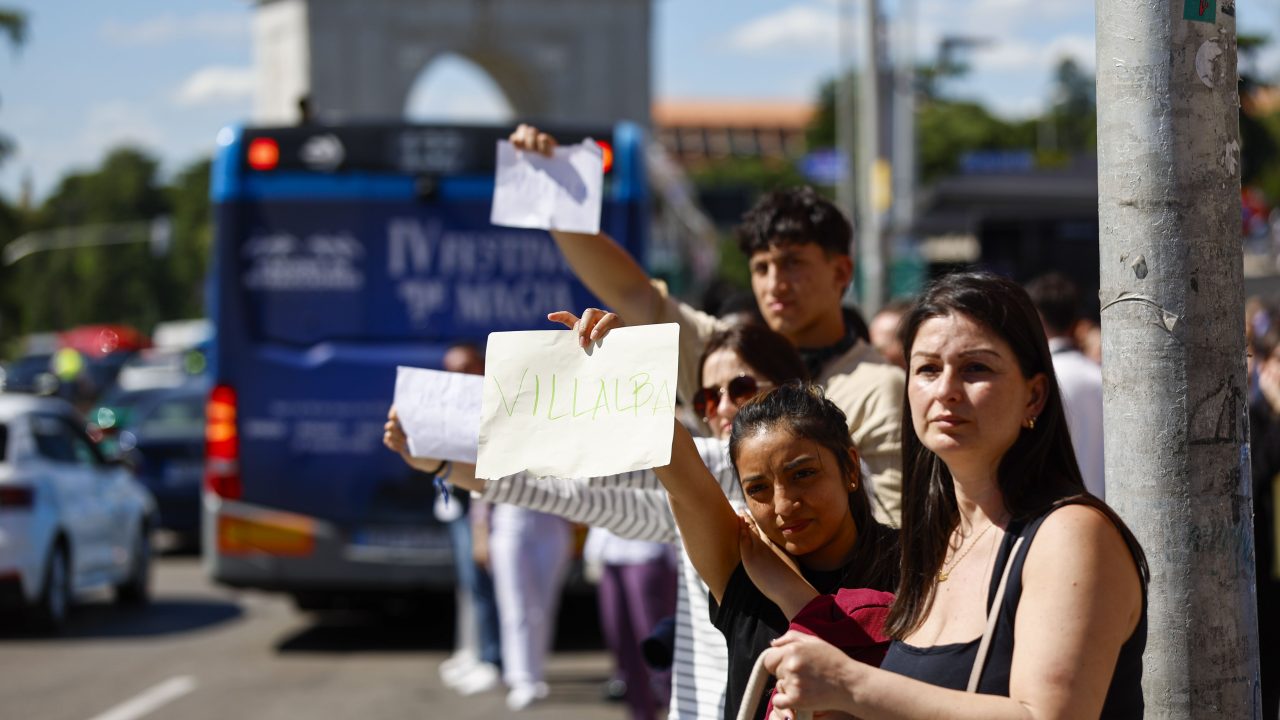
Public transport shutdowns stranded millions, with trains, metros, and trams halted. Reuters and AP reported people trapped in metro tunnels, using phone torches to navigate, and others walking long distances home. The elderly, disabled, or those with young children faced significant barriers in such conditions.
Euronews reported that citizens were asked not to dial 112 unless in genuine emergencies, but those without phone access, like the elderly or disabled, were unable to seek help. Internet traffic dropped 90% in Portugal and 80% in Spain, per Cloudflare Radar, severing digital lifelines for remote communities.
Small businesses, often run by lower-income individuals, faced significant losses. Euronews quoted Mariana Guzman, an ice-cream shop employee in Madrid, who feared losing dozens of vats of product, a financial blow that could devastate small enterprises.
The BBC reported plainclothes officers preventing looting in areas where businesses couldn’t secure electric shutters, indicating heightened risks for vulnerable shop owners. Those without insurance or savings, common among marginalized communities, faced unrecoverable losses.
Traffic light failures caused chaos, with Reuters noting traffic jams and police manually directing vehicles. Pedestrians, especially the disabled or elderly, faced heightened accident risks at unlit intersections.
The outage underscores the fragility of modern grids, particularly in regions transitioning to renewables. While Spain’s renewable leadership is commendable, the lack of sufficient grid-stabilizing technologies may have amplified the outage’s impact. However, blaming renewables alone oversimplifies the issue, as technical faults and underfunded interconnections played significant roles.
While investigations continue, the lack of a definitive cause underscores the complexity of modern energy systems. The outage serves as a stark reminder to bolster grid resilience and address systemic inequities to protect those most at risk in future crises, including caused by cyberattacks.
Updated: April 29, 2025 - 04:29


