 Edit
Sofia and Moscow clash over allegations of ‘Russophobic’ campaign in Bulgarian schools
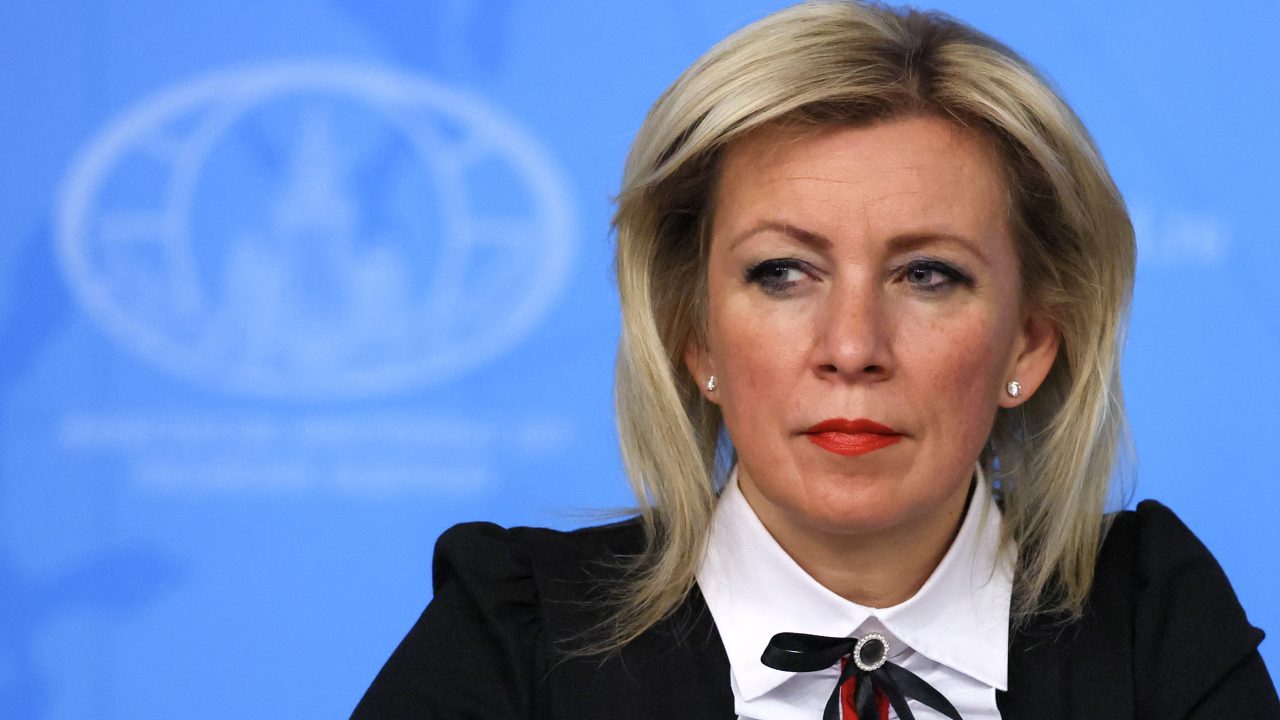
Russian Foreign Ministry spokeswoman Maria Zakharova accused Sofia of “witch hunt”
Tensions between Bulgaria and Russia have escalated following allegations by Russian Foreign Ministry spokeswoman Maria Zakharova that Sofia is waging an institutional campaign of “Russophobia” by targeting Russian language education and Russia-linked NGOs.
Bulgarian officials and MPs, however, reject the claims as baseless and politically motivated, arguing instead that their actions are aimed at countering Kremlin-backed disinformation and foreign influence operations in the country’s schools.
Zakharova accused Sofia of orchestrating a state-sponsored “witch hunt” targeting Russian language education and pro-Russian NGOs in the country. The statements were made during her regular briefing on 20 May.
In her remarks, Zakharova claimed that Bulgarian MPs were persecuting Russian language teachers and organisations with connections to Russia, following reports over the controversy of Bulgarian schoolchildren participating in events promoting Russian cultural heritage. “Russophobic members of the national parliament,” she said, had submitted inquiries to the Ministry of Education, requesting clarity on the methodology behind Russian cultural studies in schools in order to “prevent the dissemination of Russian propaganda.”
According to Zakharova, the Ministry’s subsequent internal questionnaire to its subordinate institutions marked only the beginning of the campaign. She further attacked the state broadcaster BNT for its reporting on school competitions with Russian elements, accusing journalists of double standards. “Apparently, promoting contests on gender fluidity or paediatric gender reassignment is preferable,” she said, in the typical homophobic Kremlin style.
Sofia pushes back
Bulgaria’s state broadcaster BNT responded that Zakharova’s comments likely referred to two reports aired in April and May under its fact-checking series: “In Focus: School competitions with Russian links in the Ministry’s calendar” and “In Focus: Russian propaganda in Bulgarian schools?”
The backdrop to the dispute includes an ongoing national debate on introducing classes on virtues and religion into the school curriculum – an initiative promoted by the Orthodox Church and viewed by civil society actors as a potential gateway for Russian influence.
An earlier investigation by the Bulgarian online media outlet Sega, a partner of EUalive, revealed that numerous schools and kindergartens continued cooperating with the Russian Cultural and Information Centre (RCIC) in Sofia after the start of Russia’s full-scale invasion of Ukraine. The RCIC is linked to Rossotrudnichestvo, a Russian government agency currently under EU sanctions. Events such as poetry readings and holiday celebrations have continued there, with the participation of hundreds of Bulgarian children.
Parliamentary reactions and security concerns
Zakharova’s reference to parliamentary scrutiny is likely linked to a controversy involving MP Lena Borislavova from the pro-European coalition We Continue the Change – Democratic Bulgaria (PP-DB), and Education Minister Krasimir Valchev. Borislavova had publicly criticised the Ministry for its involvement in a forum promoting the Russian language. Valchev denied the Ministry’s direct participation, explaining that while individual participation cannot be controlled, instructions had been reissued for careful consideration of affiliations and topics.
MP Bozhidar Bozhanov, also from PP-DB, confirmed that he had submitted a parliamentary question regarding the inclusion of an event in the Ministry’s official calendar organised by an NGO that supports Russia’s annexation of Crimea. He noted with irony that the Russian Foreign Ministry appeared to be closely monitoring the internal correspondence of the Bulgarian education system.
Bozhanov described the fight against Russian propaganda as vital, warning that it spreads both online and offline with the aim of dividing Bulgarian society and promoting the Kremlin’s agenda. “It’s not just theory. There are leaked documents, investigations, and criminal proceedings across Europe that confirm these operations,” he said, referencing anonymous troll farms, fake news sites, and paid content as instruments of disinformation.
A network of influence
The Bulgarian service of Radio Free Europe recently aired multiple investigations into pro-Russian propaganda in schools. Among those openly engaged in promoting pro-Russian narratives is Yanka Takeva, head of the Bulgarian Teachers’ Union and a member of the National Council of the Russophile movement. The movement’s president, Nikolai Malinov, currently stands trial for espionage and is sanctioned by the United States under the Global Magnitsky Act along with the movement itself.
Journalist Ruslan Trad also pointed to a wider Russian network tied to the Russian Orthodox Church operating in Bulgaria. According to Bulgarian National Television, this network – under the banner of the Union of Orthodox Journalists (UOJ) – exerts influence through anonymous websites, cultural events, and social media. The network is reportedly linked to Russia’s FSB intelligence agency and is part of a broader ecosystem designed to promote pro-Kremlin narratives across Orthodox communities in Europe.
Trad noted that the network targets school debates on religious education to insert Russian viewpoints and is part of a coordinated effort that risks undermining public discourse and national security. Bulgaria, he concluded, remains a strategic target for Russian disinformation campaigns.
Fake opinion poll
A fabricated opinion poll, falsely attributed to the reputable Bulgarian sociological agency Alpha Research, has raised alarms among experts monitoring disinformation flows in Bulgaria. The manipulation appears designed to inflate public support for Russian President Vladimir Putin and the Kremlin’s war in Ukraine.
In April, for the second time in a month, the website Faktibg.com published what it claimed was a sociological survey conducted by Alpha Research. According to the article, the data covered the period 16-22 April 2025 and presented staggering results: 77% of Bulgarians allegedly support Russia in the war, only 10% back Ukraine, and 91% of citizens approve of Vladimir Putin as a leader. An additional 13% were described as neutral.
These figures, however, and the entire poll, are entirely fabricated.
The disinformation was disseminated via Facebook pages affiliated with Faktibg.com and its predecessor Informiran.net – both of which have previously been flagged by Bulgaria’s fact-checking platform Factcheck.bg for spreading false or misleading information. One of the pages, “News from the Last Hour”, which has more than 42,000 followers, shared the fake news widely, garnering nearly 550 shares within two days.
Factcheck.bg contacted Alpha Research for verification. The agency’s director, Genoveva Petrova, categorically denied the existence of such a survey, describing the publication as “yet another fake news story misusing the name of our agency.” Alpha Research issued an official statement clarifying that all legitimate surveys are published on its website and released through verified channels.
The reality of Bulgarian public opinion
The actual public sentiment regarding Russia and its leadership has been markedly different from what the fake poll suggests.
In March 2024, Alpha Research released results from a legitimate survey conducted shortly after the death of Russian opposition leader Alexei Navalny and just ahead of the presidential election in Russia. That poll showed that 58% of Bulgarians were concerned about Russia’s invasion of Ukraine and its destabilising ambitions towards the EU and NATO, of which Bulgaria is a member. At the time, only 20% expressed approval for Vladimir Putin’s leadership, while 62% disapproved.
In August 2024, another Alpha Research study confirmed a significant and sustained decline in Bulgarian support for Russia and Putin. Approval of the Russian president dropped to 22.1% – nearly half the level recorded in 2017. Positive attitudes toward Russia also fell dramatically: from 60% in 2018 to just 31.8% in 2024.
The survey also revealed diverging views on the desired outcome of the war. Nearly two-thirds of Bulgarians (65.8%) believed the best resolution would be peace, regardless of conditions. Only 11.2% wanted a Russian victory, while 18.1% viewed Ukraine’s victory as most favorable for Bulgaria.
A coordinated campaign of manipulation
The timing and reach of the fake survey raise serious questions about coordinated attempts to distort Bulgarian public opinion and legitimise pro-Kremlin narratives through social media manipulation. Despite being clearly fabricated, the disinformation succeeded in spreading widely online before being debunked, underlining the vulnerability of Bulgaria’s information space.
As the country approaches a critical juncture in its EU integration path, including eurozone accession, these operations appear aimed at fuelling polarisation and undermining trust in institutions. The disinformation ecosystem continues to exploit national sensitivities and external geopolitical pressures – with fabricated data now joining the toolkit of malign influence actors.
Caption: Russian Foreign Ministry spokeswoman Maria Zakharova looks on as she attends the annual news conference of Russian Foreign Minister Sergei Lavrov (not pictured) in Moscow, Russia, 14 January 2025. [EPA-EFE/YURI KOCHETKOV]
Updated: May 22, 2025 - 05:15






