Edit
Seventeen EU states, led by Italy and Romania, move to shield farm and cohesion funds
Giorgia Meloni and Nicușor Dan rally the Friends of Cohesion against further cuts in the 2028–2034 budget, setting up a clash with the six frugal countries
Seventeen EU governments, coordinated by Italian Prime Minister Giorgia Meloni and Romanian President Nicușor Dan, have written to the Irish EU Council presidency urging that overall funding for cohesion policy and the Common Agricultural Policy be preserved in the 2028–2034 budget.
The letter, sent to Irish Taoiseach Micheál Martin, comes ahead of the European Council on 15–16 October 2026, which will discuss the next Multiannual Financial Framework (MFF). The signatories – known as the Friends of Cohesion – are Bulgaria, Croatia, Cyprus, Czechia, Estonia, Greece, Hungary, Italy, Latvia, Lithuania, Malta, Poland, Portugal, Romania, Slovakia, Slovenia and Spain. Meloni and Dan plan to host an informal meeting of the group on the margins of the summit.
In the letter, the 17 countries argue that cohesion and agricultural funding play a central role in Europe’s prosperity and deliver tangible benefits to citizens, businesses, farmers and local communities. They state that further cuts “would weaken policies that remain essential for achieving the Union’s economic and social objectives” and risk undermining public support for the European project. They call for the overall level of resources for both policies to be maintained.
The intervention responds to the European Commission’s 2025 proposal for a budget of nearly €2 trillion for 2028–2034. That proposal shifts hundreds of billions of euros away from agriculture and regional (cohesion) spending toward priorities such as defence and competitiveness. Under the Commission’s figures, cohesion is allocated roughly €400 billion over seven years and agriculture about €300 billion – less than 20 percent and 15 percent of the total, respectively – compared with a combined share of roughly 30–35 percent in the 2021–2027 period. The letter presses the Irish presidency to leave nearly €900 billion in these areas untouched in the draft negotiating document expected shortly.
The group acknowledges the need for additional spending on security and defence, competitiveness, connectivity, energy security and resilience, but insists these should be funded with extra resources rather than by further reductions to agriculture and cohesion. It expresses readiness to discuss new EU “own resources” (revenue streams) provided they are “genuine, fair, simple and non-regressive.” Other options it raises include a more gradual repayment of NextGenerationEU post-pandemic debt (currently projected at about €25 billion a year) and limited, targeted European debt instruments. The signatories also oppose continuing the system of budget rebates that benefit only a few wealthier member states, and argue that national contributions should reflect relative prosperity and effort.
The move sets up a clear divide with a rival group of six countries led by Germany, which earlier the same week renewed calls for across-the-board cuts of several hundred billion euros. EU governments are aiming to reach a deal among themselves by the end of 2026, before elections in several member states complicate the talks. Ireland’s forthcoming “negotiating box” will frame the leaders’ discussion in mid-October.
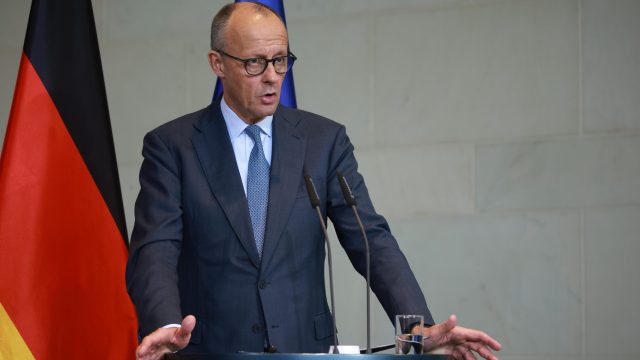
The six “frugal” countries – Germany, the Netherlands, Austria, Denmark, Finland and Sweden – are the main counterweight to the Friends of Cohesion in the 2028–2034 budget talks. All are net contributors; together they say they finance almost 40 percent of member states’ contributions to the EU budget, while net contributors as a group shoulder roughly three-quarters of the financing burden. Led by German Chancellor Friedrich Merz, they have repeatedly called for the Commission’s proposal of nearly €2 trillion to be cut by several hundred billion euros “in a balanced manner,” with reductions across headings. They argue that the EU budget cannot expand while national governments are consolidating public finances, and they reject new common borrowing as a substitute for reform. In joint statements in late August and a letter to the Irish presidency in late September 2026, they pressed for a modernised budget focused on security and defence, competitiveness, innovation and migration control, and warned that an overall figure they consider realistic is a precondition for agreement by the end of the year.
Meloni summarised the position publicly: together with Nicușor Dan, the 17 Friends of Cohesion had united around the goal of keeping agriculture and cohesion as central priorities in the next European budget while still securing adequate resources for Europe’s new challenges. She said she was strongly convinced this was achievable.
Governments aim to conclude the 2028–2034 deal by the end of 2026 so that programmes can start on time in 2028, though past MFFs have sometimes slipped. The Irish presidency’s negotiating box and the October 2026 European Council are the immediate next steps in the current round.
This article draws on reporting by EUalive’s partner IBNA.
Caption: In the margins of the European Council meeting on 18 June 2026, the President of the Council of Ministers, Giorgia Meloni, and the President of Romania, Nicușor Dan, convened an informal meeting of the Heads of State and Government of the Member States making up the ‘Friends of Cohesion Policy’ group (Bulgaria, Croatia, the Czech Republic, Estonia, Greece, Hungary, Italy, Latvia, Lithuania, Malta, Poland, Portugal, Romania, Slovakia, Slovenia, Spain), to strengthen political coordination on the next EU Multiannual Financial Framework, at a crucial stage in the negotiations that will define the strategic priorities and the architecture of the future European budget. [Website of the Government of Italy]
Updated: October 5, 2026 - 09:29