Edit
EditScandal in Slovenia: Tanja Fajon’s EU Sahel appointment faces unexpected roadblocks
Domestic disputes risk weakening the EU’s response to coups, jihadist threats, and Russian influence in West Africa
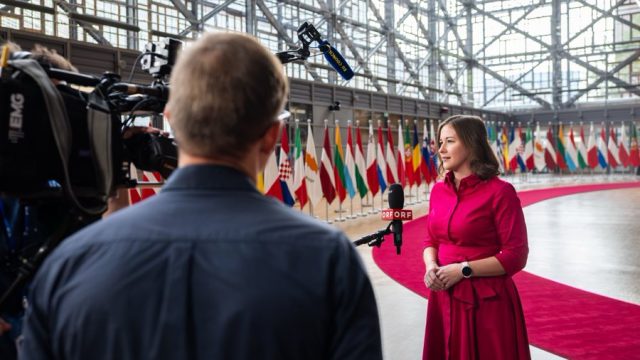
The appointment of former Slovenian Foreign Minister Tanja Fajon as the European Union’s Special Representative for the Sahel has been thrust into controversy, with repeated delays exposing deep political divisions in both Slovenia and the wider EU decision-making process.
Once expected to proceed smoothly, the nomination has been removed from the agenda of the Committee of Permanent Representatives (Coreper) not once but twice, pushing any final decision potentially into the autumn. The situation underscores tensions between Slovenia’s outgoing and incoming governments, questions of procedural legitimacy, and the high stakes of EU engagement in one of the world’s most unstable regions.
At the heart of the matter lies a clash between Slovenia’s previous administration under Prime Minister Robert Golob and the new government of Janez Janša that has taken a more critical stance. Fajon’s candidacy, advanced by EU High Representative Kaja Kallas, encountered resistance from Ljubljana shortly after the government transition. The new Foreign Minister, Tone Kajzer, raised concerns directly with Kallas, seeking clarification on the transparency and legitimacy of the selection process. According to sources in Brussels, the proposal has not been withdrawn but merely postponed, with the European External Action Service (EEAS) maintaining that the process remains ongoing.
Slovenian political divisions and allegations of impropriety
The objections from the new Slovenian government are not framed as personal attacks on Fajon’s professional qualifications but rather as challenges to the procedure and timing of her nomination. Critics argue that the outgoing Golob government, already in a caretaker capacity, overstepped by advancing a long-term international appointment without broader consensus. This has fueled accusations of procedural violations, with demands for a full review of how the EEAS handled the selection.
Domestic politics have added further fuel to the fire. Conservative opposition voices and right-wing media in Slovenia have voiced suspicions that Fajon’s candidacy may have been bolstered by a significant increase in Slovenian humanitarian aid during her tenure. Reports indicate that aid to the Sahel region, particularly through the World Food Programme, multiplied substantially, leading to claims that public funds were leveraged to enhance her international profile. Former Prime Minister Golob has defended the nomination, stating in correspondence that the final decision rests with Brussels, yet the new government has effectively blocked progress in the EU Council, insisting on a thorough examination of the case.
Kaja Kallas and the EEAS have remained largely silent on the specifics. Spokesperson Anitta Hipper emphasized that the matter constitutes an internal, confidential procedure, declining to comment on the complications. Despite these tensions, the proposal for Fajon’s appointment continues to sit on the table, illustrating how national political shifts can ripple through European institutions.
The linkage to other European appointments has complicated matters further. Slovenia’s position as one of the last countries to finalize its nominees for European Commissioners has intertwined with the handling of Fajon’s diplomatic post, creating additional leverage points in negotiations. This interconnectedness highlights the often opaque nature of EU bargaining, where one country’s domestic priorities can influence broader diplomatic timelines.
Geopolitical urgency in the Sahel amid mounting instability
The delays come at a particularly sensitive moment for the Sahel region, where security and political challenges demand swift and coherent EU engagement. Three central countries – Mali, Burkina Faso, and Niger, have experienced military coups and have since distanced themselves from traditional Western partners. These nations have exited the Economic Community of West African States (ECOWAS) and formed the Alliance of Sahel States (AES), signaling a broader realignment.
Relations with France and the United States have deteriorated sharply, resulting in the withdrawal of Western military forces. In their place, strategic partnerships with Russia have deepened, with the Russian “African Corps” (formerly associated with Wagner forces) establishing a presence on the ground. High-level engagements between Moscow and AES leaders have further solidified these ties. The juntas have also taken steps toward institutional independence, initiating withdrawal from the International Criminal Court and exploring their own regional financial and technological initiatives.
Compounding these shifts is the escalating threat from jihadist groups linked to al-Qaeda and the Islamic State. These organizations continue to expand territorial control, launching increasingly coordinated attacks on military targets and causing significant casualties, including the death of Mali’s Defense Minister in one notable offensive. Violence has begun spilling beyond the core Sahel states into coastal West African countries such as Benin, Togo, and Côte d’Ivoire, raising fears of wider regional destabilization.
In this volatile context, the EU Special Representative role carries substantial weight. The appointee would be tasked with navigating the bloc’s evolving approach to security cooperation, humanitarian assistance, and diplomatic outreach in a region increasingly turning away from traditional partners. The postponement of Fajon’s confirmation, while rooted in Slovenian domestic concerns, risks leaving the EU without dedicated high-level leadership during a critical period of transformation.
Procedurally, several paths remain open for advancing the appointment. While Coreper prepares Council meetings, the EU Council could potentially proceed via written procedure or at a regular ministerial session, provided there is consensus or a qualified majority. This majority requires support from at least 15 member states representing 65 percent of the EU population. However, with the last pre-summer Council meeting on 27 July now uncertain and the next Coreper session not until early September, timelines have stretched considerably.
Sources: Siol.net, STA, Nova24tv.si, Reuters
Caption: High Representative of the European Union for Foreign Affairs and Security Policy Kaja Kallas (L) and Deputy Prime Minister and Minister of Foreign and European Affairs of the Republic of Slovenia, Tanja Fajon, attend a meeting of the Foreign Affairs Council (FAC) in Brussels, Belgium, 11 May 2026. EU foreign ministers meet to discuss Russia’s war against Ukraine, including the High-Level Meeting of the International Coalition for the Return of Ukrainian Children, as well as the situation in the Middle East, the Western Balkans, and preparations for the EU-Syria high-level political dialogue later in the day. EPA/OLIVIER HOSLET
Updated: July 16, 2026 - 10:27