Edit
EditRussia escalates pressure on Pashinyan ahead of Armenia’s crucial parliamentary elections
As Yerevan deepens ties with the EU, Moscow recalls its ambassador, issues stark economic warnings, and frames the June 7 vote as a stark choice between East and West
Russia has sharply escalated pressure on Armenia ahead of the country’s parliamentary elections on 7 June, signalling growing concern in Moscow over Yerevan’s gradual rapprochement with the European Union despite the absence of any imminent EU accession bid.
The Kremlin’s decision to recall its ambassador from Yerevan for consultations marks one of the strongest diplomatic signals available short of downgrading relations. Russian officials said the move was prompted by the Armenian leadership’s steps towards closer cooperation with the EU.
The development comes as Armenian Prime Minister Nikol Pashinyan seeks re-election in a campaign increasingly shaped by questions of foreign policy and Armenia’s future strategic orientation.
While Armenia adopted legislation last year launching a process towards eventual EU integration and has intensified political contacts with Brussels, the government has repeatedly stressed that EU membership is not an immediate objective. Yerevan is currently focused on advancing visa liberalisation talks and broader cooperation with the bloc rather than preparing a formal accession application.
Nevertheless, Moscow appears determined to frame the election as a choice between continued participation in the Eurasian Economic Union and a future European path.
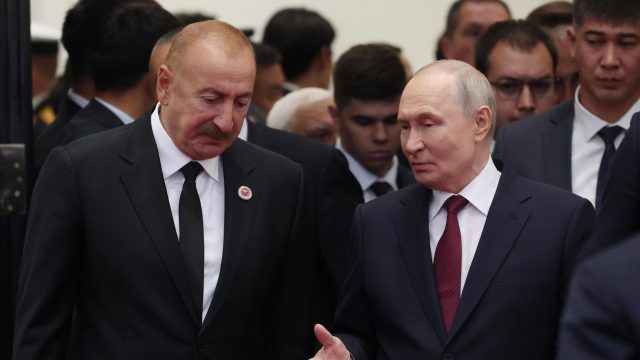
Russian President Vladimir Putin has warned that Armenia could lose substantial economic benefits if it moves away from Russia-led integration structures. Russian officials have suggested that abandoning the Eurasian Economic Union could cost Armenia up to 14% of its GDP, while signalling that preferential arrangements currently enjoyed by Yerevan may not continue indefinitely.
Moscow threatens Armenia with EAEU suspension over EU aspirations, echoing 2013 Ukraine crisis
In recent weeks, Moscow has already imposed temporary restrictions on imports of Armenian berries and fresh vegetables. Earlier measures targeted mineral water, flowers and products from several Armenian brandy producers.
Energy has also become part of the pressure campaign. Kremlin spokesperson Dmitry Peskov has publicly linked Armenia’s access to favourable Russian gas prices to its continued participation in Russian-led integration frameworks.
Russian officials have also floated the possibility of ending preferential railway tariffs and tightening conditions for Armenian labour migrants working in Russia.
The rhetoric has extended beyond economics. Russian leaders have repeatedly argued that closer ties with the EU were among the causes of the conflict in Ukraine, comments widely interpreted in Armenia as a warning against deeper Western integration.
The pressure campaign intensified further during a summit of Eurasian Economic Union leaders, where participants endorsed the idea that Armenia should hold a nationwide referendum on whether it wishes to pursue EU integration or remain within the Russian-led bloc.
Yerevan has firmly rejected such proposals. Pashinyan argues that Armenia has not reached a stage where citizens can make an informed decision on EU membership because no accession process is currently underway.
“Until Armenia officially applies for membership of the European Union or moves closer to candidate status, holding a referendum would be illogical,” the Armenian prime minister has said.
The geopolitical dispute is unfolding alongside a fiercely contested election campaign. Moscow has openly favoured opposition figures, particularly the Strong Armenia party associated with Russian-Armenian businessman Samvel Karapetyan.
However, recent polling by Breavis suggests that Pashinyan’s ruling Civil Contract party remains on course for a comfortable victory, with support among decided voters significantly exceeding that of its rivals.
The campaign has also drawn international attention. U.S. President Donald Trump publicly endorsed Pashinyan’s re-election bid, linking Armenia’s political stability to broader regional initiatives, including the recently announced “Trump Route for International Peace and Prosperity”.
Thank you, President @realDonaldTrump for the high appreciation and friendly words 🫶❤️🇦🇲🇺🇸🫶 pic.twitter.com/sn0BMEnKhi
— Nikol Pashinyan (@NikolPashinyan) May 28, 2026
Meanwhile, a Reuters investigation, citing Western intelligence sources and confidential documents, reported allegations that Russia may seek to facilitate the travel of large numbers of Armenian citizens residing in Russia in order to participate in the vote. According to the report, preparations could involve tens of thousands of potential voters and significant logistical expenditures. Reuters reported that the allegations were based on intelligence assessments and has not suggested that any such operation has already taken place.
Brussels has also stepped up its support for Armenia. A spokesperson for the European Commission said this week that the EU remains a reliable partner and is helping Armenia strengthen democratic resilience against hybrid threats, foreign information manipulation and attempts to undermine confidence in democratic institutions.
Analysts in Yerevan warn that Russia’s pressure is unlikely to disappear after the election. Some believe Moscow may seek to make an example of Armenia in order to discourage other countries from moving closer to the West.
U.S. and Armenia advance Trump’s TRIPP corridor as Yerevan accelerates drift from Russia
The full article in Ukrainian by EUalive’s partner European Pravda – here.
Caption: Armenian Prime Minister Nikol Pashinyan addressed the European Parliament on 11 March 2029. [@NikolPashinyan on X]
Updated: June 3, 2026 - 18:07