 Edit
EditReport: Iberian April blackout triggered by excessive voltage
ENTSO-E report rules out renewables and points to cascading failures across the grid as the cause of Europe’s largest energy collapse
The massive power outage that hit the Iberian Peninsula in April is the first known blackout caused by excessive voltage, the European network of electricity transmission system operators (ENTSO-E) said in a report. Released ahead of a 28 October deadline, the report focused on the power system’s condition on the day of the outage and the sequence of events.
The report confirms that the blackout was not caused by over-reliance on renewables, but by a series of cascading events that escalated due to multiple failures across the system. During the half hour preceding the blackout, measures taken to mitigate two periods of oscillations led to an increase in voltage.
Grid connections (transformers) delivering wind and solar power disconnected due to protection settings against high voltages, causing voltages to increase further. As the Iberian system lost synchronisation with the rest of Europe, interconnections with Morocco and France tripped, and emergency disconnections of load failed to recover the situation, ultimately leading to the collapse of the Spanish and Portuguese electricity systems.
The report notes that solar and wind generation in Spain and Portugal on 28 April was broadly consistent with preceding days and seasonal averages. However, relatively few thermal power plants were connected at the time of the incident to provide voltage control services.
The final report is expected in four months, providing more detail on the root causes of the blackout. ENTSO-E has also released a factsheet summarising what is currently known about the causes of the incident.
“The blackout in Iberia was a rare event caused by multiple, complex factors. The ENTSO-E report confirms the Spanish government’s findings that relatively few thermal power plants were connected at the time of the incident to provide voltage control services, and some renewable generation disconnected as the system destabilised. The findings contradict numerous claims that an over-reliance on solar power was to blame. This event reinforces what we already knew. As power systems evolve, enhanced grid upgrades and a focus on clean flexibility are essential for resilience,” said Dr Chris Rosslowe, senior analyst at Ember.
Ember published analysis showing how Spain’s renewables growth has helped decouple its electricity prices from gas. However, the think tank warned that since the blackout, reliance on gas for grid stabilisation has increased costs. Investing in clean flexibility solutions such as interconnection and battery storage remains a key priority for building the renewables-based electricity system of the future.
What happened in Iberia?
On Monday, 28 April, just after midday, a blackout spread across Spain, Portugal and part of southern France. The full collapse of the electricity system left millions without power, halted trains and public transport, shut down lifts, disrupted phone and internet connections, and forced hospitals onto backup generators. The grid was gradually restored and stabilised by the following morning. According to Reuters, this was the largest energy collapse in European history.
Only five seconds were enough to plunge the peninsula into darkness. According to Spain’s transmission system operator Red Eléctrica, around 12:33 an “event” occurred, which the company’s spokesperson described to Spanish journalists as a “power oscillation”, which is a sudden fluctuation in grid power that made it impossible to match supply with demand.
The grid managed the first fault, but just 1.5 seconds later a second “event” triggered a 60% drop in electricity generation, sparking a cascading effect that brought down the entire system. Operators also cut Spain off from the rest of the European transmission network for around an hour due to instability.
The media and public immediately began speculating about the causes and some pointed to renewables as a main reason for the blackout.
Roughly eight hours after the blackout, 43% of power and 421 of 680 distribution substations had been restored, according to Spanish Deputy Prime Minister Sara Aagesen. Full restoration took about 18 hours, aided by hydro resources that allowed plants to operate autonomously, and by imports from France and Morocco.
Initial investigations suggest that the sharp drop in production, which triggered the chain reaction, began in Extremadura in southwest Spain, a region with high solar capacity, two nuclear reactors at the Almaraz plant, and significant hydropower from large reservoirs on rivers flowing from the Portuguese border.
Since the blackout, the Spanish and Portuguese governments have urged the EU to help them develop new power links with other countries, which they say would help their electricity grids respond to disruptions.
A final report, due in the first quarter of 2026, will investigate the root causes and steps taken to control voltage in the system.
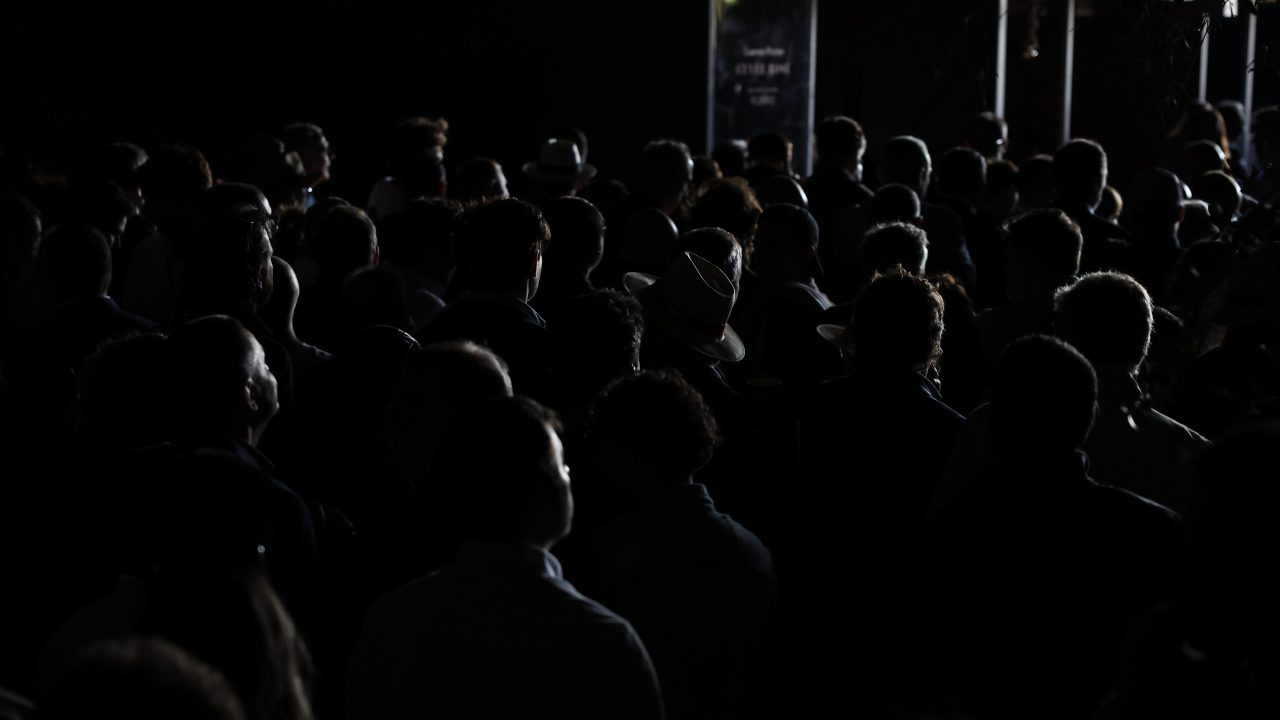
Caption: A view of the spectators of the Mutua Madrid Open tennis tournament during the blackout that hit Spain and Portugal in Madrid, Spain, 28 April 2025 (issued 29 April 2025). A power blackout hit large parts of Spain and spread to neighboring Portugal and France on 28 April, disrupting transport systems, internet connections, and daily life, according to authorities. The exact cause of the outage is unknown. EPA/Chema Moya
Updated: October 6, 2025 - 05:15