 Edit
EditPutin and Macron rekindle dialogue after three-year hiatus
Few details have emerged from the two-hours conversation during which Iran and Ukraine were discussed
On 1 July, Russian President Vladimir Putin and French President Emmanuel Macron held their first phone call in nearly three years, described by the Kremlin as “substantive.”
The two-hour conversation, the first since September 2022, covered the Iran-Israel conflict and the war in Ukraine, reflecting a complex personal and diplomatic relationship that has oscillated between cautious engagement and deep mistrust.
Iran and Ukraine in focus
The call, initiated by Macron, signals a cautious attempt to revive dialogue amid escalating global tensions. According to the Kremlin, Putin emphasized Iran’s right to peaceful nuclear energy development while adhering to the Non-Proliferation Treaty.
Macron, who views Iran’s nuclear program as a critical issue warranting the involvement of all five U.N. Security Council permanent members, urged full cooperation with the International Atomic Energy Agency (IAEA).
This comes after Iran’s parliament voted to suspend IAEA cooperation following U.S. and Israeli strikes on its nuclear sites, which were aimed at thwarting Tehran’s alleged nuclear ambitions – an accusation Iran denies. Macron’s office highlighted his push for a “diplomatic solution” to address Iran’s nuclear program, missile capabilities, and regional influence, noting that both leaders agreed to “coordinate” efforts.
On Ukraine, the leaders reprised familiar positions. Putin blamed the war on the West’s disregard for Russia’s security interests, insisting any peace deal must reflect “new territorial realities” – a reference to Russia’s illegal annexation of Ukrainian territories.
Macron, unwavering in his support for Ukraine’s sovereignty, stressed that Kyiv alone should decide on territorial concessions. He briefed Ukrainian President Volodymyr Zelenskyy before and after the call and also discussed it with U.S. President Donald Trump, underscoring France’s role as a diplomatic bridge.
The Kremlin transcript of the conversation regarding Ukraine reads:
“When considering the situation around Ukraine, Vladimir Putin recalled that the Ukrainian conflict is a direct consequence of the policies of Western states, which for many years ignored Russia’s security interests, created an anti-Russian foothold in Ukraine, condoned violations of the rights of Russian-speaking residents, and are now pursuing a policy of prolonging military actions, fuelling the Kyiv regime with various modern weapons.
“Speaking about the prospects for a peaceful settlement, the Russian President confirmed the fundamental approaches to possible agreements, which should be comprehensive and long-term, provide for the elimination of the root causes of the Ukrainian crisis and be based on new territorial realities.”
Conversely, the French communiqué reads:
“Regarding Ukraine, the President of the Republic emphasized France’s unwavering support for Ukraine’s sovereignty and territorial integrity. He called for the establishment, as soon as possible, of a ceasefire and the launch of negotiations between Ukraine and Russia for a solid and lasting settlement of the conflict. The two Presidents will continue to discuss this issue as well.”
A relationship of ups and downs
Macron and Putin’s interactions have long been marked by a mix of pragmatism and tension. Early in Macron’s presidency in 2017, he hosted Putin at Versailles, signalling an ambition to keep open channels with Moscow despite Russia’s annexation of Crimea in 2014.
Macron’s approach, rooted in France’s tradition of strategic autonomy, aimed to position himself as a mediator in global crises. This culminated in a high-profile visit to Moscow in February 2022, just weeks before Russia’s invasion of Ukraine, where Macron sought to avert conflict. The now-iconic image of the two leaders seated at opposite ends of a long table underscored the physical and political distance between them.
Macron’s efforts to broker peace were criticized by some European allies, who saw his engagement with Putin as naive or overly conciliatory, especially as Russia’s aggression escalated. By mid-2022, their dialogue had effectively collapsed, with Macron later admitting that Putin’s assurances during those talks were deceptive.
A fragile reconnection
The call marks a tentative step toward re-engagement, but the Macron-Putin relationship remains strained by past betrayals and divergent goals. Macron’s earlier attempts to build rapport with Putin, including inviting him to his private residence in 2019, contrasted sharply with the breakdown in trust after Russia’s invasion of Ukraine.
Macron’s insistence on dialogue, even at the risk of alienating allies, reflects his belief that isolating Russia entirely is counterproductive.
Yet, Putin’s rigid stance on Ukraine and Macron’s firm support for Kyiv highlight the limits of their rapport. As permanent U.N. Security Council members, France and Russia share a platform for coordination, but the shadow of their turbulent personal and diplomatic history looms large.
With Reuters and press releases from the Elysée and the Kremlin, edited by g.g.
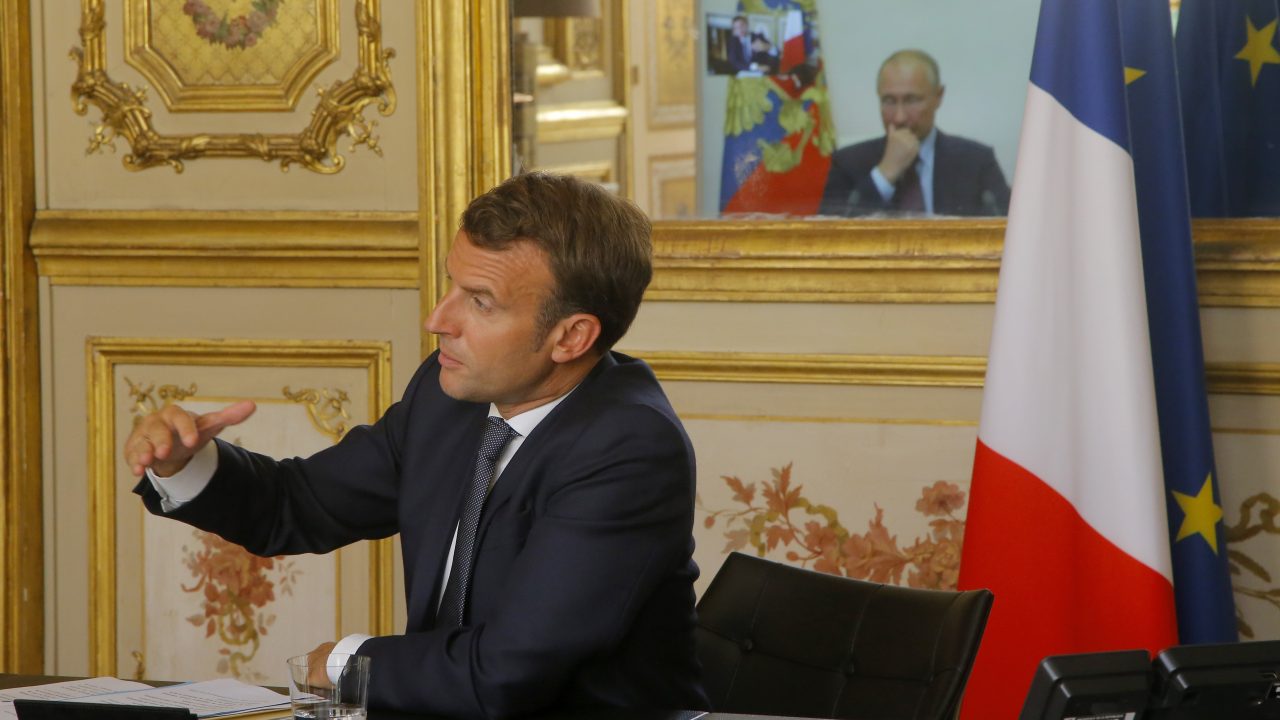
Caption: French President Emmanuel Macron talks to Russian President Vladimir Putin during a video conference at the Elysee Palace in Paris, France, 26 June 2020. Russian President Vladimir Putin holds video talks with French President Emmanuel Macron about the virus, Libya, Syria and relations with the U.S. under Donald Trump. EPA-EFE/Michel Euler / POOL
Updated: July 2, 2025 - 05:18