Edit
Parliament tells Šefčovič: no business as usual in Beijing
MEPs back a tougher China line on trade, security and rights before the commissioner’s visit, citing a near-€1 billion daily deficit and reports of Chinese military training for Russian troops
The European Parliament told Trade Commissioner Maroš Šefčovič to drop “business as usual” with Beijing ahead of his visit to China, which begins on 8 October.
In a recommendation adopted by 454 votes to 86, with 110 abstentions, MEPs said the relationship has reached a critical point because of unfair Chinese economic practices and Beijing’s stance on Russia’s war against Ukraine. Dialogue on global challenges, peace, security, climate and human rights still matters, they said, but trade imbalance, security and European values are now part of the same file.
Rapporteur Hilde Vautmans (Renew Europe) read the majority as cross-party backing for a more united China policy. “Europe’s relations with China cannot continue as they are today,” she said after the vote, listing three priorities: economy, security and values. The result, she argued, gives Šefčovič “a very strong political mandate.” Europe should expect concrete results.
On security, MEPs voiced deep concern at verified reports that the Chinese military has trained Russian personnel to fight in Ukraine. The EU should coordinate with the United States, the G7 and like-minded partners, and press China to use its influence on Moscow to help end the war. Vautmans said Brussels must protect critical infrastructure from espionage and foreign interference and act against Chinese companies that support Russia’s war machine. Peace and stability in the Taiwan Strait, she added, are a direct European interest. On rights she cited Tibet, forced labour and Hong Kong: “Economic interests can never mean silence on human rights.”
The economic demands centre on what Vautmans called a deficit of “almost a billion euros every day.” MEPs want a firm response to the misuse of Europe’s excessive dependence on China, and a de-risking strategy covering critical raw materials, medicines, batteries, electric vehicles, information and communication technologies, semiconductors and other strategic sectors. They also want tighter investment screening and better protection of critical technologies, infrastructure and supply chains. Chinese industrial overcapacity, state subsidies and restricted access for European firms are listed as the main distortions. Where Beijing dumps electric vehicles, steel or solar panels, Vautmans said, Europe should use its trade-defence instruments. Other EU institutions are asked to enforce reciprocity and a level playing field, with proportionate action if China does not open its market.
For the Beijing trip she wants movement on the trade gap, better market access, real reciprocity and reliable supplies of critical raw materials without politically motivated restrictions. “We are not seeking confrontation with China. We want a genuine partnership. But that requires reciprocity, respect and trust.” She described the recommendation’s novelty as political unity around concrete measures and a revival of parliamentary diplomacy. MEPs also call for a stronger Global Gateway as a credible alternative to the Belt and Road Initiative, especially in Africa and Latin America. The text restates the EU’s “One China” policy and opposes any unilateral change to the status quo in Taiwan by force or coercion.
Three European Parliament delegations visited China between March and June 2026. Members of the international trade committee are due back from 27 to 29 October, about ten days after a European Council partly devoted to global macroeconomic imbalances.
The article in Italian by EUalive’s partner FocusEurope.it can be found here.
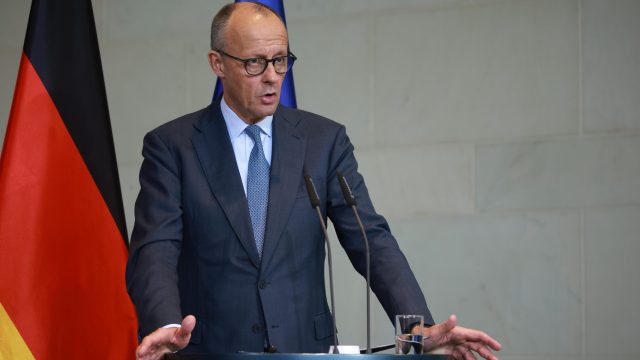
Caption: Maroš Šefčovič on 17 June 2026. EP plenary session – preparation of the European Council meeting of 18-19 June 2026 [European Parliament Multimedia Centre]
Updated: October 8, 2026 - 16:08