Edit
Mickoski and Mitsotakis: parallel paths and shared authoritarian trends in Greece and North Macedonia
The most alarming parallel is the weakening of political opposition, creating a semblance of democracy without effective checks
In two distinct Balkan nations, yet with striking parallels in governance, right-wing leaders Kyriakos Mitsotakis of Greece and Hristijan Mickoski of North Macedonia are charting remarkably similar courses to consolidate power, writes Spiros Sideris, chief editor of the Independent Balkan News Agency (IBNA), a partner of EUalive.
From reformist rhetoric to nationalist mobilisation, from institutional control to the marginalization of opposition, the strategies of Mitsotakis and Mickoski raise pressing concerns about the future of democracy in the region.
National narratives: Prespa, identity, and adversaries
Opposition to the Prespa Agreement served as a pivotal rallying point for both leaders. Mitsotakis fiercely criticized the agreement, decrying perceived concessions to national identity, though as prime minister, he has pragmatically adhered to international commitments.
Mickoski, by contrast, has made identity politics a cornerstone of his agenda, heightening tensions with Bulgaria and amplifying ethnocentric narratives targeting North Macedonia’s Albanian minority.
In both cases, nationalist rhetoric serves as a powerful tool for domestic mobilization rather than a means of fostering conflict resolution.
Scandals and corruption: From “Greek Watergate” to Balkan clientelism
The Mitsotakis government has been rocked by high-profile scandals, including the “Greek Watergate” wiretapping affair involving surveillance of politicians, journalists, and officials, alongside allegations of nepotism, media manipulation, and EU sanctions over mismanagement of funds.
While Mickoski himself has not been directly implicated in personal scandals, his VMRO-DPMNE party carries a legacy of entrenched corruption and clientelist networks. Recent investigations, such as those into family travel expenses, have fuelled suspicions that Mickoski’s administration is perpetuating the systemic corruption of the past.
National tragedies: rhetoric without accountability
Mitsotakis has faced scrutiny over his handling of national tragedies, including the deadly Tempe train collision, the Pylos shipwreck, and devastating wildfires. His response has followed a predictable pattern: acknowledging “political responsibility,” promising investigations, yet shielding high-ranking officials from accountability, resulting in widespread perceptions of impunity.
Similarly, Mickoski has responded to tragedies like the Kocani fire with pledges to hold those responsible accountable. However, North Macedonia’s opaque institutional framework and lack of transparency undermine the credibility of such commitments.
Partisanship: reform promises undermined by immobilism
Both leaders campaigned on promises to dismantle entrenched party rule and usher in reform. In Greece, however, Mitsotakis has appointed veteran party loyalists to key positions, consolidating his control and maintaining a tight grip on information flows.
In North Macedonia, Mickoski’s VMRO-DPMNE is reviving the deep-rooted party networks that defined its earlier rule, with public administration remaining a tool of partisan influence in both nations.
Despite their rhetoric of change, both leaders have perpetuated systems that prioritize loyalty over merit.
Suppression of opposition
Perhaps the most alarming parallel is the systematic weakening of political opposition, creating what resembles a democracy without effective checks.
In Greece, the opposition has been so diminished – through media control and New Democracy’s strategic dominance – that it struggles to serve as a meaningful institutional counterweight.
In North Macedonia, the Social Democratic Union (SDSM) appears politically stagnant, leaving VMRO-DPMNE to dominate with little credible resistance.
In both countries, democracy risks devolving into an exercise of power devoid of robust debate or accountability.
Parallel lives, democratic erosion
Despite their distinct contexts, Kyriakos Mitsotakis and Hristijan Mickoski are pursuing strikingly similar trajectories. They project visions of national unity and modernisation, yet their governance is characterised by institutional control, political impunity, and the sidelining of opposition.
The emerging picture is not one of visionary leadership propelling their nations forward, but of two politicians who, with varying degrees of intensity, perpetuate the darker facets of Balkan governance: authoritarian tendencies, limited accountability, and the consolidation of power within their own camps as the sole legitimate authority.
For the Balkans – and indeed for Europe – the question looms large: where does effective governance end and the erosion of democracy begin? The parallel paths of Mitsotakis and Mickoski underscore a critical challenge for the region, as their leadership styles threaten to undermine the democratic principles essential to its stability and progress.
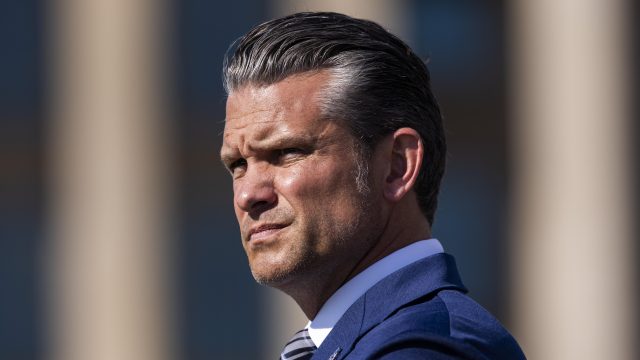
Caption: Greece’s Prime Minister Kyriakos Mitsotakis arrives to attend the EU leaders’ Summit in Brussels, Belgium, 26 June 2025. EPA/OLIVIER MATTHYS
Updated: July 14, 2025 - 06:17