Edit
Merz’s push for “associated membership” for Ukraine: a realistic shortcut or a long shot?
Consistency test: can the EU bend rules for Ukraine without alienating the Balkans?
German Chancellor Friedrich Merz has reignited debate on Ukraine’s EU path with a bold proposal: creating a special “associated member” status that would bring Kyiv much closer to EU institutions without granting full membership rights. In a letter dated 18 May to EU leaders, Merz urged the rapid formation of a dedicated task force to flesh out the idea ahead of the European Council summit in mid-June.
The proposal envisions Ukraine participating in European Council summits and ministerial meetings, gaining a non-voting commissioner in the European Commission, and sending non-voting representatives to the European Parliament. It could also include gradual access to the EU budget and even security guarantees under the EU’s mutual defence clause, all while full accession negotiations continue in parallel.
Merz acknowledges the obvious: full EU membership for Ukraine “is, of course, not possible” in the near term due to the immense challenges of reforms, ratification hurdles across 27 member states, and the ongoing war. He frames the associate status as a pragmatic bridge that delivers immediate political and economic benefits while supporting – rather than replacing – the standard accession process.
Merz’s proposal also envisages extending the EU’s mutual assistance clause (Article 42.7 of the Treaty on European Union) to Ukraine, effectively providing a form of collective defence guarantee from EU allies. However, applying such a pledge in practice would be realistic only if a solid and durable peace agreement is in place, given the clause’s implications and the ongoing risks associated with Russia’s aggression.
How realistic is changing (or bypassing) EU enlargement rules?
“Associated membership” as described does not currently exist in EU treaties. Creating it would likely require unanimous agreement among member states and could involve treaty amendments or creative interpretations of existing frameworks (such as enhanced Association Agreements or observer-style arrangements). Past enlargements have stuck rigidly to the Article 49 procedure: candidate status, negotiations, accession treaty, and ratification. Deviating from this risks setting precedents that worry net contributors and countries wary of deeper integration.
Political feasibility
- Supportive voices: Germany and France, key players, are shaping similar “pre-entry perks” ideas. Several Eastern and Northern member states back faster integration with Ukraine for strategic reasons. The proposal could help lock in Ukrainian reforms and provide tangible wins amid war fatigue.
- Sceptics and opponents: Countries concerned about agricultural competition, rule-of-law standards, or budget implications may resist. Ukraine itself has repeatedly rejected “second-class” or partial membership. President Zelenskyy has stressed full integration only.
- Broader context: The EU is already exploring “accelerated gradual integration” – deeper single-market access, participation in programmes, and institutional involvement without voting rights. Merz’s plan builds on this momentum but pushes it further.
Practical challenges
Reforms remain the core bottleneck. Ukraine must still meet the Copenhagen criteria (rule of law, functioning market economy, ability to adopt the acquis). Even optimistic scenarios see chapters closing no earlier than late 2027, with full accession years away. An associate status could accelerate economic alignment and political buy-in but would not magically bypass these requirements.
War-related issues add complexity. Merz has previously hinted that a peace settlement – potentially involving difficult territorial realities – may need to align with EU timelines, a view that has drawn criticism in Kyiv.
A fair point on the Western Balkans
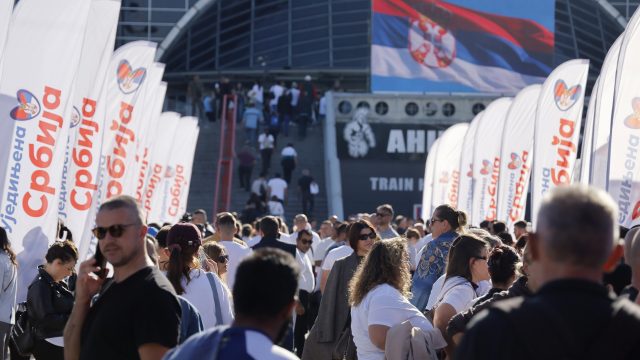
While Merz’s proposal for Ukraine highlights the EU’s growing willingness to bend or supplement traditional enlargement rules for geopolitical urgency, it inevitably raises questions of consistency and credibility. Countries in the Western Balkans – Montenegro, Serbia, Albania, North Macedonia, Bosnia and Herzegovina, and Kosovo – have languished in the EU’s “waiting room” for 15 to 20+ years. Many in the region view the sudden push for creative shortcuts for Ukraine as a painful reminder of double standards: a war-torn Eastern partner potentially receiving “associated membership” perks while long-standing Balkan candidates face political inertia in Brussels.
Outlook
Merz’s initiative reflects growing recognition in Berlin and other capitals that Ukraine needs visible progress now – for its own resilience and for the EU’s credibility – while full membership follows the long road. Whether it materialises depends on the June European Council and subsequent task force work. Success would mark a creative evolution of enlargement policy; failure or dilution into vague observer status would reinforce the view that traditional rules still dominate.
Caption: (L-R) Ukrainian President Volodymyr Zelensky, German Defense Minister Boris Pistorius, German Chancellor Friedrich Merz and Ukraine’s Defence Minister Mykhailo Fedorov arrive for the signing ceremony of a German-Ukrainian agreement on defence cooperation, in Berlin, Germany, 14 April 2026. Following the Hungarian elections on 12 April, the German government expects that the EU’s 90 billion euro loan package for Ukraine will be unblocked swiftly. EPA/CLEMENS BILAN
Updated: May 21, 2026 - 16:17