Edit
Mastering uncertainty: Vučić’s deliberate dance with election timing
Economic pressures, protest energy, and international shifts complicate the president’s decision on whether to call early polls or prolong the suspense
Serbian President Aleksandar Vučić has spent recent weeks deliberately fueling speculation about the timing of snap parliamentary elections, according to an analysis by our partner agency BETA.rs.
While he projects an image of imminent polls within the next few months, the most probable outcome remains a calculated delay, keeping all options open until the moment that best serves his interests.
A shifting timeline and strategic ambiguity
For months, Vučić insisted that elections should wait until after December, once key infrastructure projects tied to Expo 2027 were complete. His recent remarks, however, have introduced greater uncertainty. On 31 March he suggested the vote could occur by the end of the year or even as early as 28 June – St. Vitus Day. Days later, on 3 April, he linked the decision to the war in the Middle East, stating that early summer elections might proceed if peace took hold, but would be postponed amid any major international crisis. By 13 April, he further refined the possibilities, mentioning a potential date by 10 July or a window stretching from September through December.
This fluid rhetoric serves multiple purposes. It keeps political opponents off balance and maintains constant mobilization among his supporters. It also preserves maximum flexibility for Vučić to call the election when conditions appear most favorable. At the same time, the ongoing discussion helps overshadow the ruling coalition’s underwhelming performance in local elections held on 29 March across ten municipalities. Those contests revealed a notable shift in momentum, with opposition forces, particularly those backed by the student protest movement, gaining ground and activating previously disengaged voters.
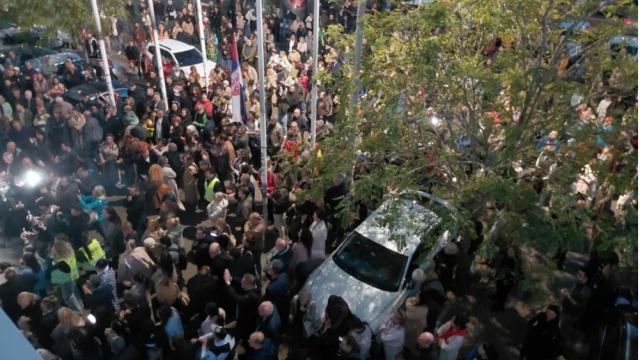
The deadly collapse of the newly rebuilt concrete canopy at Novi Sad’s railway station in November 2024, which claimed 16 lives, continues to cast a long shadow over Serbian politics. What began as demands for accountability over alleged corruption and negligence in public construction quickly evolved into a broader student-led movement challenging the government on issues of transparency, democratic standards, and institutional integrity. Vučić has responded with a mix of tactics: extending invitations for dialogue with opposition figures while simultaneously ordering police actions at Belgrade University, arresting activists, issuing threats against academics, and attempting to politicize the death of a philosophy student.
Reasons for an early vote
Several factors could encourage Vučić to schedule elections as early as the start of summer, perhaps on 28 June or 5 July. One practical consideration involves voter behavior: many citizens, especially those not aligned with the ruling party, traditionally vacation with their families at the seaside during this period, potentially lowering turnout among opposition-leaning demographics.
Another concern is the economy. Signs of deterioration in the second half of the year could heighten public dissatisfaction, making a later vote riskier. Additionally, a swift election might catch opposition groups unprepared, forcing them to run on fragmented tickets rather than uniting behind a single list, an approach that has proven effective for anti-government forces in recent local contests.
External developments add further pressure. Hungarian Prime Minister Viktor Orbán’s recent electoral setbacks could influence the Alliance of Vojvodina Hungarians, a longtime coalition partner of Vučić’s Serbian Progressive Party (SNS). Shifts in Budapest might prompt that ally to reconsider its alignment, though any change is more likely in the fall than immediately. Meanwhile, the loss of key protection within the European Union has left the door open for stronger Western criticism. The European Commission is already weighing the suspension of up to €1.5 billion in funding over concerns about democratic backsliding and Serbia’s ties with Russia. Questions also linger about potential repercussions tied to investigations involving Orbán.
The case for delay and looming instability
Despite these incentives for speed, compelling reasons exist for Vučić to postpone the vote until December or even later. The local election results, while officially claimed as a clean sweep by the ruling side, exposed vulnerabilities. The SNS retained its core electorate but struggled in places like Kula and Aranđelovac without coalition support, where student-backed tickets emerged stronger. In larger cities, anti-Vučić sentiment runs deeper, and citizen efforts to monitor and prevent electoral irregularities have demonstrated sustained energy among opponents.
The president’s primary motivation for delay, however, centers on the high risk of post-election turmoil. Neither side appears willing to accept defeat gracefully. Opposition demands have moved beyond simply calling for elections; many now insist on a genuine transfer of power, including Vučić’s withdrawal and the dismantling of the entrenched system he oversees. If the opposition claims victory while alleging widespread fraud on a scale that strips the government of legitimacy, the result could be mass protests with unpredictable consequences.
Such a scenario would plunge Serbia into a deep institutional crisis. By extending the timeline, Vučić buys time to exploit divisions within the opposition, erode the momentum of the student movement through targeted measures, or capitalize on potential disillusionment among pro-opposition citizens. Yet this strategy carries risks of its own. Prolonged waiting could instead foster greater unity among opposition actors or create a referendum-like atmosphere that proves even more damaging to the ruling coalition.
The facade of consultation
Vučić initiated on 13 April formal consultations with political parties regarding both the possibility of snap elections and Serbia’s foreign policy orientation amid shifting global dynamics. Participants included all ruling coalition members and a handful of nominally opposition groups widely viewed as aligned with the president, such as “We – A Voice From the People” led by Branko Pavlović, the Concord United Trade Unions of Serbia under Željko Veselinović, and Vladimir Gajić’s People’s Party. The inclusion of these actors lent the process an appearance of inclusivity, though several MPs from the Concord Worker’s Movement resigned in protest after Veselinović’s participation.
Following the talks, most coalition partners publicly opposed immediate snap elections, with some calling instead for a government reshuffle – a move Vučić had already hinted at. Critics describe the entire exercise as political theater designed to project democratic openness. In reality, the views expressed by coalition partners carry little weight in the president’s final decision. Their stated reluctance to vote soon allows Vučić to portray any delay as deference to allies rather than personal caution, reinforcing the narrative that he remains unafraid of the ballot box.
The consultations also touched on Serbia’s European Union path. By floating the idea of a possible foreign policy shift, and amplifying voices like the pro-Russian Movement of Socialists, whose leader Aleksandar Vulin called for a referendum on EU integration – Vučić appears to be applying pressure on Brussels. The message is clear: continued support for his leadership may be necessary to keep Serbia on its declared pro-European course.
In the end, the timing of Serbia’s next parliamentary election remains a complex equation shaped by domestic protest, economic pressures, international relations, and the ever-present threat of post-vote instability. Vučić continues to hold the initiative, using ambiguity as a tool to maintain control. Whether he opts for an early summer surprise or a more measured approach later in the year, the underlying tensions unleashed by the Novi Sad tragedy and the student movement have already altered the political landscape in lasting ways.
A longer version of the original article by BETA can be found here.
Caption: The President of Serbia Aleksandar Vučić addressing the media on 15 April after a meeting with the highest leadership of the Ministry of Defence and the Serbian Army in the “Banjica” barracks. (Government of Serbia)
Updated: April 16, 2026 - 10:31