Edit
Lithuanian Prime Minister resigns amid financial misconduct allegations
Gintautas Paluckas steps down following pressure from coalition partners and an ongoing investigation into potential conflicts of interest
Lithuanian Prime Minister Gintautas Paluckas submitted his resignation amid an ongoing investigation into suspected financial misconduct related to companies in which he holds stakes. The move, announced on 31 July by President Gitanas Nausėda, comes after mounting pressure from within the governing coalition and growing public scrutiny.
Paluckas has yet to make a public statement, but his departure follows warnings from the junior coalition partner, the centre-left Democratic Union “For Lithuania”, that it would exit the government unless he stepped down by 18 August. Without the party’s 14 parliamentary seats, the Social Democrats and their remaining coalition partner, the right-leaning “Dawn of Neman”, would be left with a fragile majority of 71 in Lithuania’s 141-seat Seimas.
Allegations of preferential state loans
The controversy centres on financial dealings involving “Garnis”, a battery-producing company in which Paluckas reportedly owns a 49% stake. The company reportedly received a €200,000 loan from the state development bank ILTE shortly after Paluckas assumed the office of prime minister.
Investigations by Lithuanian media and watchdog groups suggest that the loan was granted under preferential terms through a support programme intended for start-ups and small businesses. Critics argue that the loan may have indirectly benefited “Emus,” another company in which Paluckas has long held shares but which failed to qualify for such funding.
A report by local outlet Made in Vilnius alleged that Garnis, a newly registered firm with no submitted financial records, may have served as a vehicle to transfer funds or contracts to Emus. Additional reports suggest invoices were issued to “Garnis” while deliveries were sent to “Emus”, raising further concerns about the use of state funds.
In response, the director of “Garnis”, Artūras Lapinskas, dismissed the allegations as “nonsense” and said he would file a complaint with the Data Protection Authority over the media coverage. Paluckas himself has maintained that there is no legal or structural link between the two companies and insisted that he played no role in the loan application or its approval.
Ethical review underway
Paluckas has requested an official review by the National Commission on Ethics in Public Service (NCEPS), which reports to the parliament. According to its chairman, Gediminas Sakalauskas, the commission will investigate whether Paluckas breached any legal or ethical standards. The review could take up to three months.
Meanwhile, critics argue that the prime minister should have avoided any appearance of impropriety by distancing himself more clearly from his business interests, particularly given the decisions taken by his cabinet in February and March that affected ILTE’s operations.
Paluckas’ insistence that he acted legally and transparently has failed to calm the public or political opposition.
Opposition figures, including former Prime Minister Ingrida Šimonytė, condemned what they called double standards in how the current administration is treated compared to previous governments. “If this were my government, I would have been publicly crucified,” she told the media.
Meanwhile, supporters within Paluckas’ own party and coalition have defended him. Remigijus Motuzas, head of the Social Democratic parliamentary group, stated there is no evidence of illegal activity. He emphasised that the loan was granted through regular procedures and that Paluckas had no involvement in the decision-making process.
Others, however, including Seimas Speaker Saulius Skvernelis from the “For Lithuania” party, stressed that the prime minister should have clearly separated his political responsibilities from private business interests. “Politics and business must be kept apart,” he said. “Especially when the prime minister is always under the magnifying glass.”
The resulting political uncertainty comes at a sensitive moment for Lithuania, which is preparing to face upcoming joint military exercises between Russia and Belarus near its borders.
While foreign policy is expected to remain stable under President Nausėda, the internal turbulence raises questions about governance and coalition cohesion just over a year before the next scheduled parliamentary elections.
What lies behind Russia’s large-scale military exercises in Belarus?
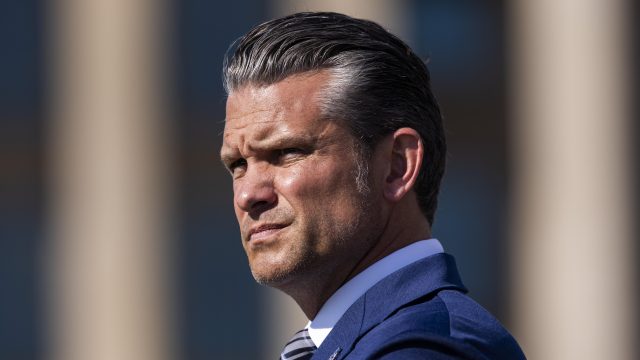
Caption: Lithuanian Prime Minister Gintautas Paluckas attends a press conference after the Baltic Council of Ministers meeting in Riga, Latvia, 30 May 2025. EPA/VALDA KALNINA
Updated: July 31, 2025 - 12:55