 Edit
Is this vote-buying? Trump floats $5,000 “dividend” if Republicans keep Congress
Campaigns routinely promise tax cuts, spending programs, or benefit expansions that take effect after an election
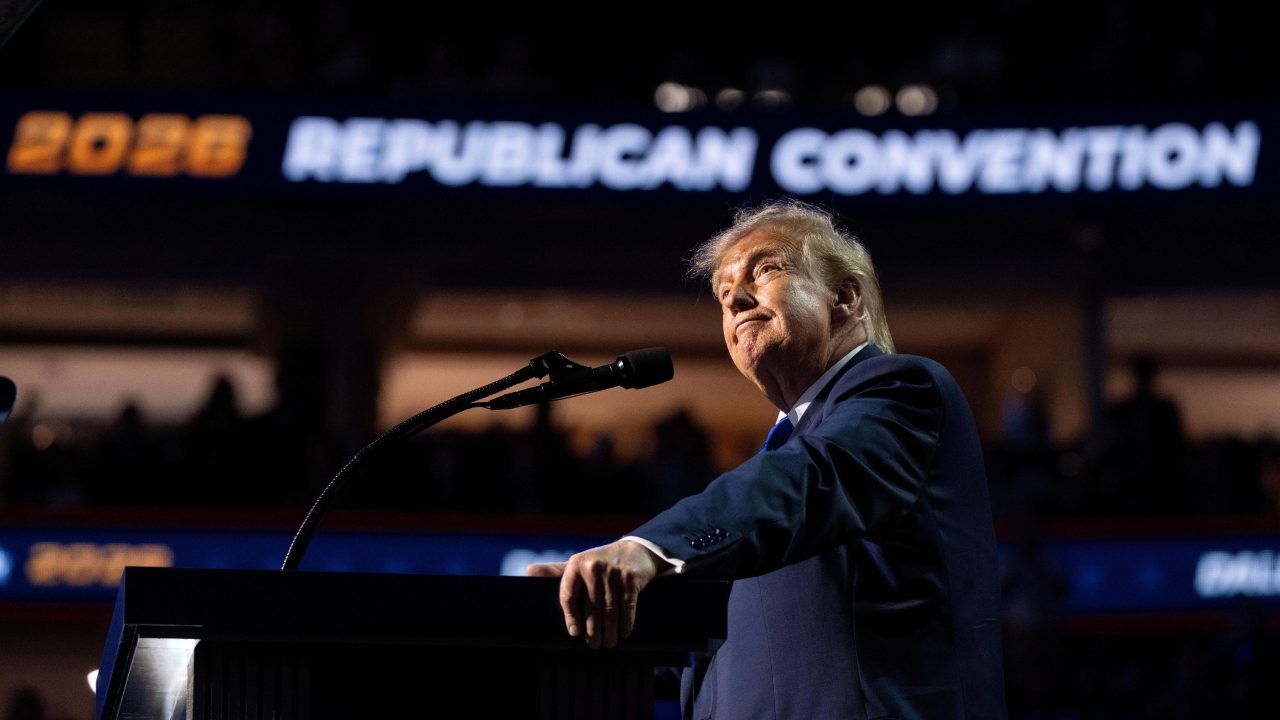
President Donald Trump told supporters at the Republican midterm convention in Dallas that he would issue a $5,000 payment – called the “Trump Dividend” – to every adult U.S. citizen if Republicans retain control of both the House and Senate in November. He described it as a distribution from economic success, similar to a company cash dividend, and suggested tariffs could help fund it. Recipients would have to spend the money inside the United States.
The idea would cost well over $1 trillion. With roughly 250 million adult citizens, the arithmetic is straightforward and enormous. Trump did not detail the exact eligibility rules, the legislative path, or how the payments would be administered. Similar earlier pledges – tariff rebates and a “DOGE dividend” – were never delivered.
The announcement is being treated by many observers as a late-campaign turnout play. Trump is personally unpopular in several polls, and Republicans face difficult House math. Conditioning a large, universal cash transfer on one party’s electoral success immediately raised the question of whether this is vote-buying.
A promise is not criminal
Under U.S. law, classic vote-buying is a crime: paying an individual to vote, or to vote a certain way, with private money or a personal inducement. Federal statutes target that kind of quid-pro-quo transaction. A candidate promising that the government will later send checks if his party wins is treated differently. Campaigns routinely promise tax cuts, spending programs, or benefit expansions that take effect after an election. Those promises are political, not criminal.
Critics argue this case sits closer to the line because the payment is explicit, large, universal, and tightly tied to a single election outcome rather than a standing policy. They see it as an attempt to purchase turnout with public money. Defenders reply that voters already expect government transfers, that tariffs are a stated revenue source, and that every party offers fiscal benefits to its coalition. They note that stimulus checks, tax credits, and other cash-like programs have been used by both parties without being prosecuted as vote-buying.
The practical barriers are large. Any such payment would require congressional legislation, face scoring and deficit rules, and compete with existing spending. Past Trump cash promises did not survive that process. Whether the proposal is shrewd politics, reckless fiscal signalling, or something closer to an inducement is a judgment voters and commentators will make; the legal category of “vote-buying” has so far been reserved for narrower, individual transactions rather than campaign-wide policy pledges.
As Trump takes center stage in Dallas, Republicans debate a future without him
Caption: U.S. President Donald Trump speaks on the first day of the Midterm Republican National Convention at the American Airlines Center in Dallas, Texas, USA, 9 September 2026. The two-day event, conceived by US President Donald Trump to spotlight key midterm congressional races, runs 09-10 September. EPA/JEFF MCWHORTER
Updated: September 10, 2026 - 08:02


