Edit
Hungary trades its EU veto for a Ukraine minority-school law
A sequenced deal would open two Ukrainian accession clusters on 13 October if Kyiv passes education changes
Hungary is set to lift its veto on two chapters of Ukraine’s EU accession talks on 13 October, under a sequenced deal that trades a minority-education law in Kyiv for the end of a blockade Budapest has used, in different forms, for nearly a decade.
The dispute is older than the full-scale war. Ukraine’s 2017 education law and 2019 language law cut the scope of minority-language schooling and required more Ukrainian in secondary grades. Viktor Orbán treated the change as an attack on the Hungarian community in Zakarpattia, blocked Ukraine’s NATO and EU steps, and spent years telling Hungarian voters that Kyiv was hostile. Kyiv’s position was that the laws applied to all minorities, excluded Russian from the concessions sought by Budapest, and answered a real decline in Ukrainian-language competence in some schools. EU benchmarks later wrote the outstanding minority points into Ukraine’s accession roadmap. Orbán never closed the file.
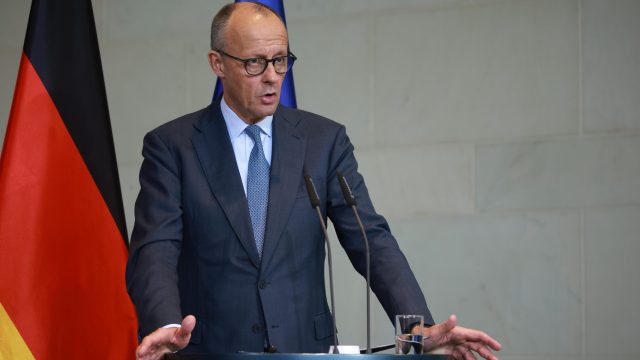
Péter Magyar’s government, in office since spring 2026 after defeating Fidesz, inherited the veto and then widened the quarrel. At a Carpathian summit Hungary had initially accepted, Magyar accused Kyiv of acting without Budapest’s consent and tore up a Naftogaz–MOL deal on oil storage that would have paid Hungary and given Ukraine more secure fuel. The outburst answered Orbán-party claims that the new government had become too pro-Ukrainian. Kyiv did not answer in kind. Within days Budapest was looking for a way back; the turn came at the UN General Assembly, where Foreign Minister Anita Orbán met Andrii Sybiha and both sides agreed to keep the talks quiet. Parallel contacts between Anita Orbán and Deputy Prime Minister Vsevolod Chentsov, already under way before the summit, resumed.
The bargain is an old promise with a new enforcement mechanism. Ukraine tables amendments to the education law, already an official accession benchmark and cleared with Hungarian, Romanian and other minorities. Hungary lets the Irish presidency request Ukraine’s negotiating positions on cluster 2 (internal market) and cluster 3 (competitiveness and inclusive growth)—the bureaucratic step Budapest has been vetoing—and then allows the clusters to open at the 13 October Council in Luxembourg. Each side moves in parallel and can stop if the other does. Parliament is to pass the bill in a single extraordinary sitting on 12 October, first reading and final vote together. Chentsov says the aim is still to open every cluster by the end of the year; diplomats involved say a Zelenskyy–Magyar meeting will probably be required before the last two can move.
The text creates a “national-minority school” status once minority-language pupils exceed 50 percent, keeps the status down to 20 percent, and exempts sitting head teachers from a new Ukrainian-language certificate. Children may use their language at breaks. The status also covers indigenous languages, including Crimean Tatar, on easier terms. It does not cover Russian. Language-law defender Volodymyr Viatrovych has said the main risks were removed and that he will vote for it. Mykyta Poturaiev, a co-author, says the two points still disputed with the Hungarian side were settled on those terms.
None of this restores trust. Ukrainian officials believe the current government already broke a June promise to open all clusters once the roadmap was agreed, and Magyar still competes for voters Orbán spent sixteen years convincing that Ukraine is an adversary. The design of the deal assumes either side may walk. If it holds, Budapest can claim a minority outcome Orbán never got, and Kyiv gets two clusters open in time for the 15 October European Council. The loser, if the sequence survives, is the old veto—and the party that built a decade of policy on keeping it.
The article by EUalive’s partner European Pravda can be found here.
Caption: Hungary’s Prime Minister Peter Magyar attends a press conferencd after a Visegrad Group (V4) and Ireland leaders’ summit in Bratislava, Slovakia, 10 September 2026. EPA/JAKUB GAVLAK
Updated: October 8, 2026 - 06:56