Edit
Greece moves closer to Israel while Israel-Turkey rivalry intensifies
Athens acquires multi-layered air defence network as Aegean tensions with arch-foe Turkey intensify
Greece is set to sign a 3.1 billion euro defence agreement with Israel in Tel Aviv, marking the largest single defence export deal in Israeli history and equipping Athens with its first fully integrated, multi-layered air defence system.
A Greek delegation will formalise the contract with the Israeli Defence Ministry, concluding three years of negotiations. The systems, known collectively in Greece as Achilles’ Shield, will be delivered in stages and are scheduled to reach full operational readiness within 35 months.
Most of the funding will flow to Rafael Advanced Defence Systems for David’s Sling batteries capable of intercepting heavy rockets and ballistic missiles, alongside mobile Spyder systems designed to counter drones and other unmanned aerial vehicles. Israel Aerospace Industries will supply the Barak MX system for protection against aircraft and missiles. The package also includes a national command-and-control centre equipped with artificial intelligence capabilities, modelled in part on Israel’s own integrated air defence architecture. This centre will coordinate the various batteries and manage missile launches across the network. Greek industry is expected to take roughly 25 percent of the work, with local companies receiving approximately 700 million euros as subcontractors. Spyder batteries will be deployed on Greek islands, including destinations popular with Israeli tourists.
Greek Defence Minister Nikos Dendias has described the project as a central element of the government’s Agenda 2030 military modernisation programme. He called Achilles’ Shield “an important link in the reform of the armed forces” and “a necessary response to the geopolitical and technological challenges of our time,” arguing that the initiative is guiding Greece toward a new reality of defence and deterrence.
Strategic partnership deepens amid regional friction
The agreement further solidifies a growing strategic partnership between Greece and Israel at a moment when tensions between Athens and Ankara have sharpened. Greece, Cyprus and Israel have intensified security coordination in recent years. Cyprus has already acquired the Barak MX system, according to foreign reports, while Greece has previously purchased Spike missiles and SPICE precision-guided munitions from Rafael, Rampage missiles from Elbit Systems and Israel Aerospace Industries, and Heron 2 drones from IAI. The new air defence deal positions Israel as a key partner in protecting Greek airspace.
Relations between Greece and Turkey, long marked by disputes over maritime boundaries and the status of Aegean islands, briefly improved after the February 2023 earthquake in Turkey, when Athens provided substantial aid. The two sides signed the Athens Declaration on Friendly Relations and Good-Neighbourliness in December 2023. That period of relative calm lasted less than three years. In recent weeks Turkey designated two marine parks in the Aegean and eastern Mediterranean, one encompassing waters between the Greek islands of Lemnos and Samothrace and another east of Rhodes surrounding Kastellorizo. Greece’s Foreign Ministry labelled the designations illegal, stating that Turkish marine parks outside Turkey’s territorial waters hold no legal validity. Prime Minister Kyriakos Mitsotakis stressed that areas under Greek sovereignty are determined by international law and that Greece remains ready to defend them.
Turkey establishes two Aegean marine national parks, drawing Greek protest
Greek officials view the Turkish parks as an attempt to advance Ankara’s “Mavi Vatan,” or Blue Homeland, doctrine, which asserts expansive claims over exclusive economic zones belonging to Greece and Cyprus and challenges the sovereignty of numerous Greek islands. Greece has responded by accelerating its own military investments. After years of restrained spending, Athens ranked among the world’s larger arms importers between 2021 and 2025. The Achilles’ Shield project is explicitly designed to counter a spectrum of threats, including those originating from neighbouring countries, and is expected to be fully operational by 2029.
Turkey-Israel rivalry: Erdogan and Netanyahu’s escalating war of words
President Recep Tayyip Erdoğan of Turkey has repeatedly branded Israel a “terror state,” likened Prime Minister Benjamin Netanyahu to Hitler, and floated the possibility of Turkish military action against Israeli interests. Netanyahu has fired back, labeling Erdoğan an “antisemitic dictator,” while Israeli officials accuse Ankara of backing terrorism and behaving like an enemy state.
This verbal confrontation reflects a deepening strategic rivalry that analysts warn could heighten instability across an already volatile Middle East. Both nations are U.S. allies with strong ties to the Trump administration, yet their assertive military postures and competing regional ambitions, stretching from the Eastern Mediterranean to Syria and the Horn of Africa, have placed them on a collision course.
Ziya Meral, director of Raven Research and Advisory, describes the situation as an “inevitable geostrategic competition.” While outright war remains unlikely, he cautions that heightened tensions raise the risk of miscalculation. A limited strike intended to “send a message” could easily spiral.
Israel illustrated that danger last week by bombing a disused air base in northern Syria. Officials said the strike aimed to prevent an imminent Turkish deployment. Turkey and Syria denied any such plans; no casualties were reported. U.S. Ambassador Tom Barrack called the attack an “unnecessary escalation” and urged both sides to favor diplomacy over military moves.
Relations were not always this fraught. Turkey was the first Muslim-majority country to recognize Israel in 1948 and stayed out of the subsequent Arab-Israeli wars. Diplomatic and trade ties persisted for decades despite periodic friction over the Palestinian issue. Turkey’s NATO membership and Israel’s close security partnership with Washington further underpinned a pragmatic relationship.
Two recent developments have driven the sharp deterioration: Turkey’s increasingly vocal support for Palestinian causes and its expanding military footprint in Syria, which both countries view as vital to their security. The latest flashpoint came when Turkish authorities issued a warrant for Netanyahu over the interception of a Gaza-bound flotilla. Netanyahu responded by reiterating his “antisemitic dictator” charge and accusing Erdoğan of seeking to export aggression into Syria.
The personal animosity between the two leaders now amplifies broader strategic competition, leaving the region more fragile at a moment when it can least afford another layer of confrontation.
Sources: Kathimerini, Jerusalem Post, The New York Times, Reuters
Israel deepens strategic footprint in Southeast Europe amid shifting security priorities
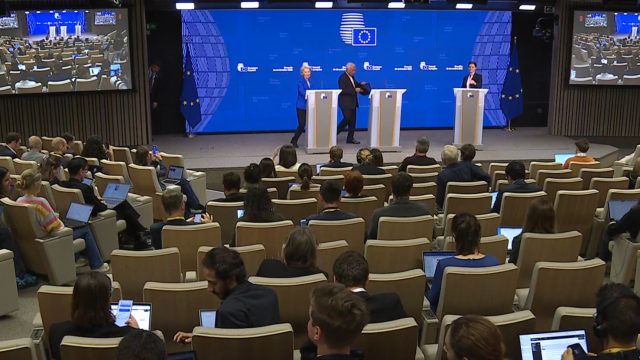
Caption: Greece’s Minister of National Defence Nikos Dendias attends a Foreign Affairs Council in its defence configuration, in Brussels, Belgium, 12 May 2026. The Council will discuss EU defense readiness, coordinate continued military assistance for Ukraine, and evaluate recent security developments in the Middle East. EPA/OLIVIER HOSLET
Updated: August 31, 2026 - 13:11