Edit
Germany had cold feet in Greenland?
Berlin says early departure took place according to plan and was driven by adverse weather conditions, not political considerations
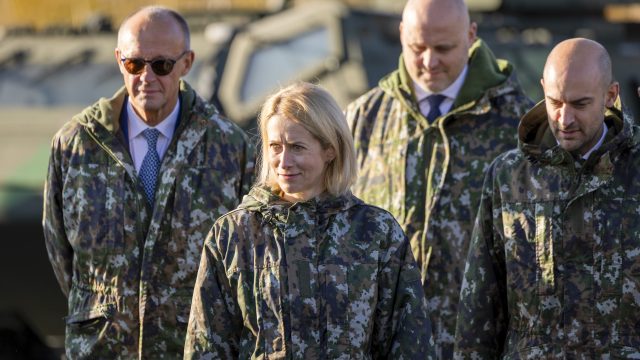
A reconnaissance group of the German Armed Forces has left Greenland earlier than expected, prompting questions among local and international partners at a time of heightened geopolitical tension around the Arctic. Germany’s Ministry of Defence insisted the departure took place according to plan and was driven by adverse weather conditions, not political considerations.
According to the German tabloid “Bild”, 15 German soldiers led by Rear Admiral Stefan Pauli departed Greenland’s capital on the afternoon of 18 January aboard an Icelandair Boeing 737. The order to return to Europe reportedly came early that morning from Berlin.
The German Federal Ministry of Defence confirmed that a flight to the Danish Kangilinghuit air base had been planned for 15-17 January but was cancelled due to bad weather. German soldiers ultimately arrived in Greenland on 16 January together with Norwegian and Swedish troops, as Denmark launched an urgent deployment of advanced units to Nuuk.
The European military presence followed renewed statements by U.S. President Donald Trump, who has described control of Greenland as “absolutely essential” for U.S. national security. Copenhagen and the Greenlandic government decided to reinforce security amid concerns triggered by those remarks.
A Bundeswehr officer said cooperation was ‘as constructive as possible said cooperation with the Danish military during the mission was “as constructive as possible”. The Bundeswehr later stated that the mission had to be shortened because weather conditions prevented a planned visit to the Danish military base on the island.
“Our team, which participated in a multinational reconnaissance mission in Greenland, is completing its mission today as planned,” the ministry said in a statement. It added that the soldiers had gathered “important information”, which would now be used to coordinate possible measures to strengthen security in the North Atlantic and the Arctic together with NATO partners.
Tensions around Greenland have escalated since late 2025, when Trump publicly declared that U.S. control over the island was inevitable. Greenland’s then prime minister, Mute Egede, responded by stressing that the territory was not for sale. On 7 January, Trump went further, refusing to rule out military or economic pressure to establish control over Greenland and the Panama Canal, framing his interest in defence terms.
The rhetoric has drawn sharp reactions from European leaders. Danish Prime Minister Mette Frederiksen called such statements unacceptable when directed at an ally and warned that a U.S. invasion of Greenland would effectively spell the end of NATO. Greenlandic Prime Minister Jens-Fredrik Nielsen described linking the island to military intervention as disrespectful.
At the international level, Germany, France, the United Kingdom, Poland, Italy, Spain and Denmark issued a joint statement stressing that security in the region must be ensured collectively within NATO. On 14 January, Danish Foreign Minister Lars Løkke Rasmussen announced additional funding for armaments aimed at the potential defence of Greenland.
France, at Denmark’s request, decided the same day to mobilise a small military contingent for deployment in Greenland, in coordination with several NATO member states. Swedish, Norwegian and German troops have also arrived to take part in preparations for multinational exercises under Danish auspices.
The security dispute has spilled into trade relations. On 17 January, Trump announced a 10% tariff, effective from 1 February, on goods from European countries that supported Greenland in the face of what he described as the threat of annexation by the United States. He said the tariff would rise to 25% on 1 June and remain in place until the U.S. reached a deal to purchase the island.
European leaders warned that such measures would deepen divisions among allies. European Commission Vice-President Kaja Kallas said on X that China and Russia would benefit from transatlantic rifts, arguing that any risks to Greenland’s security should be addressed within NATO. She cautioned that tariffs would make both Europe and the United States poorer and distract from efforts to help end Russia’s war against Ukraine.
European People’s Party leader Manfred Weber said his group could not approve the EU-U.S. trade deal agreed with Trump in the summer of 2025 as long as threats over Greenland persisted. The agreement, partially implemented but still requiring European Parliament approval, included 15% U.S. tariffs on most EU goods in exchange for the EU scrapping tariffs on U.S. industrial goods and some agricultural products.
European Parliament trade committee chair Bernd Lange called for suspending the agreement and using the EU’s strongest trade defence tools, potentially including tariffs, new taxes on technology companies or restrictions on investment.
In a joint statement, European Council President António Costa and Commission President Ursula von der Leyen underlined that territorial integrity and sovereignty were fundamental principles of international law. They stressed the EU’s full solidarity with Denmark and Greenland, warning that tariffs would undermine transatlantic relations and risk a dangerous downward spiral.
NATO Secretary General Mark Rutte said he had spoken with Trump about the security situation in Greenland and the Arctic, adding that discussions would continue, including at a planned meeting in Davos later this week.
European Council President António Costa said that EU leaders will meet in the coming days to discuss U.S. President Donald Trump’s threat to impose tariffs over Greenland. “Given the significance of recent developments and in order to further coordinate, I have decided to convene an extraordinary meeting of the European Council in the coming days”, Costa wrote on social media.
Sources: European Pravda, Suspilne, BGNES
Caption: Danish soldiers leave the harbor after disembarking a boat at the port in Nuuk, Greenland, 18 January 2026. The Danish Defense will continue the increased presence with exercise activities together with a number of NATO allies in and around Greenland in 2026. This is done in cooperation with the Greenlandic authorities and the Greenlandic government, Naalakkersuisut, as stated on the Danish Defense website. EPA/Mads Claus Rasmussen
Updated: January 19, 2026 - 06:40