Edit
From phase-out to takeover: how Belgium is nationalising its nuclear power from ENGIE
The move marks the latest and most dramatic chapter in the country’s reversal of its long-standing nuclear phase-out policy
Belgian Prime Minister Bart De Wever announced on Thursday a landmark agreement with French energy giant ENGIE. The Belgian state will pursue a full takeover of the country’s entire nuclear fleet. All dismantling activities at the shuttered reactors are suspended immediately while due diligence and studies proceed, with the aim of reaching a binding deal by 1 October.
This move marks the latest and most dramatic chapter in Belgium’s reversal of its long-standing nuclear phase-out policy. After years of legally mandated closures, the government is now effectively nationalising a strategic asset to secure affordable, low-carbon electricity and reduce dependence on fossil fuel imports.
Decades of phase-out policy
Belgium once derived roughly half its electricity from nuclear power. Seven pressurized water reactors – four at Doel near Antwerp and three at Tihange near Liège – formed the backbone of a reliable, low-emission energy system. A 2003 law, heavily influenced by Green politics, mandated their complete phase-out by 2025 and banned new builds.
The policy began unravelling after the 2022 energy crisis triggered by Russia’s invasion of Ukraine. Successive governments granted a 10-year extension to the two youngest and largest units, Doel 4 and Tihange 3 (each around 1,000 MW), which now operate until 2035 under a 50/50 joint venture (BE-NUC) between the state and ENGIE. The older five reactors were progressively shut down: Doel 3 (2022), Tihange 2 (2023), and Doel 1, Tihange 1, and Doel 2 in 2025.
These closures turned Belgium from a net electricity exporter into an importer, exposing the country to volatile prices and neighboring grids (ironically including France’s nuclear-heavy system). De Wever’s centre-right coalition, formed in early 2025, made nuclear revival a priority. Parliament repealed the 2003 phase-out law in May 2025 with overwhelming support, clearing the way for life extensions, restarts, and new capacity- including small modular reactors (SMRs)- with a target of up to 8 GW total nuclear by 2035.
Why ENGIE is exiting – and why the state is buying in
ENGIE, through its subsidiary Electrabel, has long signalled its desire to exit nuclear operations in Belgium to focus on renewables and other assets. The company has already invested heavily in decommissioning provisions and viewed further extensions or restarts as outside its core strategy. Earlier deals transferred significant waste liabilities to the Belgian state, but ENGIE retained operational control and exposure to uncertain costs.
For the De Wever government, full state takeover addresses several pain points. It gives Belgium direct control over a critical infrastructure asset, enables faster decisions on restarts and upgrades, and aligns with goals of energy sovereignty and industrial competitiveness. De Wever has repeatedly criticised past “dogmatic” policies for leaving the country in a weak negotiating position and saddling future generations with high costs.
The letter of intent launches exclusive negotiations and due diligence. The state will assess the full fleet’s condition, including staff, infrastructure, liabilities, and upgrade needs. No price tag has been disclosed, but analysts expect a multi-billion-euro transaction involving assumption of decommissioning and waste responsibilities (already partially state-borne) plus investments in restarts.
Technical and economic stakes
Restarting recently shut reactors is technically feasible and economically attractive compared to new builds. Tihange 1, shut in late 2025, is a strong candidate for relatively quick return at an estimated €350–500 million, potentially delivering power at competitive costs around €65/MWh. Other units would require more work but far less than constructing equivalent new capacity (estimated at €24 billion for two large EPR reactors in France).
Challenges remain: regulatory approvals from the Federal Agency for Nuclear Control (FANC), workforce retention, supply chain revival, and managing public balance-sheet risks from long-term liabilities. ENGIE’s departure means the state or a new operator must step in fully. However, with strong public support (over 70% favor extensions) and European momentum toward nuclear, the political will appears present.
Broader implications
This nationalization fits a wider European “nuclear renaissance.” Countries once committed to rapid phase-outs are reconsidering amid energy security concerns, industrial needs, and climate goals. For Belgium, regaining control could stabilize prices for energy-intensive industries, support reindustrialization and data centers, and position the country as less vulnerable to geopolitical shocks.
Critics, including environmental groups, warn of high costs and delays in renewables. Supporters see it as pragmatic realism: nuclear provides dispatchable, low-carbon baseload that intermittent sources cannot fully replace without massive overbuild and storage. As due diligence unfolds over the coming months, the 1 October 1 target will test whether this ambitious takeover can deliver.
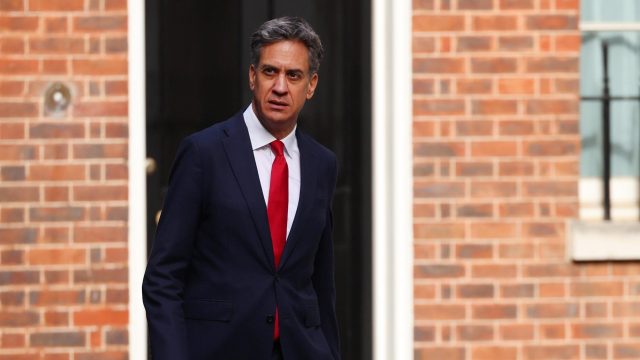
Caption: Belgian Prime Minister Bart De Wever attends a plenary session in the Belgian Federal Parliament in Brussels, Belgium, 16 April 2026. Members of parliament question the prime minister on the government’s plans regarding rising fuel prices and the planned increase in fuel taxes. EPA/OLIVIER MATTHYS
Updated: April 30, 2026 - 10:54