Edit
From Breitbart to Newsmax: Balkan leaders seek a shortcut to Trump
The latest example is North Macedonia's PМ Hristijan Mickoski, who used an interview with Breitbart to air а message aimed at Trump’s circle
Balkan leaders are increasingly using Breitbart as an informal channel to reach Donald Trump’s political circle, presenting their countries as useful partners to Washington in the hope of turning political proximity into concrete deals. Breitbart News Network is a far-right, populist American media outlet known for its aggressive conservative stance and strong alignment with Trump’s MAGA movement, and it is frequently criticized for sensationalism and unreliable reporting.
From Greece and Serbia to North Macedonia, governments are pitching their strategic value on energy, defence, trade and investment, revealing how diplomacy in the region is adapting to Trump’s transactional approach to foreign policy.
The latest example is Macedonian Prime Minister Hristijan Mickoski, who used an interview with the outlet to make а public message aimed at Donald Trump’s political and media circle.
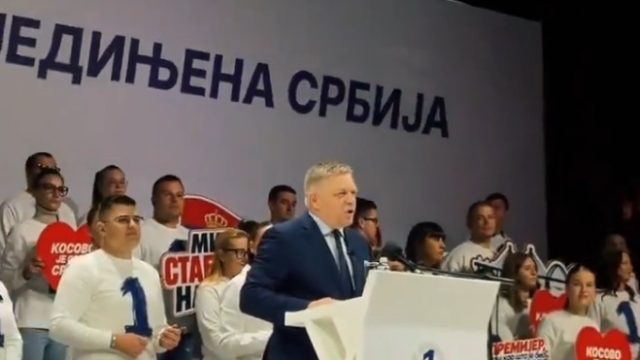
Kyriakos Mitsotakis, Aleksandar Vučić and officials from other Balkan governments have followed a similar path, seeking to present their countries as valuable and willing partners of the United States.
Breitbart’s significance lies less in the size of its audience than in its position within the U.S. conservative ecosystem, where an interview can quickly become a message to the White House.
In the nearly hour-long interview published on 24 August, Mickoski said his government supports Donald Trump and presented North Macedonia as a reliable pillar of U.S. interests in the Balkans.
He said Skopje had established contacts with figures in Trump’s circle during the 2024 election campaign, specifically mentioning communications with Richard Grenell and U.S. Ambassador to Greece Kimberly Guilfoyle.
The interview went well beyond a political declaration of support. Mickoski discussed imports of U.S. liquefied natural gas, energy links with Greece and Serbia, the development of critical mineral resources, military infrastructure, defence spending, trade and potential U.S. investment in data centres.
He also said U.S. military aircraft use the country’s airports, presenting North Macedonia’s geographical position as an asset for the American operational requirements.
His most substantive message was his ambition to turn the strategic dialogue with Washington into “Trump-style diplomacy”, with less bureaucracy and more tangible results. Mickoski thus linked his public support for the U.S. president to a clear set of requests: investment, trade facilitation, energy agreements and a stronger U.S. presence.
The interview comes ahead of Mickoski’s planned visit to the United States for the UN General Assembly, where he intends to pursue the signing of a bilateral trade agreement. It offers a preview of the proposals he plans to take to Washington, while publicly signalling that his government is ready to align itself with key U.S. priorities.
Why Breitbart
Breitbart is a conservative, openly pro-Trump media outlet with historic ties to the political movement that helped bring the current U.S. president to power. Its former executive chairman, Steve Bannon, served as White House chief strategist during Trump’s first term before briefly returning to the outlet and leaving permanently in 2018.
This historic relationship does not make Breitbart an official arm of the U.S. government. But for a Balkan leader, the advantage is straightforward.
The message is delivered in an environment receptive to the language of national sovereignty, tighter borders, energy security, higher defence spending and resistance to Chinese influence.
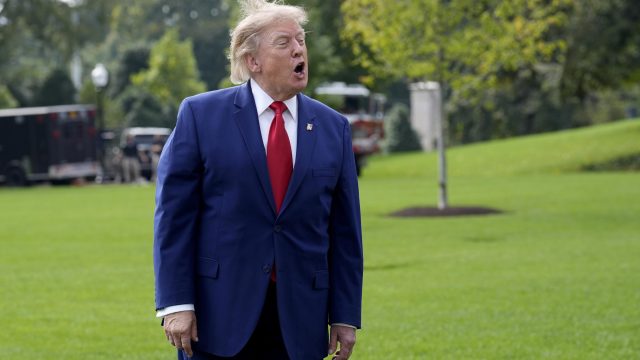
The channel has already proved effective. Following Kyriakos Mitsotakis’s interview with Breitbart in April, one of the outlet’s reporters put a related question to Donald Trump in the Oval Office. The U.S. president described Greece as “a terrific ally” and the Greek prime minister as “a terrific guy”. Remarks made by Mitsotakis in Delphi thus prompted a public response in Washington.
A similar sequence followed Aleksandar Vučić’s interview. The Serbian president said Trump was more popular in his country than any other modern US leader and invited him to Belgrade, promising him a large public welcome.
Trump subsequently shared the article on Truth Social. For Vučić, the presidential repost carried greater political value than the interview’s initial exposure.
A common channel, different objectives
The leaders who turn to Breitbart do not form a unified conservative front. Mitsotakis belongs to Europe’s established centre-right, Mickoski represents a more nationally conservative orientation, while Vučić pursues a multi-vector foreign policy between the European Union, the United States, Russia and China. They nevertheless use the same outlet to present different national priorities in language familiar to the Trump administration.
For Greece, the objective is to strengthen its image as an energy hub, a reliable NATO ally and an entry point for U.S. LNG into Central and Eastern Europe. Migration Minister Thanos Plevris used the same Breitbart platform to argue that Trump’s return accelerated Europe’s shift towards a stricter migration policy.
Athens is thus linking its energy, security and migration policies to issues near the top of the U.S. administration’s agenda.
Serbia is seeking a reset with Washington, increased American investment and the possible revival of the Washington Agreement on Kosovo. Vučić is using Trump’s positive standing among the Serbian public to propose a fresh start in bilateral relations without abandoning Belgrade’s ties to Beijing and Moscow.
For North Macedonia, the stakes are more immediate. Its path towards European Union membership remains blocked by the refusal of the country’s present governement to deliver on commitment at EU level to change the country’s constitution as to include the Bulgarian minority.
Mickoski is seeking an additional source of political and economic support without abandoning the European objective. The United States cannot remove the conditions attached to the accession process, but it can provide investment, defence cooperation and greater international weight.
For Balkan governments, an appearance on Breitbart offers access to a politically influential media channel as well as domestic political benefits. It allows leaders to cultivate the image of a direct relationship with Washington and present themselves as interlocutors for a U.S. president who values personal contacts and direct agreements.
Newsmax in Bulgaria?
A similar dynamic is unfolding in Bulgaria around U.S. far-right media group Newsmax. The group’s CEO Chris Ruddy met Prime Minister Rumen Radev in Sofia, while the media company has also been reported to be the frontrunner to acquire Bulgaria’s largest media group Nova Broadcasting Group.
The combination of high-level political contacts and a potential foothold in one of the country’s most influential media organisations would give Newsmax a significantly more direct presence in Bulgaria, and another channel through which the Trump-aligned U.S. media ecosystem could extend its influence into the Balkans.
Sources: IBNA, Breitbart News, The White House, Reuters
Caption: North Macedonia’s Prime Minister Hristijan Mickoski arrives at the EU-Western Balkans summit in Tivat, Montenegro, 5 June 2026. The high-level one-day summit brings together European Union (EU) leaders and their Western Balkan counterparts to discuss concrete integration measures and accelerate the region’s path toward bloc membership. EPA/BORIS PEJOVIC
Updated: August 26, 2026 - 06:41