 Edit
Fourteen countries raise alarm over Russia’s “shadow fleet” at sea
They accuse Moscow of navigation systems interference and call for stricter enforcement of international maritime rules
A group of 14 European countries has issued a coordinated warning to the international maritime community over the growing risks posed by Russia’s so-called “shadow fleet” operating in the Baltic and North Seas, citing safety violations, sanctions circumvention and interference with navigation systems, EUalive’s partner European Pravda reports.
The joint statement, released by the UK Ministry of Defence, brings together coastal states from the Baltic and North Sea regions, alongside Iceland, and urges flag states, port authorities and shipping companies to enforce international maritime law more rigorously.
Signatories include Belgium, Denmark, Estonia, Finland, France, Germany, Iceland, Latvia, Lithuania, the Netherlands, Norway, Poland, Sweden and the United Kingdom.
At the core of the warning is the claim that vessels linked to Russia’s shadow fleet frequently operate outside established legal and safety frameworks. The statement stresses that ships may sail under the flag of only one state and must carry valid documentation, including insurance and safety certificates, as required by international conventions.
Tankers that fail to meet these requirements, the signatories argue, may be treated as stateless vessels under the United Nations Convention on the Law of the Sea (UNCLOS), exposing them to enforcement action.
The countries also accuse Russia of interfering with satellite-based navigation systems in European waters, particularly in the Baltic Sea region. According to the statement, growing disruptions to Global Navigation Satellite Systems (GNSS) originating from the Russian Federation are degrading the safety of international shipping and placing all vessels at risk.
Satellite navigation, the signatories note, is not merely a convenience but a critical safety component of modern maritime transport. GNSS data underpins not only vessel positioning but also precise time synchronisation for systems such as the Global Maritime Distress and Safety System (GMDSS). Any disruption, they warn, undermines the reliability of maritime transport and increases the risk of accidents.
Equally concerning is the manipulation of the Automatic Identification System (AIS), which plays a central role in traffic coordination, situational awareness and emergency response. Spoofing or falsifying AIS data, the statement says, weakens maritime safety and security, raises the likelihood of collisions and complicates search-and-rescue operations.
Sweden and Finland push for tougher EU sanctions on Russia’s energy exports
In response to these risks, the signatories call on the international maritime community to recognise GNSS interference and AIS manipulation as direct threats to safety and security at sea. They urge national authorities to ensure that vessels are properly equipped and that crews are adequately trained to operate safely in the event of navigation system outages.
The countries also advocate closer cooperation on developing alternative terrestrial radio navigation systems that could serve as backups if satellite-based systems are disrupted or fail.
Beyond navigation concerns, the statement highlights broader compliance issues linked to the use of shadow fleet vessels to bypass international sanctions. The countries behind the statement stress that the consistent application of International Maritime Organization (IMO) regulations is essential to protecting maritime safety, seafarers and the marine environment.
They underline the need for strict adherence to key international conventions, as well as obligations under UNCLOS.
Specific requirements outlined in the statement include maintaining continuous operation of AIS and long-range identification and tracking systems, complying with mandatory ship reporting and traffic services, observing routing measures adopted by the IMO, and reporting incidents involving oil or hazardous substance discharges.
Vessels are also required to carry approved emergency pollution response plans and to notify coastal states in advance of any ship-to-ship transfers conducted within exclusive economic zones.
German Foreign Minister Johann Wadephul has separately called for more decisive action against Russia’s shadow fleet, underscoring growing concern among EU member states over the security and environmental risks associated with these vessels.
In parallel, it has been reported that the Finnish Border Guard, working with other Baltic Sea states and the European Commission, is establishing a maritime surveillance centre in the Gulf of Finland aimed at protecting critical underwater infrastructure.
The joint warning concludes that maintaining trust in maritime navigation requires not only technological solutions but also responsibility, transparency and decisive enforcement of international rules, particularly at a time when new safety challenges are emerging in European waters.
Russia’s so-called shadow fleet refers to a large network of ageing oil tankers used to circumvent Western sanctions on Russian oil exports, particularly since the 2022 invasion of Ukraine. These vessels often operate under flags of convenience, obscure ownership structures, and sometimes falsify documentation to evade restrictions, making enforcement of safety, insurance and environmental rules difficult.
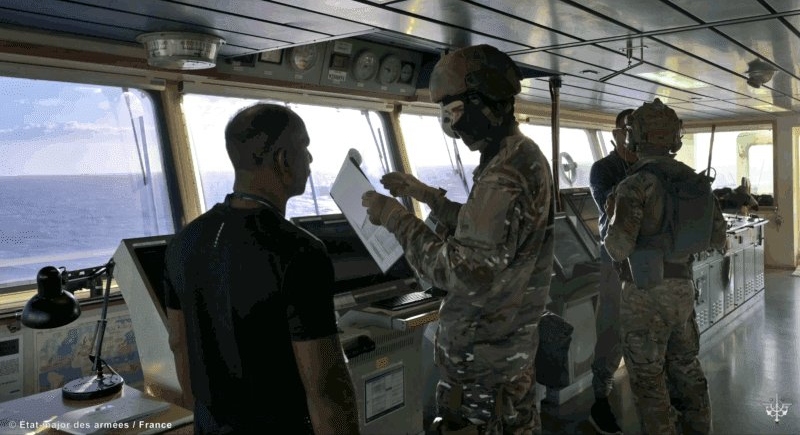
Western navies have recently stepped up actions against such ships: for example, the French navy intercepted the oil tanker Grinch in the Mediterranean on suspicion of sanctions evasion, and Western allies have boardings and seizures underway to disrupt the shadow fleet’s operations. The fleet is believed to number in the hundreds or more – estimates suggest it comprises a significant share of global tanker capacity used to transport Russian oil to Asia and other markets. Critics warn that these vessels pose safety and environmental risks due to lax regulation, older age and disabling of tracking systems to avoid detection.
Caption: A picture posted on X shows the French taking control of a Russia-linked oil tanker suspected of flying a false flag in the Mediterranean, stressing France’s determination to enforce international law and sanctions aimed at curbing Moscow’s so-called shadow fleet. @EtatMajorFR
Updated: January 28, 2026 - 06:27