Edit
For Trump’s Venezuela oil grab, judgement day will be the midterms
The election – and the chance of the U.S. President to retain power - will be decided by what a gallon costs in October
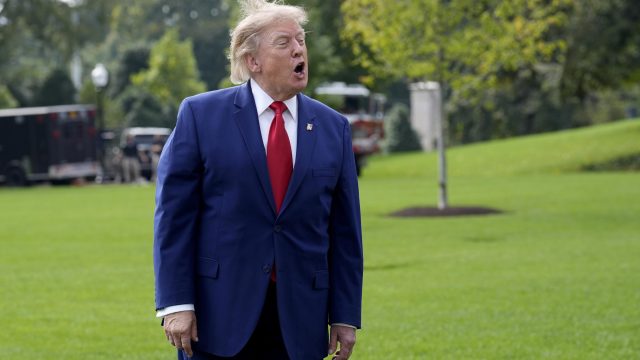
On 28 August, Donald Trump said the United States had secured “majority U.S. control” of more than 65 billion barrels of Venezuelan reserves – “THE BIGGEST OIL DEAL IN WORLD HISTORY” – and that it would “substantially lower Gas Prices for all Americans.” Marco Rubio sold the same line: stable, low-cost crude in the hemisphere, cheaper petrol at home. Venezuela’s interim president, Delcy Rodríguez, installed after U.S. forces seized Nicolás Maduro in January, blessed 17 fields and talked of $100 billion in private investment.
🇺🇸 BIG: Trump says the US has secured majority control of 65B+ barrels of Venezuelan crude at no cost to taxpayers, calling it the biggest oil deal in history. pic.twitter.com/42MBtBLAuW
— Cointelegraph (@Cointelegraph) August 29, 2026
Nine weeks later come the midterms. Regular gasoline has been above $4 a gallon, about a dollar higher than a year ago. The Iran war that began in late February pushed crude to $112 a barrel at the peak. Trump’s approval is in the low 30s. Republicans are defending narrow majorities. He is due to meet refiners and retailers next week specifically to show he is “doing something” about the pump. That is the political weather in which the Venezuela post went up.
What “control of 65 billion barrels” does not mean
Reserves are not supply. Venezuela’s official endowment is enormous – on the order of 300 billion barrels, the world’s largest booked figure. Production is about 1.25 million barrels a day, a fraction of what the fields once did, after years of underinvestment, a wrecked power grid and sanctions. Analysts who have looked at the post-Maduro reopening have been blunt: new contracts in the near term add incremental oil, on the order of a few hundred thousand barrels a day over a year, not millions. Orinoco extra-heavy crude needs diluent, upgraders, ports and electricity. That is a multi-year build, not a November delivery.
The United States is already taking a large share of what Venezuela can physically move. Roughly half of current output – more than 500,000 barrels a day – is going to Gulf Coast plants built for that heavy slate. Venezuela has been the second-largest source of U.S. crude imports for months. The “new” deal is, in large part, a claim on future fields and a 55 percent cut of a joint venture with 100-year concessions – plus oil at cost for the U.S. government – wrapped as if the inventory had just arrived in Houston.
Pump prices between now and 3 November will be set by the Iran risk premium, global balances, refining margins and the Strategic Petroleum Reserve, not by a title to undeveloped Orinoco rock. A futures twitch on the headline is possible. A visible drop at the corner station because of this paper is not.
Does this qualify for “oil grab”?
The structure is unusual even by Washington standards. The United States has no national oil company. Putting the war secretary in the room with the secretary of state, after a U.S. operation removed the previous head of state, and then announcing “majority control” of another country’s reserves, is closer to a wartime resource settlement than to a normal production-sharing contract. Rodríguez’s government gets investment and tax talk; Washington gets equity, offtake at cost, and a press release. Legal title under Venezuelan hydrocarbons law is still foggy. Firms that were expropriated in the Chávez years will have claims. None of that is resolved by Truth Social.
The midterm calculation, stated plainly
Incumbent parties usually lose House seats in midterms. Losses have tended to be smaller when gasoline is falling than when it is rising. Voters feel fuel weekly. A plurality already say pump prices will affect their vote. That is why the administration needs a story of action even if the physics of Orinoco cannot help before Election Day.
The useful distinction is this:
Intent to campaign on cheaper gas: high. The text of the announcement, Rubio’s post, the timing, the refiner meeting and the polling all point the same way.
Ability of this deal to cut prices by November: low. The oil that can move is largely moving already. The oil that would change the level of prices is years of capital away.
Ability of the announcement to change the subject: medium, and only for a news cycle. If prices stay over $4, the claim will be tested at the pump, which is a harsher editor than a social-media thread.
Trump is not wrong that Venezuelan heavy crude fits Gulf Coast metal and that more of it, over time, can ease a particular feedstock squeeze. He is wrong, or at least premature, if the implication is that majority control of 65 billion barrels is a midterm price cut. The stunt is the claim that the two are the same. The oil grab, if that is what this becomes, will be judged in the fields and the courts. The election – and the chance of Trump to retain power – will be judged by what a gallon costs in October. Those clocks do not run together.
Today I paid $3.95 for a gallon of gas which is the most I’ve ever paid for gas before.
What are you paying for gas? pic.twitter.com/Afd0vqpFf0
— Ben Owen™️ (@hrkbenowen) August 28, 2026
Caption: MAGA supporter Ben Owen says that today (29 August) he paid $3.95 for a gallon of gas which is the most he’s ever paid for gas before.
Updated: August 29, 2026 - 12:19