Edit
EU’s Kaja Kallas in Baku: gas flows despite parliamentary rift
During the talks, President Ilham Aliyev announced that Azerbaijani natural gas had begun flowing to two additional EU member states - Germany and Austria
The EU High Representative for Foreign Affairs and Security Policy met on Tuesday in Baku President Ilham Aliyev and Foreign Minister Jeyhun Bayramov. During the talks, Aliyev announced that Azerbaijani natural gas had begun flowing to two additional EU member states – Germany and Austria – expanding Baku’s European customer base to 16 countries, including 10 from the bloc.
The deliveries, which started in January 2026, travel via the Trans Adriatic Pipeline (TAP), the final leg of the Southern Gas Corridor. They follow a 10-year contract signed in June 2025 between Azerbaijan’s state energy company SOCAR and Germany’s SEFE (Securing Energy for Europe) for up to 1.5 billion cubic metres (bcm) annually. Smaller volumes – up to around 1 bcm per year – are heading to Austria. TAP’s recent capacity expansion of 1.2 bcm per year has made the new routes possible.
For Europe, the move is pragmatic. Russian pipeline gas has fallen from roughly 45 % of EU imports before 2022 to about 12 % today. Azerbaijan now supplies around 12.5–12.8 bcm to the EU, a 54 % increase since 2021, helping fill storage and reduce dependence on liquefied natural gas from the United States or Norway. Aliyev described Azerbaijan as a “reliable partner” for EU energy security; Kallas echoed the sentiment, calling the country a “valued and reliable energy partner” for the bloc.
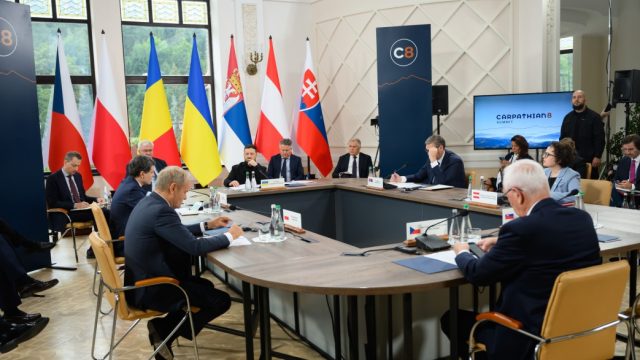
Yet the visit occurred only days after Azerbaijan’s Milli Majlis dramatically suspended all cooperation with the European Parliament. On 1 May, lawmakers voted unanimously to halt ties across every channel, including the EU-Azerbaijan Parliamentary Cooperation Committee. They also began the process of withdrawing from the Euronest Parliamentary Assembly. The trigger was an EP resolution adopted the previous day on “supporting democratic resilience in Armenia.” Baku viewed the text – mentioning the right of return for Armenians to Nagorno-Karabakh and the release of prisoners of war – as biased and hostile. Parliamentary Speaker Sahiba Gafarova said relations had deteriorated for years, especially after Azerbaijan restored its territorial integrity in 2023.
Azerbaijan’s parliamentary break with the EU: is it a threat to Europe’s gas supply?
The parliamentary freeze is largely symbolic. It does not touch government-to-government dealings or commercial contracts. Energy, connectivity and trade remain firmly on track. Azerbaijani officials and European diplomats alike treat the gas partnership as insulated from political friction. The 2022 EU-Azerbaijan strategic energy memorandum, which aimed to double gas imports, continues to guide policy. Ministerial meetings on the Southern Gas Corridor, including one in March 2026, have focused on further expansion and green-energy links rather than parliamentary spats.
Critics argue the EU’s approach reveals a diplomatic blind spot. Human-rights organisations and some MEPs accuse Brussels of soft-pedalling concerns over media freedoms and political prisoners in Azerbaijan in exchange for molecules of gas. Azerbaijani media, meanwhile, frame the EP suspension as a long-overdue rejection of “interference.” In practice, however, both sides appear content to compartmentalise: parliaments quarrel while pipelines flow.
The new German and Austrian supplies illustrate the pattern. Volumes remain modest relative to Europe’s needs – Azerbaijan’s total 2025 exports were 25.2 bcm – but the symbolism matters. Central European buyers gain direct access to Caspian gas without relying solely on Italian redistribution. SOCAR executives say dedicated production fields feed the exports, countering occasional claims of Russian gas “laundering.” TAP operators report steady utilisation and room for growth if new upstream projects, such as non-associated gas from the Azeri-Chirag-Gunashli field, come online.
For Baku, the deal bolsters revenue- gas already generates billions annually – and cements its role as a South Caucasus energy bridge. For the EU, it is another small but tangible step toward diversification at a time when global supply chains remain volatile, from the Strait of Hormuz to the North Sea.
Kallas’s visit, coming so soon after the parliamentary rupture, underscores a quiet consensus in both capitals: energy pragmatism trumps institutional drama. Whether that balance holds as the Southern Gas Corridor eyes 20 bcm targets and as political temperatures in the region fluctuate will shape the next chapter of EU-Azerbaijan relations. For now, the gas keeps coming.
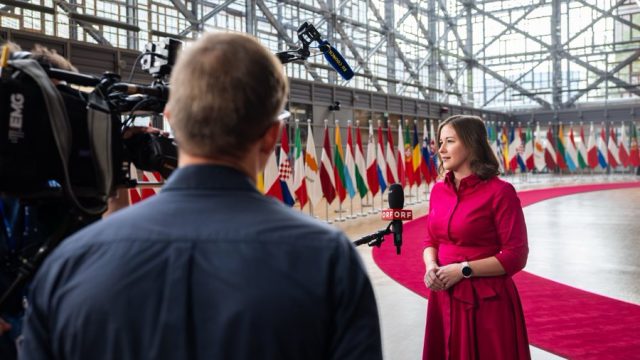
Caption: EU foreign affairs chief Kallas was received in Baku by President Ilham Aliyev [X account of Kaja Kallas]
Updated: May 6, 2026 - 07:10