Edit
European Parliament slams Republika Srpska’s separatism amid Russian influence concerns
Western officials fear that Russia could exploit ethnic tensions to destabilise Europe’s periphery
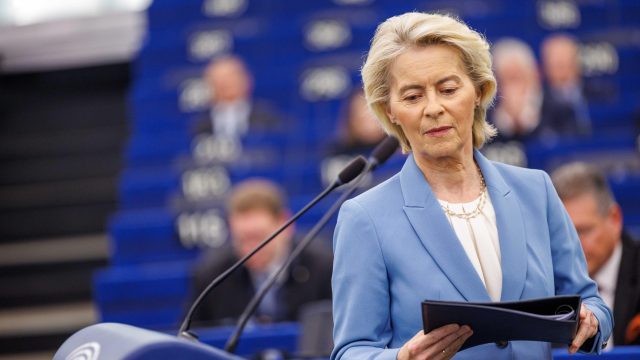
The European Parliament (EP) has adopted on 9 July a resolution condemning the separatist policies of Republika Srpska (RS) and its President, Milorad Dodik, while reaffirming strong support for Bosnia and Herzegovina’s (BiH) EU membership aspirations.
The resolution, passed with 459 votes in favor, 130 against, and 63 abstentions, underscores the need for a merit-based accession process rooted in the Copenhagen criteria and the principles of BiH’s unity, sovereignty, and territorial integrity.
EU accession and reform challenges
The EP welcomed the European Council’s decision to open accession negotiations with BiH, prompted by the shifting geopolitical landscape following Russia’s 2022 invasion of Ukraine.
While acknowledging key reforms, the resolution expresses concern over slow progress and weak implementation. It urges BiH to advance constitutional and electoral reforms, strengthen democratic institutions, uphold the rule of law, and intensify efforts to combat corruption and organized crime.
The resolution strongly denounces the divisive rhetoric and secessionist policies promoted by Dodik and the RS leadership, which threaten BiH’s stability and European security. The EP called for decisive EU action, including targeted sanctions, to counter these destabilising forces.
It also highlighted concerns about malign foreign interference, particularly from Russia and China, which fuel disinformation campaigns and erode public trust in the EU.
Rapporteur Ondřej Kolář (EPP, Czech Republic) emphasized the urgency of the situation: “ The future of the Balkans lies within Europe, not under Russian domination. Bosnia and Herzegovina is in the most difficult situation in Europe after Ukraine, and we must find a way to help it achieve full integration into Western structures. Developments in BiH demonstrate every day that we must strive for peace, stability, and development, because if we let up, we may once again face war and destruction.”
Dodik’s separatist agenda
Dodik, who maintains close ties with Moscow, has openly advocated for RS’s unification with Serbia, describing it as a “historical goal” for the Serbian people during a speech at the Herzegovinian Uprising anniversary in Nevesinje on 6 June.
His actions have drawn scrutiny, particularly after a BiH court withdrew an arrest warrant against him on 4 July, citing insufficient grounds for execution. Dodik had been wanted for anti-constitutional activities aimed at undermining BiH’s constitutional order, following his failure to respond to a prosecutor’s summons in March.
In a separate case, Dodik was sentenced in February to one year in prison and a six-year ban from public office for defying decisions by Christian Schmidt, the international High Representative overseeing the Dayton Peace Agreement. Dodik’s legal team has appealed, and the case remains ongoing.
Russian influence
The geopolitical stakes are high. Western analysts, including those at the Financial Times, warn that Dodik’s alignment with Russia could destabilize Bosnia, potentially igniting broader regional unrest. FT reported that Dodik’s meetings with Russian President Vladimir Putin recently, shortly after the issuance and withdrawal of his arrest warrant, have raised concerns about Russia’s role in fostering pro-Russian sentiment in the Balkans.
Western officials fear that Russia could exploit ethnic tensions to destabilize Europe’s periphery, with Dodik at the center of this strategy. A senior Western official described the situation as BiH’s most significant political crisis in 30 years, warning that it could escalate into a security crisis if unchecked.
The Dayton framework and ethnic divisions
The Dayton Peace Agreement, which ended the 1992–1995 Bosnian War, established BiH as a state comprising two semi-autonomous entities: Republika Srpska, primarily populated by Bosnian Serbs, and the Federation of Bosnia and Herzegovina, home to Bosniaks and Bosnian Croats. This structure, while maintaining peace, has perpetuated ethnic divisions, with each entity operating its own government, parliament, and police, loosely connected by state-level institutions.
The war, which killed over 100,000 people, mostly Bosniaks, remains a stark reminder of the consequences of separatist politics. The 30th anniversary of the Srebrenica genocide in July underscores the fragility of BiH’s stability.
Igor Crnadak, an opposition politician in RS, warned that Dodik’s alignment with Moscow risks pushing RS toward autocracy, while others, like Professor Nedjma Djananovic, argue that Dodik’s rejection of BiH’s central institutions normalizes the country’s division.
EU membership and future prospects
The EU’s renewed focus on enlargement, spurred by Russia’s invasion of Ukraine, offers BiH a pathway to integration, but challenges remain.
Mladen Ivanić, a Bosnian Serb opposition politician, advocates for a phased EU membership approach, allowing Balkan countries to gradually adopt EU obligations. However, he cautions that both Brussels and Sarajevo often overstate the feasibility of full membership in the near term.
Despite the Dayton Agreement’s flaws, it has preserved peace for three decades. High Representative Christian Schmidt acknowledges that the system may persist for another 20 years.
The European Parliament’s resolution signals a firm commitment to BiH’s European future while condemning actions that threaten its unity. As Dodik continues to challenge the Dayton framework and align with external actors like Russia, the EU faces the challenge of balancing sanctions and diplomacy to stabilize BiH. The path to EU integration demands robust reforms and a unified stance against separatist agendas to ensure lasting peace and security in the region.
Caption: Russian President Vladimir Putin (C) shakes hands with Bosnian Serb leader Milorad Dodik (R) upon their meeting at the Kremlin in Moscow, Russia, 1 April 2025. Dodik arrived in the Russian capital despite an international arrest warrant issued against him. EPA/MIKHAIL TERESHCHENKO/SPUTNIK/KREMLIN POOL
Updated: July 10, 2025 - 10:12