 Edit
European Parliament ditches Google for Qwant: a first step toward digital sovereignty?
Critics note that the switch is largely symbolic: Qwant holds only about 1-2% market share in France and even less elsewhere in Europe
In a quiet but pointed move, the European Parliament has replaced Google as the default search engine on its internal computers. Starting Thursday, searches typed into the address bars of Microsoft Edge and Mozilla Firefox browsers will route through Qwant, a French privacy-focused alternative. Users can still switch back manually, but the change sends a clear message: Europe is serious about reducing dependence on U.S. technology.
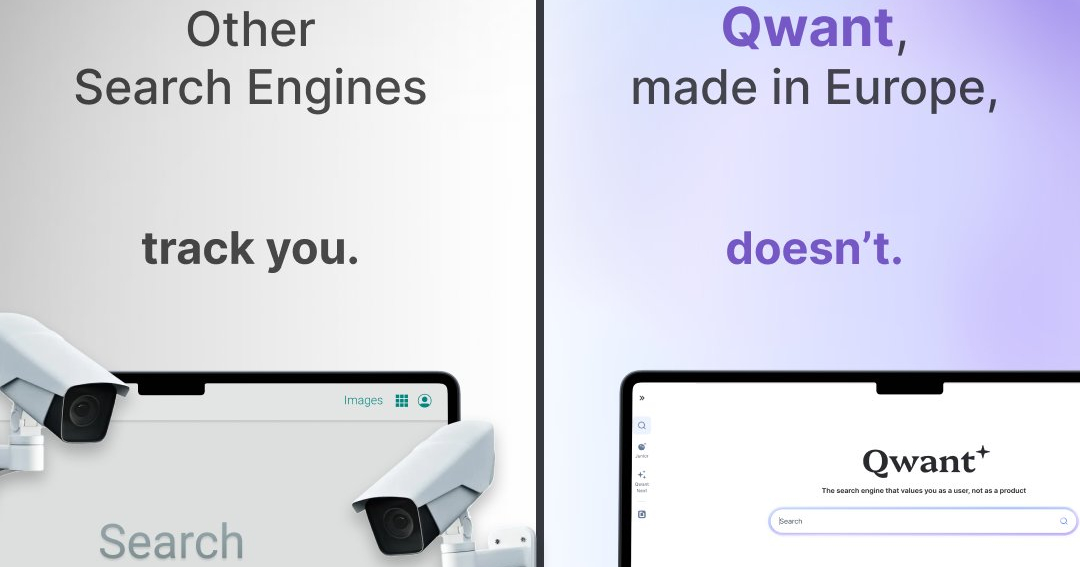
The decision, confirmed in an internal email, aligns with the Parliament’s commitment to “digital sovereignty and the protection of users’ personal data.” Qwant, founded in 2013, markets itself as a tracker-free service that does not retain search history or build user profiles. This contrasts sharply with Google’s data-driven model.
🇪🇺 Qwant is now the default search engine of the European Parliament 🇪🇺
We have been informed that our search engine, Qwant, will be configured as the default search engine on the European Parliament's internal computers, including searches performed from the address bar of… pic.twitter.com/MG2W2iTtzL
— Qwant (@Qwant_FR) June 4, 2026
Why now? Timing and broader push
The switch coincided with the European Commission’s unveiling of its Tech Sovereignty Package on Wednesday. This ambitious set of proposals aims to bolster Europe’s capabilities in semiconductors, cloud computing, AI, and open-source software. At its core is the Cloud and AI Development Act (CADA), which seeks to triple EU data centre capacity, create a sovereignty assessment framework for cloud services, and favour European providers for sensitive public workloads in sectors like defence, banking, and government.
CADA introduces tiers of “sovereign” cloud services based on factors such as immunity to foreign laws (notably the U.S. CLOUD Act), data location, supply-chain control, and cybersecurity standards. The goal is to mitigate risks from over-reliance on non-EU providers, which currently dominate more than 70-80% of Europe’s cloud and digital infrastructure.
This is not an isolated gesture. France has led efforts, with plans to migrate government workstations to Linux and replace tools like Microsoft Teams with domestic alternatives. The European Parliament itself saw a 2025 cross-party letter from 38 MEPs urging a phase-out of Microsoft and other foreign tools, citing strategic vulnerabilities.
Espionage fears or strategic caution?
Official statements emphasize privacy and sovereignty rather than explicit “espionage” fears. However, underlying concerns about foreign legal access to data are evident. The U.S. CLOUD Act allows American authorities to compel providers like Google or Microsoft to hand over data stored abroad for criminal investigations, potentially conflicting with GDPR protections.
While not framed as paranoia about active spying, this reflects broader worries about supply-chain risks, potential “digital kill switches” in geopolitical tensions, and over-dependence on a handful of U.S. giants. Post-Snowden sensitivities and recent spyware incidents have amplified calls for resilience against any foreign actor – whether American or Chinese.
Critics note that the switch is largely symbolic. Qwant holds only about 1-2% market share in France and even less elsewhere in Europe, where Google commands 88-92%. Daily parliamentary work still relies heavily on Microsoft Office and other U.S. tools. Productivity impacts remain minimal since users retain choice.
Challenges and skepticism
Europe’s tech sovereignty agenda faces significant hurdles. The EU lags in scaling homegrown champions comparable to Google, Amazon, or Microsoft. Building competitive AI and cloud infrastructure requires massive investment, talent retention, and regulatory tweaks to foster innovation rather than just protectionism.
Analysts question whether procurement preferences and subsidies can close the gap without stifling competition or raising costs. The Draghi report on EU competitiveness and ongoing transatlantic tensions (including potential U.S. policy shifts) add urgency but also complexity. Supporters argue it’s essential for democratic resilience and economic security; detractors call it inefficient “digital nationalism.”
Qwant itself has struggled with scale despite government backing. Its success here could boost visibility, but turning a niche player into a viable default will take more than one institutional win.
A wider trend
This move fits a pattern: Germany’s push for sovereign clouds, national initiatives for open-source, and EU strategies like the Chips Act 2.0. The Open Source Strategy within the new package aims for 30 million active users of European collaboration tools by 2030.
For the 720 MEPs, thousands of staff, and the broader EU apparatus, the change is small. Yet it amplifies a loud signal to tech markets and global partners: Europe intends to reclaim strategic autonomy in the digital realm.
Whether this evolves into genuine independence or remains aspirational will depend on execution in the coming years. For now, as one MEP reportedly noted, it’s a step toward ensuring Europe’s digital future isn’t dictated from Silicon Valley.
Caption: Visual from the X account of Qwant
Updated: June 4, 2026 - 15:55