 Edit
Europe and Ukraine team up to build next-generation missile defence
The initiative addresses Ukraine’s urgent air defence shortages amid intensified Russian ballistic missile and drone attacks while laying the groundwork for a broader European missile defence architecture
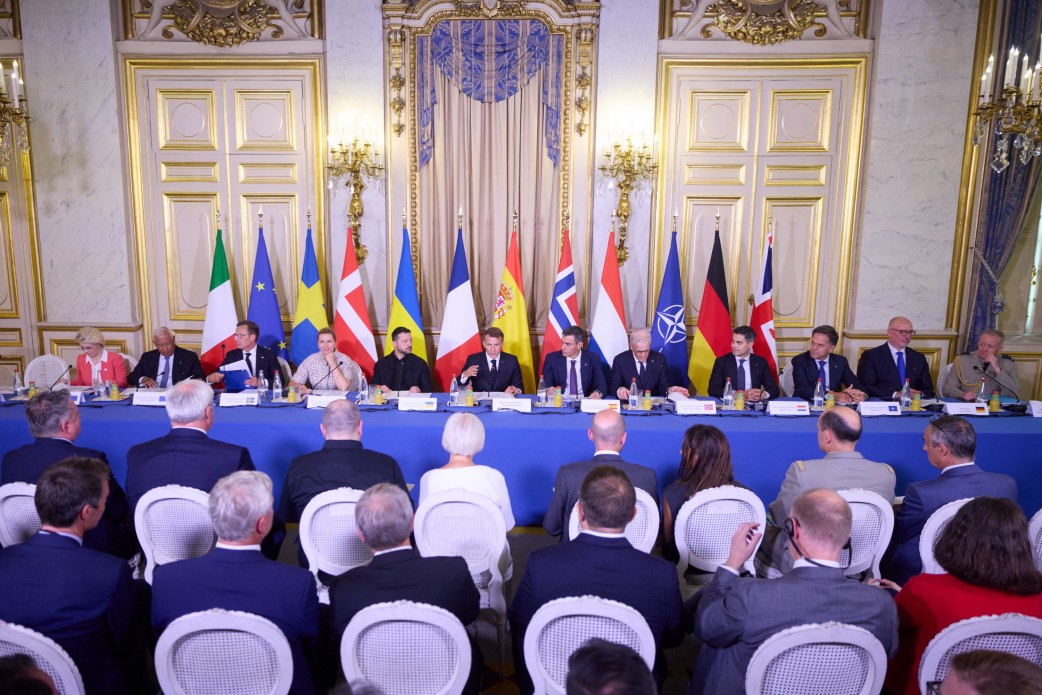
In a significant step toward strengthening collective security, Ukraine and nine European nations have launched the “Integrated coalition against Ballistic missiles”.
Denmark, France, Germany, Italy, the Netherlands, Norway, Spain, Sweden, and the United Kingdom joined Kyiv in signing a joint statement on 13 July during the Coalition of the Willing meeting in Paris. The initiative addresses Ukraine’s urgent air defence shortages amid intensified Russian ballistic missile and drone attacks while laying the groundwork for a broader European missile defence architecture.
The summit, attended by leaders including French President Emmanuel Macron, UK Prime Minister Keir Starmer, and German Chancellor Friedrich Merz, highlighted the critical need for enhanced interceptors and innovative solutions. Discussions centered on bolstering supplies for U.S.-made Patriot systems and exploring complementary European alternatives. This new coalition provides both the political momentum and industrial framework necessary to advance these goals, responding directly to Ukrainian President Volodymyr Zelenskyy’s repeated calls for robust missile defences.
The FREYJA project: building an affordable European shield
At the heart of the coalition’s efforts is support for FREYJA, a Ukrainian-European project to develop a new anti-ballistic missile system. Promoted by the Ukrainian company Fire Point, FREYJA aims to integrate with existing platforms such as Patriot and SAMP/T while offering a more cost-effective option for intercepting Russian ballistic missiles. Zelenskyy confirmed the coalition’s backing for the project, emphasizing its potential to create a “solid shield across the whole of Europe” more quickly and at lower cost than relying solely on current systems.
The FP-7.X interceptor prototype, already tested by Fire Point, forms the core of the system. Measuring 7.25 meters in length and constructed from composite materials, it can reach speeds of 1,500 to 2,000 meters per second. With a range of up to 200 kilometers and a warhead capacity of up to 150 kilograms, the missile uses a semi-active infrared seeker. Fire Point plans to develop this seeker in cooperation with Germany’s Diehl Defence, leveraging expertise from the IRIS-T air defence system. The broader FREYJA system is designed for both air and missile defence missions, with a primary focus on countering ballistic threats.
One of FREYJA’s most compelling advantages is its affordability. Each interceptor is projected to cost around $700,000, significantly less than the approximately $3.8 million price tag of a PAC-3 missile used in Patriot systems. This cost efficiency could enable scaled-up production and larger stockpiles, proving vital during periods of sustained attacks. Zelenskyy expressed optimism that the system could become operational within the next twelve months, with the inaugural coalition meeting also featuring representatives from major defence firms including Thales, HENSOLDT, Diehl Defence, Saab, Kongsberg Defence & Aerospace, Weibel, Leonardo, MBDA, Eurosam, Safran, and Destinus.
The joint statement underscores the coalition’s vision: “Our goal is to build a shared ballistic missile defence capability for Europe.” It calls for an integrated architecture that combines existing national systems with new developments, pooling defence industrial bases, research capabilities, and operational experience. The signatories explicitly recognize Ukraine’s hard-won expertise gained through defending against Russia’s aggression, positioning Kyiv as a key contributor rather than merely a beneficiary.
Technical readiness meets political imperative
Experts suggest the project faces more political hurdles than technical ones. Aviation specialist Kostiantyn Kryvolap noted that Europe already possesses most necessary components -radars, sensors, command systems, and launchers, leaving primarily the development and integration of the Ukrainian missile as the missing piece. Software for full system integration and final launcher adaptations could be addressed within months, potentially allowing testing to begin by the end of the year. Unlike lengthy traditional programs such as Patriot, which took a decade to mature, FREYJA builds on proven existing technologies for faster deployment.
The coalition commits to defining common operational requirements, forming joint technical working groups, establishing governance mechanisms, and creating a roadmap toward initial operational capability. Participants also pledged support for collaborative research and development, including funding identification and enhanced data sharing. The initiative remains open to additional nations that share its defensive principles and objectives. As the statement clarifies, “This initiative is not directed against any people, but is aimed at the defence of our own.”
The timing of the announcement is particularly pressing. Russia has escalated ballistic missile strikes on Ukrainian infrastructure, especially energy facilities, ahead of another challenging winter. By uniting industrial and technological resources, the coalition seeks not only to help Ukraine endure but to deter future threats across the continent. Zelenskyy has stressed that strong anti-ballistic capabilities are essential to ending Russia’s war, framing FREYJA as a supplement to, not a replacement for, existing European defences.
This coalition represents a shift toward greater European strategic autonomy in missile defence while deepening transatlantic and intra-European cooperation. By leveraging Ukraine’s battlefield innovations and Europe’s industrial strengths, the partners aim to construct a more resilient security framework. Success will depend on rapid political decisions, sustained funding, and seamless technical integration – steps that could reshape Europe’s defence posture for years to come.
Sources: Suspilne, Kyiv Independent, FocusEurope.it
Zelenskyy launches major government overhaul amid intensifying war pressures
Caption: The FREYJA Anti-Ballistic Missile Program was presented on 13 July in Paris. The event brought together heads of state and government, defence ministers, national security advisors, and executives from defense companies. Following the meeting, the leaders signed the Joint Declaration on the Establishment of the Integrated Anti-Ballistic Missile Coalition. [Website of the President of Ukraine]
Updated: July 14, 2026 - 05:32