 Edit
EU warns it could scrap visa-free travel for Georgians over democratic backsliding
Concerns have intensified after Tbilisi announced plans to dissolve the Anti-Corruption Bureau and the Personal Data Protection Service from 2 March
The European Union could consider suspending visa-free travel for Georgian citizens if the country’s authorities continue to backslide on democracy and the rule of law, European Commission President Ursula von der Leyen has warned, as tensions with former Western partners deepen.
In a letter sent to Georgian opposition politicians and reported by Georgian opposition outlet SOVA News, quoted by European pravda, von der Leyen said the European Commission had concluded that Georgia was falling on key reforms, notably in public administration, the rule of law and the fight against corruption.
She recalled that following a Commission proposal, the Council of the EU had already partially suspended the simplified visa regime with Georgia, affecting holders of diplomatic and service passports. Discussions are now under way on possible further steps, including the full suspension of visa-free travel for all Georgian citizens, the Commission president said.
“While consensus on sanctions between member states has not yet been reached, negotiations on sanctions against individuals responsible for retreating from democracy and human rights violations are ongoing,” von der Leyen wrote.
The warning comes against the backdrop of an increasingly critical assessment of Georgia’s EU trajectory. In the Commission’s November enlargement package, Georgia received the most negative evaluation among the countries covered. Enlargement Commissioner Martha Kos said at the time that Georgia remained an EU candidate country “in name only”.
Concerns have intensified after Tbilisi announced plans to dissolve the Anti-Corruption Bureau and the Personal Data Protection Service from 2 March 2026.
Both bodies were established in 2022 on the recommendation of the European Union. The move followed disputed parliamentary elections in 2024, the results of which were rejected by Georgia’s opposition parties and by the European Parliament.
These strains with Brussels are now mirrored in a separate row with London, highlighting a broader deterioration in Georgia’s relations with Western partners.
London sanctions deepens rift with the West
Earlier this week, the British ambassador was summoned to the Georgian foreign ministry after the United Kingdom imposed sanctions on two pro-government broadcasters, Imedi and POSTV. The move prompted sharp criticism from Tbilisi.
Foreign Minister Mako Bochorishvili said on 25 February that Georgia demanded an explanation from the UK over the measures. She described the sanctions as “cynical”, arguing that “the UK sees a way to defeat Russia sanctions against two Georgian TV channels”.
After meeting the ambassador, Bochorishvili told reporters that she had heard “no argument that would justify London’s decision” during a 40-minute discussion. British Ambassador Gareth Ward left the foreign ministry without comment.
The sanctions were announced as part of a major expansion of the UK’s Russia-related measures on the fourth anniversary of Moscow’s full-scale invasion of Ukraine. London added 240 organisations, seven individuals and 50 vessels to its blacklist, including the two Georgian broadcasters.
According to the British government, Imedi and POSTV have deliberately spread misleading information about Russia’s war against Ukraine and promoted narratives aimed at destabilising the country and undermining its territorial integrity.
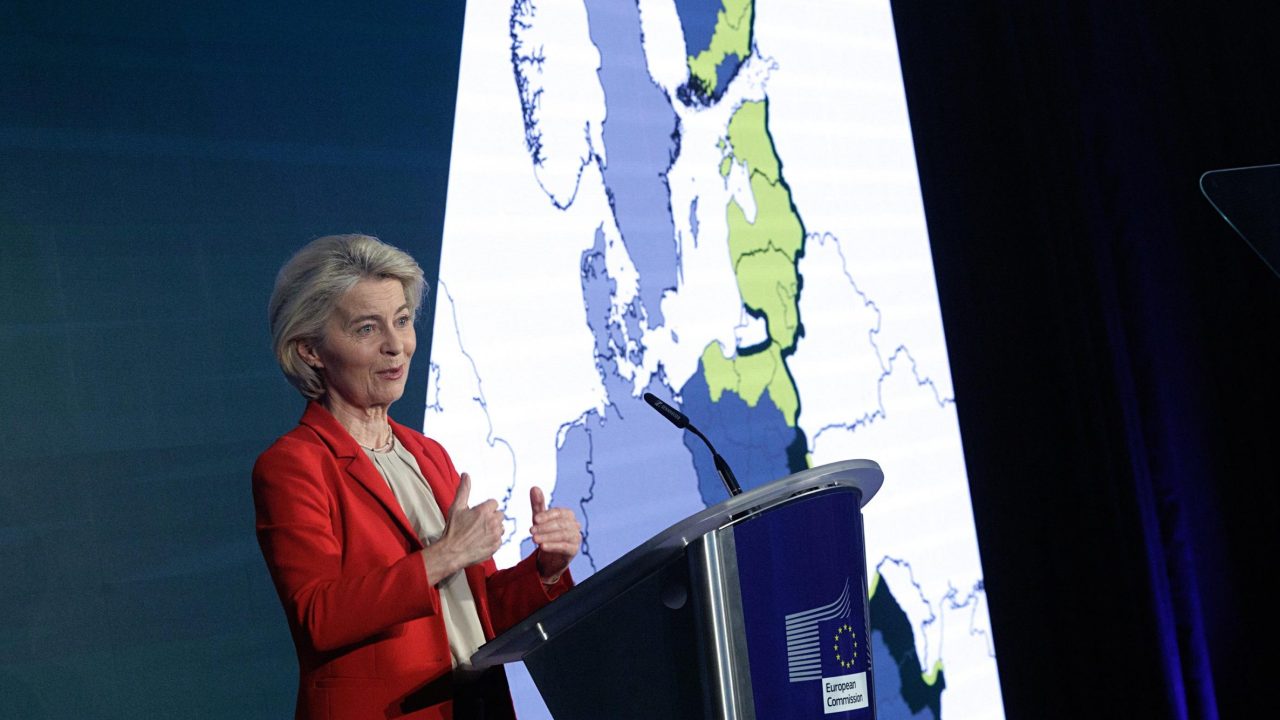
Caption: European Commission President Ursula von der Leyen delivers the opening speech at the EU’s eastern regions bordering Russia, Belarus and Ukraine high-level conference in Brussels, Belgium, 26 February 2026. EPA/OLIVIER MATTHYS
Updated: February 27, 2026 - 07:08


