Edit
EU seeks exemptions as Trump announces 25% tariffs on Japan, South Korea
For Brussels, securing compromise is critical to maintaining its $1.1 trillion trade relationship with the U.S.
The European Union has sidestepped an immediate escalation in U.S. tariffs, with sources confirming on Monday (7 July) that the bloc will not receive a letter from the United States outlining higher levies, unlike a range of other trading partners from Japan to Myanmar.
U.S. President Donald Trump has launched a new phase in his trade war, announcing tariffs of 25% to 40% on goods entering the U.S. starting 1 August, targeting countries including major economies like Japan and South Korea, as well as smaller exporters such as Serbia, Thailand, and Tunisia.
The EU is pursuing exemptions from the U.S. baseline tariff of 10%, aiming to shield its economic interests amid Trump’s erratic tariff policies, which have stirred global markets and raised doubts about their benefits for the U.S. economy. Meanwhile, the rest of the world scrambles to respond to Trump’s aggressive trade measures, with varying degrees of negotiation progress and economic fallout.
EU’s strategy amid Trump’s tariff threats
The EU is reportedly close to securing a deal with the Trump administration, potentially involving concessions on products like aircraft, medical equipment, and spirits to reduce the impact of the 10% baseline tariff.
A proposed arrangement could also allow EU automakers, particularly German firms with significant U.S. manufacturing plants like BMW and Volkswagen, to import more vehicles at rates below the current 25% tariff on cars and parts. This would bolster their U.S. operations while maintaining access to the American market.
However, the European Commission has warned EU envoys that the bloc faces a tough choice: accept a deal favoring U.S. interests or risk further uncertainty, with no assurance that Trump won’t impose additional tariffs on sectors like pharmaceuticals or semiconductors.
The EU currently contends with 50% U.S. tariffs on steel and aluminium, 25% on cars, and 10% on most other goods, making a favourable deal critical to avoid further economic strain.
Trump’s tariff strategy and U.S. economic uncertainty
Trump’s tariff announcements, delivered through letters to 14 countries, reflect a broader trade war initiated in April that has disrupted global markets.
The U.S. stock market felt the impact, with the S&P 500 dropping 0.8% on Monday, driven by declines in U.S.-listed shares of Japanese automakers like Toyota (down 4%) and Honda (down 3.9%).
The dollar surged against the Japanese yen and South Korean won, underscoring market sensitivity to Trump’s policies. His approach has been inconsistent – initially capping tariffs at 10% in April, only to raise them later, while extending negotiation deadlines to 1 August.
Trump has signalled flexibility, stating the deadline is “firm, but not 100% firm,” leaving room for last-minute deals.
The economic impact on the U.S. remains uncertain. Proponents argue tariffs could protect domestic industries and pressure trading partners into better terms, but critics warn of higher consumer prices, disrupted supply chains, and limited evidence of significant job or manufacturing gains.
Earlier this year, U.S. stocks neared bear-market territory due to tariff-related volatility but rebounded after Trump temporarily paused the stiffest levies. The ongoing unpredictability continues to challenge U.S. economic stability, with Treasury Secretary Scott Bessent noting a flurry of last-ditch offers from trading partners.
Global responses to Trump’s trade war
Beyond the EU, Trump’s tariffs have sent shockwaves across the globe, with countries facing levies ranging from 25% for Japan, South Korea, Tunisia, Malaysia, and Kazakhstan to 40% for Laos and Myanmar.
Japan’s Prime Minister Shigeru Ishiba reported progress in talks to avoid tariffs as high as 35%, with the U.S. proposing to revise terms based on Japan’s response by 1 August. South Korea, also facing 25% tariffs, views the extended deadline as a chance to intensify negotiations for a “mutually beneficial” outcome, according to its Industry Ministry. South African President Cyril Ramaphosa called the 30% tariff on his country “unjustified,” noting that 77% of U.S. goods enter South Africa tariff-free, and vowed to continue engaging with the U.S.
Smaller economies like Serbia (35%), Bosnia and Herzegovina (30%), Cambodia (36%), and Thailand (36%) face steep tariffs, with Trump warning that retaliatory measures would trigger reciprocal increases. The letters, posted on Trump’s Truth Social platform, blend negotiation opportunities with threats, stating that any tariff hikes by trading partners would be matched by the U.S.
Only Britain and Vietnam have secured agreements so far, while a U.S.-China framework on tariff rates was reached in June, leaving other nations racing against the 1 August deadline.
Global economic fallout and market reactions
Trump’s trade policies have roiled financial markets worldwide. While Asian markets have remained relatively stable, the U.S. market’s volatility reflects broader concerns about trade disruptions.
The threat of additional 10% tariffs on BRICS nations (Brazil, Russia, India, China, and others) if they adopt “anti-American” policies adds further tension, particularly as these countries meet in Brazil.
The global response underscores a scramble to mitigate economic damage. For the EU, securing exemptions is critical to maintaining its $1.1 trillion trade relationship with the U.S. (2024 data).
Japan and South Korea, key U.S. allies, face pressure to balance economic interests with diplomatic ties. Smaller economies, with less leverage, risk significant trade disruptions.
The uncertainty surrounding Trump’s tariffs, coupled with their inconsistent application, continues to challenge global economic stability, with no clear evidence that the U.S. will reap substantial long-term gains from this approach.
With Reuters, edited by g.g.
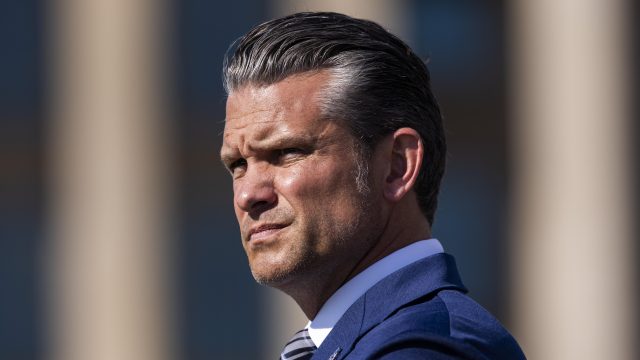
Caption: US President Donald Trump looks on during a dinner with Israeli Prime Minister Benjamin Netanyahu (not pictured) in the Blue Room of the White House in Washington, DC, USA, 7 July 2025. EPA/AL DRAGO / POOL
Updated: July 8, 2025 - 05:39