Edit
EU looks the other way as Bulgaria’s rule-of-law crisis deepens
A debate in the European Parliament over the detention of Varna’s mayor Blagomir Kotsev failed to trigger any institutional response
The Bulgarian liberal party “We Continue the Change”, in opposition at home, initiated the debate about the grim situation with the rule of law in Bulgaria, held in plenary in Strasbourg on Wednesday (22 October). However, it didn’t succeed in gathering substantial support at European Parliament level, as the other Bulgarian political forces, including the centre-right GERB (EPP-affiliated) and the centre-left BSP (S&D), secured the support of their European families to dismiss the criticism.
Renew Europe demanded the release of political prisoners in Bulgaria.
“A democratically elected mayor in Bulgaria has been thrown in prison without reason. Blagomir Kotsev and several others are political prisoners in the EU,” Valérie Hayer, leader of Renew Europe, opened the debate, denouncing “an attack on democratic institutions and the rule of law in Bulgaria.”
The ugly arrest of the first honest mayor of Varna explained
Renew Europe’s sharp reaction was prompted by the more than three-month detention of Varna’s mayor Blagomir Kotsev (from We Continue the Change – Democratic Bulgaria), who has been kept in custody since 8 July without any charges being pressed against him, amid pressure to resign from his post.
Witnesses in the case have reported being subjected to intense coercion to falsify testimonies in order to incriminate Kotsev.“
Bulgaria is a country captured by oligarchs,” Hayer continued. “This is the corrupt world of Delyan Peevski and his ally Boyko Borissov.”
Peevski is sanctioned for corruption under the U.S. Magnitsky Act and is described by opponents as an oligarch who controls the secret services and the prosecution and is gradually taking over political power in Bulgaria. First, he took over his party “Movement for Rights and Freedoms”, ousting its historical leader Ahmed Dogan, and now he is seemingly increasing his influence on Boyko Borissov’s GERB party, the largest force in the country.
However, the EPP pretends not to notice the risks stemming from Peevski’s growing control over GERB, one of its influential member parties.
Hayer said that the EU’s lack of response to Bulgaria’s deteriorating situation was “a disgrace for the European institutions and their courage.” “The EU cannot be strong abroad if it is blind at home,” she said. “Delyan Peevski is tightening his grip on Bulgaria’s political parties while the country remains a key factor for Europe’s collective defence in the Black Sea region”.
MEP Sophie Wilmès (Renew), a former Belgian prime minister now chairing the Democracy, Rule of Law and Fundamental Rights (DRFMG) working group of the European Parliament, regretted that its members failed to gather a majority for launching a monitoring mission in Bulgaria. Renew Europe has called on the European Commission to send a fact-finding mission to Bulgaria and to suspend all Recovery Plan payments until “all political prisoners in Bulgaria are released” and the country demonstrates a genuine move towards positive change.
“It is our duty to act,” Hayer insisted. “This is not about one politician. It is a warning for all of us.”
Liberals will send their own fact-finding mission
The setbacks prompted Renew Europe to form a mission to assess the rule of law in Bulgaria. Five MEPs will visit Varna and Sofia and are expected to their report in the spring of 2026. The findings will be forwarded to the Commission for inclusion in its next Rule of Law Report.
Marie Bjerre, Denmark’s Minister for European Affairs and acting President of the EU Council, answered that the rule of law situation in Bulgaria will be discussed at the Council’s General Affairs meeting.
“The situation in Bulgaria will be discussed at the (General Affairs) Council on 17 November, alongside three other member states,” Bjerre announced.
“We will examine the latest developments in Bulgaria and address the issues raised in the European Commission’s annual Rule of Law Report,” she added.
European Commissioner Dan Jørgensen briefly reiterated the last Commission report’s conclusions but made no mention of any new initiative. At the end of the debate, Jørgensen only noted that the new “European Shield for Democracy” mechanism is being activated to support civil society organisations.
GERB and Bulgarian socialists dismiss allegations
Members of Bulgaria’s ruling coalition – GERB, the Bulgarian Socialist Party (BSP) and Delyan Peevski’s MEP Elena Yoncheva (ex-BSP MEP, now elected on Peevski’s list) – all claimed there was “no problem” with the judiciary in the Balkan country.
The statements were echoed by the EPP, the Patriots for Europe, and the European Conservatives. Renew Europe was supported by the Left and the Greens, who have long warned of state capture and corruption in Bulgaria.
The EPP’s reaction reflected a total lack of concern over Bulgaria’s situation. Lena Dupont (EPP) stated that “five different courts have confirmed the arrest of Blagomir Kotsev” and called Bulgaria’s anti-corruption commission “an independent body doing its job – investigating corruption.”
Andrey Kovatchev (EPP, GERB) claimed the debate had “nothing to do with the rule of law, but only with boosting the fading popularity of We Continue the Change.” According to him, the party, together with pro-Kremlin forces, had “chosen to undermine Bulgaria’s European path.”
Former Bulgarian foreign minister Kristian Vigenin (BSP, PES) dismissed the debate as a “political abuse” of the issue, claiming that it should be discussed “elsewhere.”
“Renew Europe is being hysterical, misled by its Bulgarian members,” he said, describing the session as “a propaganda debate aimed solely at blocking EU funds for Bulgaria.”
In a near-surreal political twist, Yoncheva, who previously had fought against judicial abuse, said: “Political interference in the independent judiciary must not be allowed.”
“What does the opposition propose? To close our eyes to corruption, simply because it’s their corruption?” Yoncheva asked.
A few years ago, Yoncheva was one of the fiercest critics of GERB and of Peevski.
‘Bulgaria is captured’
“A democratically elected mayor was told to choose a ‘new beginning’ for his term or go to prison. He chose integrity – and remains behind bars,” said Nikola Minchev, former Speaker of the Bulgarian Parliament (We Continue the Change).
“Nothing fuels the anti-European narrative more than Europe closing its eyes to corruption,” Minchev warned.
Konstantinos Arvanitis (The Left) compared Kotsev’s arrest to Turkish President Recep Tayyip Erdoğan’s actions against the Mayor of Istanbul, Ekrem İmamoğlu.
Ilhan Kyuchyuk (Independent, ALDE) noted that when a citizen can be detained without clear grounds, “this constitutes a threat to everyone in Bulgaria”.
“This is a step towards dictatorship,” Kyuchyuk warned.
The only EPP member to acknowledge Bulgaria’s state capture was Radan Kanev, who said that the country’s law enforcement and judicial institutions “no longer serve the public interest or protect property rights, but have become part of attempts to seize the state by shadowy interests.”
Finally, Bulgarian MEP and musician Hristo Petrov (Itso Hazarta) concluded: “Every person in Bulgaria knows what this is all about. Everyone in the European Commission who makes decisions knows what this is all about. One day history books will say: Blagomir Kotsev was free, and seven million were in prison.”
Edited by g.g.
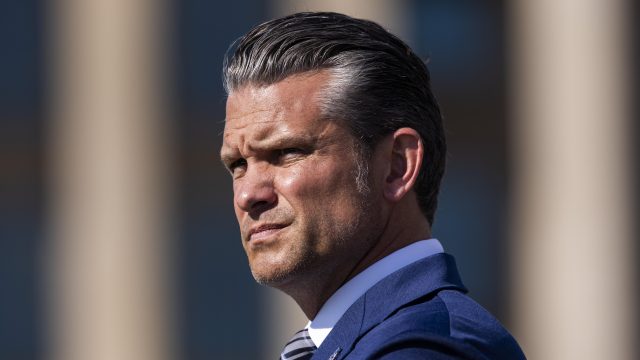
Caption: Valerie Hayer, leader of Renew, EP Plenary session – The ongoing assault on the democratic institutions and the rule of law in Bulgaria, 22 October 2025
Updated: October 22, 2025 - 19:18