Edit
EU holds firm on sanctions as US-brokered deal frees 123 Belarusian political prisoners
Brussels maintains tougher stance on potash exports while welcoming releases amid transatlantic divergence
The European Union has adopted a cautious approach to the 13 December release of 123 Belarusian political prisoners – including Nobel Peace Prize laureate Ales Bialiatski and prominent opposition leader Maria Kolesnikova – following a bilateral deal between Minsk and the Trump administration that includes lifting U.S. sanctions on Belarusian potash fertilizers.
While quietly noting the releases as positive for the individuals involved, Brussels has emphasized that its own stricter sanctions – particularly a near-total ban on transiting Belarusian potash through EU ports – remain in place, viewing them as essential leverage for broader systemic change in Minsk.
Several political prisoners released today in Belarus have been deported to Ukraine.
In these photos are Maryia Kalesnikava and Viktar Babaryka. In the video, they meet for the first time since 2020 🧡 pic.twitter.com/AvXkepVxRm
— Freedom postcards | Volnyja pashtouki (@v_pashtouki) December 13, 2025
Exiled opposition leader Sviatlana Tsikhanouskaya encapsulated this transatlantic split: “U.S. sanctions relief can lead to the release of political prisoners, [while] EU sanctions are about systemic change – stopping the war [in Ukraine], enabling democratic transition, and ensuring accountability. These approaches do not contradict each other; they complement each other.”
The prisoners, many detained since the 2020 disputed election protests, were transferred across the Belarus-Ukraine border and onward to safety, including Vilnius, Lithuania. The group included foreign nationals and high-profile figures like Viktor Babaryka, a former presidential hopeful.
The deal stemmed from talks between authoritarian leader Alexander Lukashenko and U.S. special envoy John Coale, who announced the potash sanctions lift “per the instructions of President Trump.”
Coale framed it as progress toward normalizing ties, potentially paving the way for further releases from the estimated 1,100-1,200 remaining political detainees.
This marks the largest single release under Trump’s engagement strategy with Lukashenko, building on over 430 freed since July 2024. Washington sees dialogue as a way to moderate Minsk’s alignment with Moscow, including on Ukraine.
In contrast, the EU—Belarus’s neighbor and historically a key trade partner – prioritizes isolation until repression ends and Belarus ceases supporting Russia’s war. EU sanctions hit potash harder by blocking major export routes, forcing rerouting through Russia and deepening Minsk’s dependence on the Kremlin.
Human rights groups and opposition figures celebrate the freed lives but warn against premature concessions. Tsikhanouskaya thanked Trump while cautioning: “Lukashenko hasn’t changed his policies… That’s why we need to be extremely cautious with any talk of sanctions relief.”
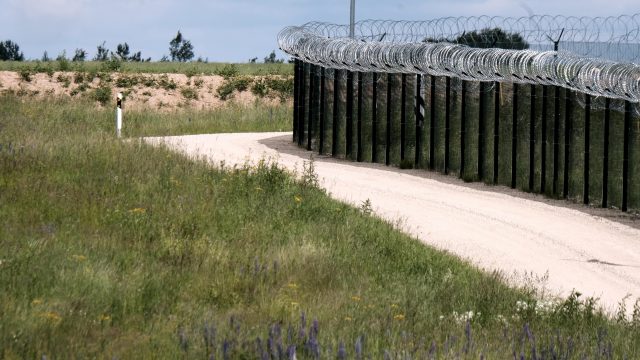
In the meantime, Belarus is continuing its hybrid war on the EU. Polish border guards discovered an underground tunnel near the village of Narewka on the Poland-Belarus frontier on 12 December, through which more than 180 migrants – primarily from Afghanistan, Pakistan, India, Nepal, and Bangladesh – had illegally crossed into the EU, marking the fourth such tunnel found this year in the Podlaskie region.
More than 180 foreigners have illegally entered Poland through a tunnel under the border with Belarus. Most of the migrants have already been detained, the search for the others is still ongoing. https://t.co/Qnj9RA9BAM
— euronews (@euronews) December 13, 2025
While the recent U.S.-Belarus prisoner release deal demonstrates Washington’s willingness to offer targeted sanctions relief in exchange for concrete concessions, the European Union – geographically closer to both threats and bearing a larger share of refugee and energy costs – is unlikely to mirror this transactional approach, not only toward Minsk but also toward Moscow itself should the Ukraine peace process advance.
Caption: The prisoners, many detained since the 2020 disputed election protests, were transferred across the Belarus-Ukraine border and onward to safety, including Vilnius, Lithuania. [@v_pashtouki on X]
Updated: December 13, 2025 - 18:09