Edit
EU hardens stance on Serbia: funding freeze looms as Commissioner Kos heads to European Parliament
A sharply critical assessment by the Venice Commission could not only halt immediate payments but also stall broader accession momentum
The European Union is moving from warnings to concrete financial pressure on Serbia, with up to €1.5 billion in assistance under the Reform and Growth Facility for the Western Balkans now at serious risk of suspension.
This escalation reflects deepening frustration in Brussels over judicial reforms adopted in January 2026 – widely referred to as the “Mrdić laws” – which restructure courts, change the selection and oversight of judges and prosecutors, and expand powers for court presidents, raising fears of greater political control over the judiciary.
No funds until Venice Commission opines
Enlargement Commissioner Marta Kos is scheduled to address the matter directly before the European Parliament’s Foreign Affairs Committee today. She has made clear that no further EU funds aimed at helping Serbia align with accession standards will be disbursed until the Venice Commission, the Council of Europe’s independent legal advisory body, delivers its expert opinion on the reforms, expected by the end of April.
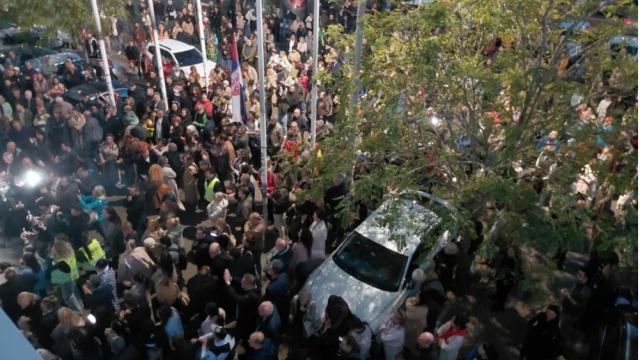
In her recent Politico interview, Kos described the laws as “a serious step backwards” and voiced broader concerns: “We are increasingly worried about what is happening in Serbia — from laws that undermine the independence of the judiciary to crackdowns on protesters and recurrent meddling in independent media.”
This builds on the critical tone of the EU’s November 2025 progress report and earlier signals, but now shifts toward active assessment of disbursements and explicit conditionality tied to the Venice Commission’s forthcoming verdict.
Serbian reactions: optimism mixed with criticism of opposition
Serbian officials remain outwardly confident. Ambassador to the EU and chief negotiator Danijel Apostolović said Belgrade is engaged in intensive talks and has “clearly communicated” its readiness to accept and implement the Venice Commission’s recommendations once published.
Minister of Public Investments Darko Glišić, speaking on Pink TV, accused the opposition of being in “euphoria” over the potential freeze, suggesting they welcome any negative news for the country.
European Commission spokesperson Guillaume Mercier noted on 16 April that the Commission routinely evaluates compliance with democratic principles, rule of law, and human rights, while expressing ongoing concern over the judicial package.
Broader context and limits of partial integration
Serbia has received more than €7 billion in EU support since 2000, including over €586 million in non-repayable grants from 2021–2024. The additional €1.5 billion under the Growth Plan is explicitly linked to measurable progress in judiciary, media freedom, and foreign policy alignment – areas where Belgrade has lagged.
President Aleksandar Vučić has at times floated deeper economic integration (single market access and free movement) without full political membership, an idea Kos has firmly rejected. In December he skipped an EU-Western Balkans summit, and Serbia’s limited alignment with EU foreign policy – particularly its ties with Russia – continues to strain relations.
Experts caution that a suspension might have limited immediate political impact. Dušan Reljić has suggested the sums could be framed domestically as resistance to external pressure, potentially reinforcing rather than weakening the government’s narrative.
Calls for debate and accountability
Sandro Gozi, secretary general of the European Democratic Party, has invited Vučić to a public debate on democracy, rule of law, media freedom, and Serbia’s European future, framing it as a normal part of enlargement rather than “lecturing.”
Bojana Selaković from the National Convention on the European Union sees the potential freeze as a strong signal of eroded trust. Unlike instruments requiring member-state unanimity, the Growth Plan falls largely under Commission competence, allowing faster enforcement and highlighting the gap between reform promises and delivery.
Decisive weeks ahead
While other Western Balkan candidates and Ukraine advance, Serbia’s accession process has seen little movement on key chapters for over four years. The Growth Plan was designed to deliver early benefits in exchange for reforms; strict conditionality now signals that backsliding will carry costs.
As the Venice Commission prepares its opinion, the coming weeks will test whether dialogue can avert a formal freeze. A sharply critical assessment – if not followed by genuine legislative alignment – could not only halt immediate payments but also stall broader accession momentum.
Caption: European High Representative of the Union for Foreign Affairs, Kaja Kallas (L) and European commissioner for enlargement Marta Kos (R) present 2025 Enlargement Package at a press conference in Brussels, Belgium, 04 November 2025. The European Commission adopted earlier in the day its annual Enlargement Package, presenting a comprehensive assessment of the progress made by the enlargement partners over the past twelve months. Montenegro, Albania, Ukraine, the Republic of Moldova, Serbia, North Macedonia, Bosnia and Herzegovina, Kosovo, Turkey and Georgia continue their respective paths towards the EU. EPA/OLIVIER HOSLET
Updated: April 20, 2026 - 12:41